Eeshanya Infraa's 'Iconic Developer' Award: A Beacon for Hyderabad's Real Estate Future
Published: October 2026
Implications for Builders and Landowners
Eeshanya Infraa's recognition as an 'Iconic Real Estate Developer' at the Times Business Awards 2026 underscores the increasing value placed on quality, innovation, and reliability in the property sector. For other builders, this serves as a benchmark for excellence, highlighting the importance of strategic project execution and customer-centricity to stand out in a competitive market. This award also bolsters confidence in the developer's projects, potentially attracting more sophisticated investors and end-users. For landowners, partnering with developers who have a proven track record and industry accolades can lead to more favorable terms and a higher likelihood of successful project completion, maximizing land value and returns.
This trend suggests that established developers with a strong reputation are well-positioned to capitalize on the ongoing demand for housing and commercial spaces. It also indicates a shift in market preference towards developers who can deliver not just buildings, but integrated communities and superior living/working experiences. Builders need to focus on sustainable practices, smart infrastructure integration, and enhanced amenities to meet evolving buyer expectations.
- Builders: Focus on quality, innovation, and customer satisfaction to achieve similar recognition.
- Landowners: Prioritize partnerships with reputable and award-winning developers for better project outcomes and land value appreciation.
- Investors: Recognize that developer reputation is a key indicator of project success and investment security.
Construction Trends, Approvals, and Supply Pipeline
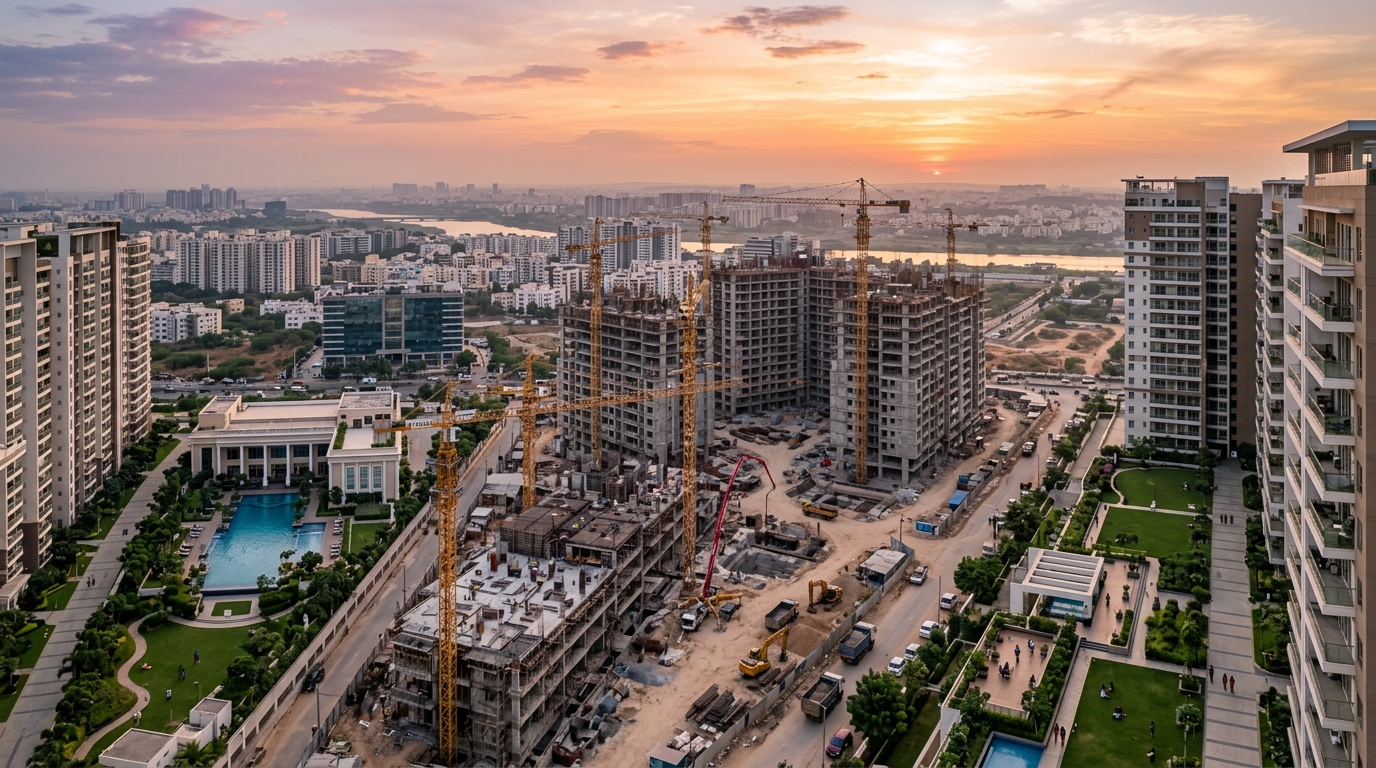
The award for Eeshanya Infraa implies a robust operational framework, likely including efficient construction practices, streamlined approval processes, and a well-managed supply pipeline. Developers receiving such accolades are typically adept at navigating regulatory hurdles and ensuring timely project delivery. In Hyderabad, particularly in growth corridors, the demand for housing and commercial spaces often outpaces supply. This leads to opportunities for developers who can quickly mobilize resources and bring projects to market while adhering to quality standards. An efficient supply chain for construction materials and skilled labor is paramount to maintaining project timelines and cost-effectiveness.
The ability to secure timely approvals from municipal authorities and regulatory bodies is crucial. Developers who have established relationships and a clear understanding of the approval matrix can significantly reduce project lead times. The current construction trends favor sustainable materials, pre-fabricated elements, and smart technology integration, which can enhance efficiency and appeal to modern buyers. Maintaining a consistent supply of essential construction materials and a skilled workforce is vital to avoid delays and cost overruns, especially given the rapid development pace in Hyderabad.
- Streamlined approval processes are a competitive advantage.
- Focus on sustainable and technology-driven construction methods.
- Proactive management of material supply chains and skilled labor is essential.
Location-Specific Opportunities in Hyderabad
Hyderabad's real estate market, especially areas like Gachibowli, Kokapet, and the Financial District, is experiencing unprecedented growth fueled by IT sector expansion and a burgeoning economy. These micro-markets present immense opportunities for developers like Eeshanya Infraa, who can cater to the demand for premium residential, commercial, and retail spaces. The concentration of multinational corporations and the presence of a highly skilled workforce drive the need for high-quality, well-connected developments. The proximity of these areas to business hubs makes them attractive for both residential and commercial investments.
Gachibowli, as a major IT and business hub, requires continuous development of residential complexes and co-working spaces. Kokapet, known for its vast open spaces and potential for large-scale integrated townships, offers a canvas for ambitious, master-planned communities. The Financial District demands high-end commercial and premium residential options for its professionals. Developers with the acumen to understand the specific needs of these evolving neighborhoods can tap into a significant supply-demand mismatch, ensuring high occupancy rates and rental yields.
- Gachibowli: High demand for residential and co-working spaces.
- Kokapet: Opportunity for integrated townships and large-scale developments.
- Financial District: Demand for premium commercial and luxury residential offerings.
- Leverage the IT sector's growth for targeted project development.
Risks and Execution Challenges
Despite the positive outlook, developers in Hyderabad face several risks and execution challenges. Fluctuations in material costs, availability of skilled labor, and stringent regulatory changes can impact project timelines and profitability. Furthermore, intense competition can lead to pricing pressures and the need for constant innovation to differentiate projects. Ensuring consistent quality across all projects, especially when scaling up, is a significant challenge.
Economic downturns or shifts in market sentiment can affect buyer demand and sales velocity. Obtaining necessary approvals can be a protracted process, prone to delays and bureaucratic hurdles, especially for large-scale projects. Managing a complex supply chain and mitigating the risks associated with it, such as material shortages or transportation disruptions, requires robust planning and contingency measures. For developers aiming for 'iconic' status, maintaining brand reputation amidst these challenges is crucial for sustained success.
- Material cost volatility and labor shortages.
- Navigating complex and potentially lengthy approval processes.
- Maintaining consistent quality and brand reputation.
- Mitigating risks from economic fluctuations and market sentiment.
Source: The Tribune