Celebrity Property Transactions: Insights into Mumbai's Luxury Real Estate Market
Published: June 2026
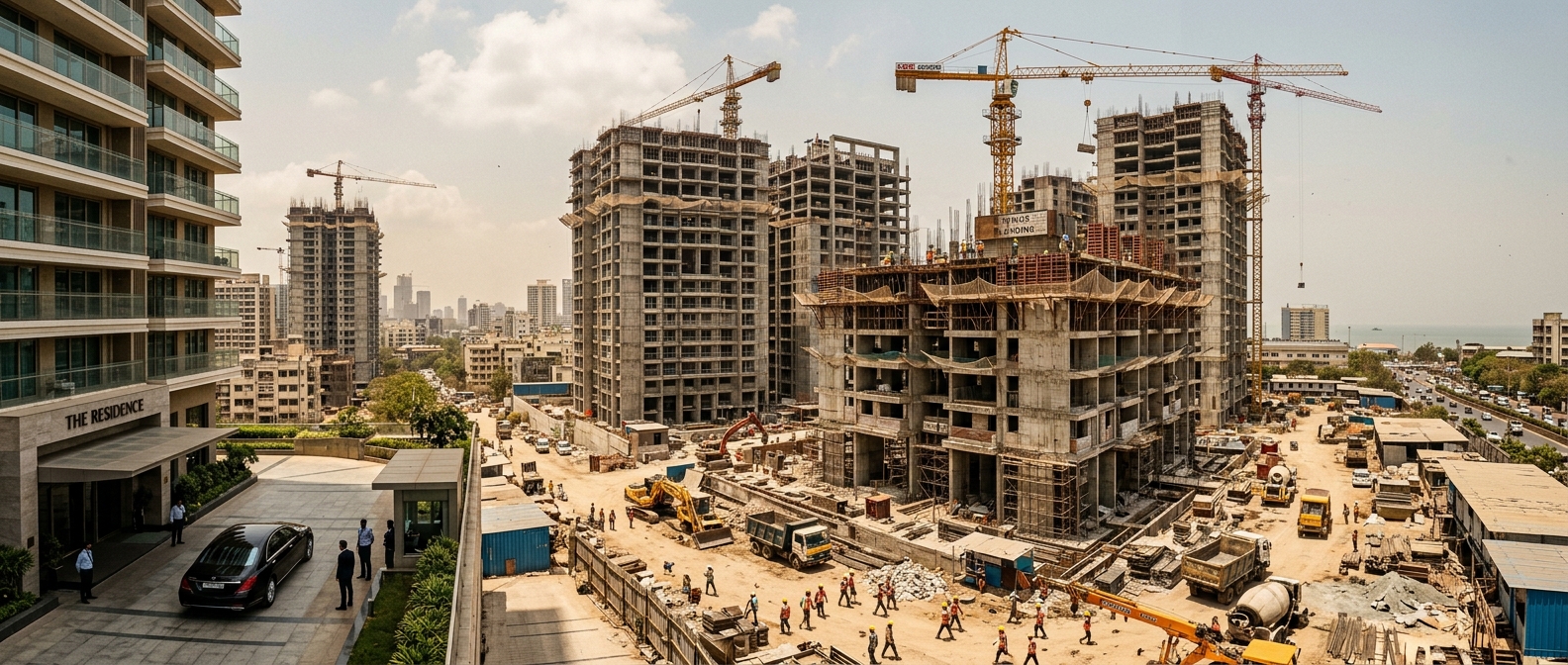
Decoding Akshay Kumar's Profitable Property Sale
The news of Akshay Kumar's substantial profit from selling Mumbai apartments highlights a key characteristic of the luxury real estate market: its resilience and potential for significant capital gains. While specific details of the transaction, such as the exact profit margin or the number of units sold, are not provided in the article, the reported 'crores in profit' indicates a strong upward trend in property values in the micro-markets where these assets were located. This aligns with broader observations of Mumbai's real estate sector, which often sees robust demand from high-net-worth individuals (HNIs) and investors seeking tangible assets with appreciation potential.
Such transactions by prominent figures can act as market indicators, signaling confidence in specific locations and the overall health of the luxury segment. The underlying demand drivers in Mumbai, including a growing affluent population, limited new supply in prime areas, and the city's status as India's financial capital, contribute to sustained price appreciation. The sale, therefore, can be interpreted as a realization of accrued value in a market that has historically rewarded patient capital.
- Strong demand for luxury properties in Mumbai.
- Potential for significant capital appreciation in prime locations.
- Celebrity transactions as market confidence indicators.
Market Implications: Demand, Supply, and Pricing Dynamics
The successful sale with substantial profit implies that current market prices in the relevant Mumbai micro-markets are robust enough to absorb such transactions and still offer attractive returns. This suggests a healthy demand-supply equilibrium, particularly for well-located and premium properties. In markets like Mumbai, where land availability is scarce, the supply of new luxury inventory in established locales is often constrained. This scarcity, coupled with sustained demand from HNIs, NRIs, and institutional buyers, typically leads to price appreciation over time.
The profitability underscores that even in a mature market like Mumbai, strategic property investments, especially in prime residential areas, can yield considerable returns. This event could encourage further investment in similar segments, potentially influencing future pricing trends if capital inflow intensifies. The ability to achieve such profits also suggests that developers in these micro-markets are either successfully catering to niche demand or that the secondary market is active and appreciative of value.
- Robust pricing in targeted Mumbai micro-markets.
- Constrained supply in prime luxury segments.
- Sustained demand from HNIs and NRIs.
- Encourages further capital inflow into similar asset classes.
Institutional Investor Perspective and Capital Flow
From an institutional investor's standpoint, celebrity property sales like this are data points that reinforce the attractiveness of India's prime real estate, particularly in gateway cities like Mumbai. These transactions, even if individual, contribute to the overall narrative of a dynamic and appreciating market, which can draw institutional capital. Such events confirm the underlying demand and the potential for capital gains, aligning with the objectives of private equity real estate funds and sovereign wealth funds looking for yield and capital appreciation.
The flow of capital into the Indian real estate sector, especially in luxury residential, is often influenced by factors such as economic growth, favorable demographics, and a maturing investment landscape. While this specific sale might be a personal transaction, it aligns with a broader trend of institutional investors increasing their exposure to Indian real estate, seeking diversification and higher returns. The success demonstrated by this sale suggests that opportunities for profitable exits exist, which is crucial for attracting and retaining institutional investment.
- Reinforces attractiveness of prime Indian real estate for institutions.
- Confirms demand and capital gains potential.
- Aligns with institutional objectives for yield and appreciation.
- Contributes to the narrative of a maturing investment landscape.
Policy and Regulatory Landscape
The Indian real estate sector has undergone significant regulatory reforms in recent years, including the implementation of RERA (Real Estate Regulatory Authority) and GST (Goods and Services Tax). These measures aim to enhance transparency, protect consumer interests, and formalize the market. While the article does not explicitly link Akshay Kumar's sale to any specific policy change, the current regulatory environment generally favors stable and transparent transactions. Increased compliance and a more organized market can boost investor confidence, including institutional players who require regulatory certainty.
Government initiatives promoting housing, such as stamp duty concessions or lower property taxes in certain regions (though not directly applicable to this Mumbai sale context), can indirectly stimulate the market. However, for luxury segments, demand is often more driven by wealth creation and investment sentiment than by direct subsidies. The smooth and profitable sale implies that the current policy framework is conducive to such high-value transactions, fostering an environment where capital can be deployed and realized effectively.
- RERA and GST contribute to market transparency and formalization.
- Regulatory stability enhances investor confidence.
- Current framework is conducive to high-value transactions.
- Wealth creation and investment sentiment are primary demand drivers for luxury segment.
Micro-Market Relevance: Mumbai's Enduring Appeal
While the news pertains to Mumbai, it's worth noting that such high-value transactions are characteristic of India's leading metropolitan areas. Cities like Delhi, Bengaluru, and more recently, emerging hubs like Hyderabad (specifically its prime areas such as Gachibowli, Kokapet, and the Financial District), are also witnessing significant growth in luxury real estate. However, Mumbai's established position as a financial and commercial epicenter, coupled with its intrinsic scarcity of prime land, often positions it at the forefront of such premium property appreciation.
The success of this sale in Mumbai underscores the enduring appeal of established luxury markets. While Hyderabad's newer micro-markets like Kokapet and the Financial District are rapidly developing and attracting institutional investment due to their planned infrastructure and business ecosystems, the depth and historical demand in Mumbai's prime locales continue to offer unique investment opportunities. Investors often diversify across these markets, seeking both the established stability of Mumbai and the high-growth potential of emerging hubs.
- Mumbai's status as a financial capital drives sustained demand.
- Scarcity of prime land in Mumbai fuels appreciation.
- Emerging markets like Hyderabad (Gachibowli, Kokapet, Financial District) offer growth potential.
- Diversification across established and emerging luxury markets is a common investor strategy.
Source: The Siasat Daily