Brigade Enterprises Launches ₹2,700 Crore Hyderabad Mega-Project: A Shot in the Arm for the City's Real Estate
Published: September 2026
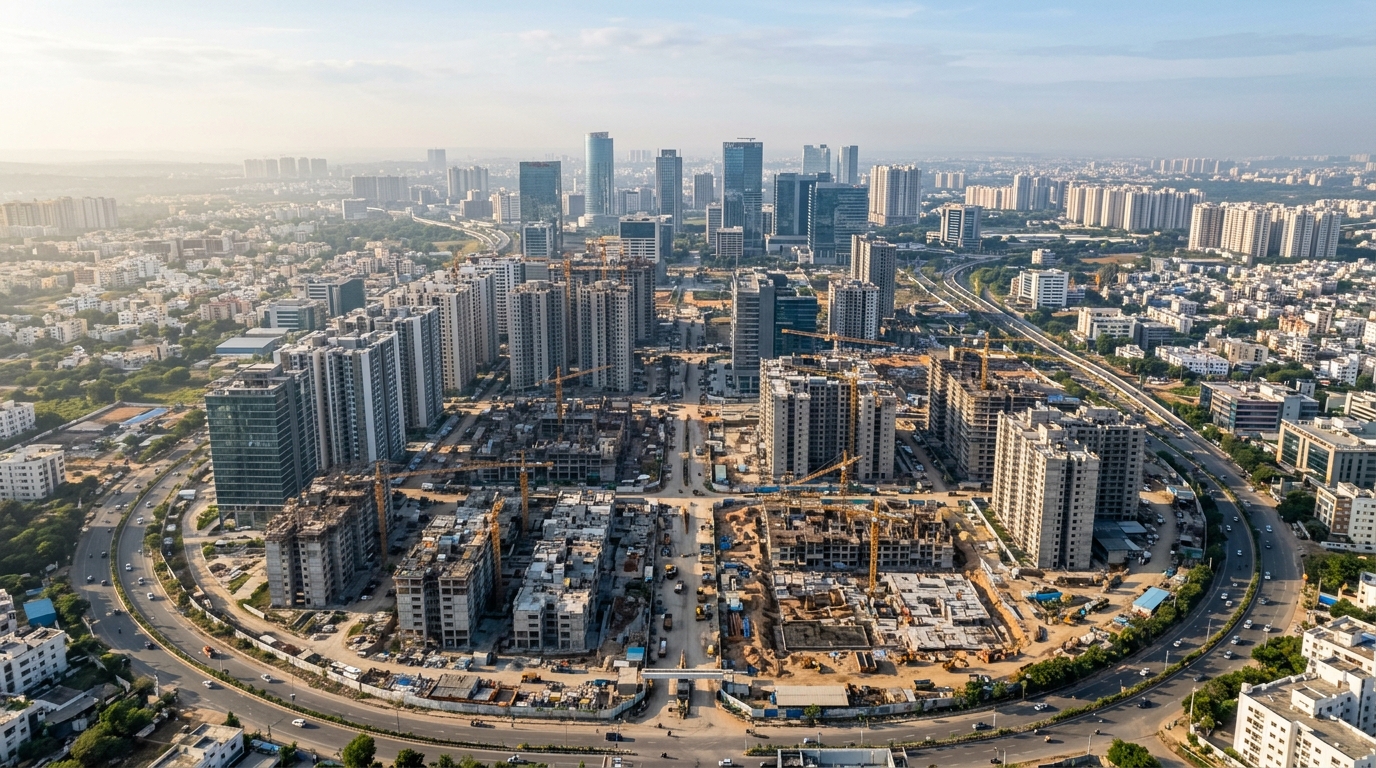
Market Implications: Demand Surge and Premiumization in Hyderabad
The announcement of Brigade Enterprises' substantial ₹2,700 crore housing project in Hyderabad, as reported by Construction Week India, is a strong indicator of sustained demand and developer optimism in the city's real estate market. This significant investment, particularly in a prime location, suggests a belief in the continued growth of aspirational housing. The project's scale implies a substantial addition to the housing supply, which, when met with robust demand, is likely to support or even drive price appreciation in the targeted micro-markets.
We anticipate this development will cater to a growing segment of homebuyers seeking integrated living experiences, encompassing residential, retail, and potentially commercial spaces. This trend aligns with global real estate shifts towards convenience and mixed-use developments, appealing to both end-users and investors looking for lifestyle enhancement and rental yield potential.
- Sustained demand for quality residential offerings.
- Potential for price appreciation in premium segments.
- Increased supply, balanced by strong demand indicators.
- Growth in integrated lifestyle and mixed-use developments.
Institutional Investor Perspective: A Magnet for Capital Inflow
From an institutional investor's standpoint, a project of this magnitude from a reputable developer like Brigade Enterprises is a positive signal. It suggests strong underlying market fundamentals and confidence in the long-term growth trajectory of Hyderabad. Such large-scale developments are often attractive to institutional capital due to their potential for economies of scale, diversified revenue streams (if mixed-use), and the ability to absorb significant investment. The ₹2,700 crore figure indicates a substantial capital commitment, likely involving a blend of developer equity and external financing, potentially including private equity or debt from financial institutions keen on participating in India's urban real estate boom.
The presence of a project of this scale can also serve as a catalyst for further investment in the surrounding area, as it validates the locational attractiveness and potential for future appreciation. This could lead to increased capital flow into Hyderabad's real estate sector, particularly into projects that offer similar integrated living concepts or are situated in proximity to such anchor developments.
- Validation of Hyderabad's real estate market potential.
- Attractiveness to large-scale institutional capital.
- Diversification of investment opportunities within the project.
- Potential to unlock further capital inflow into the micro-market.
Micro-Market Relevance: Gachibowli, Kokapet, and the Financial District Corridor
While the exact location within Hyderabad is not specified in the initial report, a project of this scale and investment value is highly likely to be situated within or in close proximity to Hyderabad's most prominent growth corridors. This typically includes areas like Gachibowli, Kokapet, and the broader Financial District. These regions are characterized by a high concentration of IT/ITeS companies, a burgeoning corporate presence, and a well-established infrastructure, attracting a demographic with high disposable incomes and a demand for premium housing.
The development will further enhance the residential appeal of these micro-markets, potentially drawing more residents and complementing the existing commercial and social infrastructure. The increased residential supply will be a crucial factor in meeting the housing needs of the rapidly expanding workforce in these economic hubs, thereby reinforcing their status as prime real estate destinations.
- Reinforcement of Gachibowli and Financial District as prime residential hubs.
- Meeting the housing demand driven by economic growth.
- Potential to drive infrastructure development in the surrounding areas.
- Synergy with existing commercial and retail ecosystems.
Policy and Regulatory Landscape
The successful launch and execution of a project of this magnitude are intrinsically linked to a conducive policy and regulatory environment. Hyderabad's real estate sector has historically benefited from relatively stable state government policies and efficient regulatory frameworks, such as the RERA (Real Estate (Regulation and Development) Act) implementation. Initiatives aimed at improving urban infrastructure, connectivity, and ease of doing business further bolster developer confidence and facilitate such large-scale investments. While no specific policy changes are mentioned in this news, the continued trust placed by developers in Hyderabad underscores the effectiveness of its existing policy framework in supporting real estate growth.
Sustained economic growth in Hyderabad, driven by its status as an IT and business hub, coupled with a pro-development stance from local authorities, creates a fertile ground for projects like Brigade's. Any future policy that further streamlines approvals, enhances urban planning, or incentivizes sustainable development would be a welcome addition for both developers and investors.
- Positive impact of stable and efficient regulatory frameworks.
- Benefit from urban development and infrastructure initiatives.
- Reinforces Hyderabad's position as an attractive investment destination.
- Importance of continued government support for real estate growth.
Source: Construction Week India