Amaravati's Shadow: Will Andhra's Capital Ripple Through Hyderabad's Real Estate Boom?
Published: April 2026
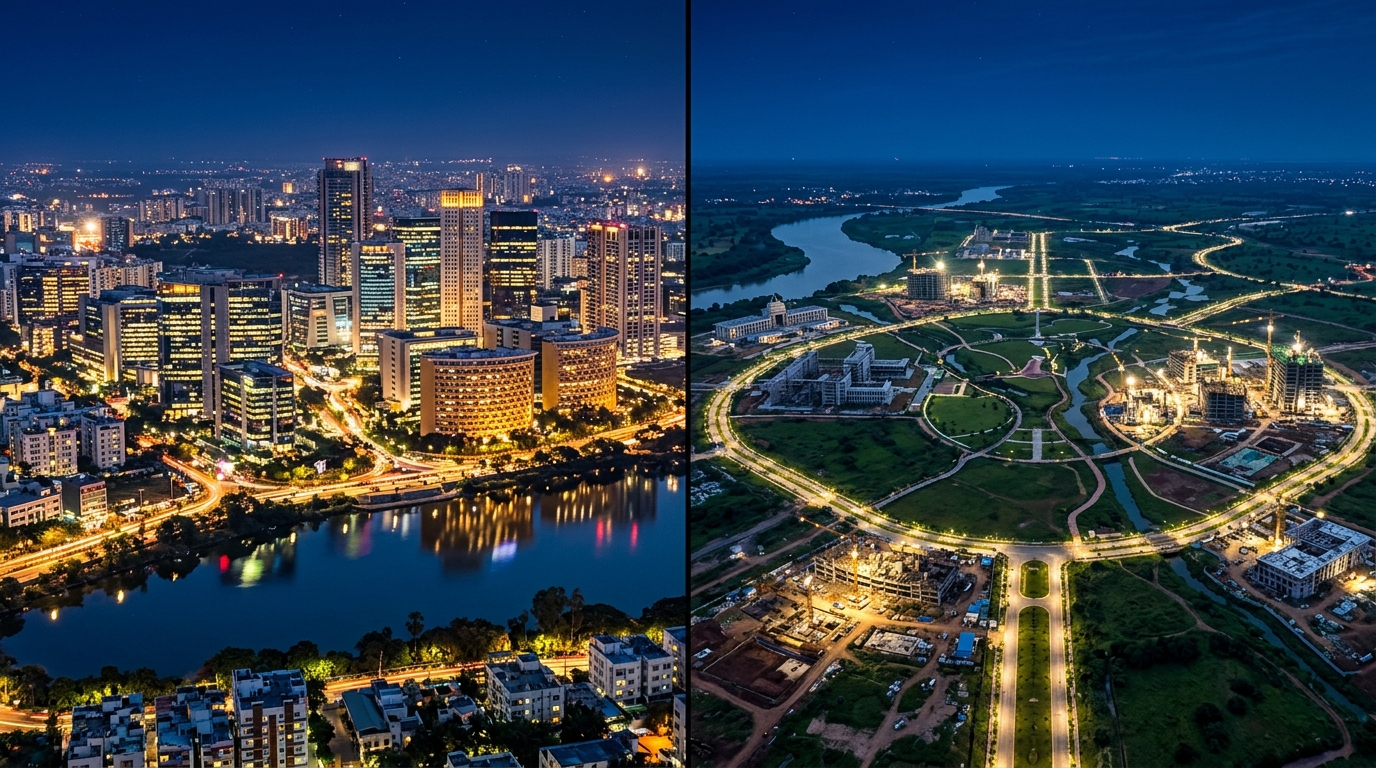
The Dawn of Amaravati: A New Contender Emerges
For years, Hyderabad has basked in the glory of its robust real estate market, a vibrant ecosystem fueled by IT growth, infrastructure development, and a steady influx of discerning buyers and investors. However, the resurgence of Amaravati as the envisioned capital of Andhra Pradesh brings a fresh dynamic to the South Indian property narrative. The potential for a significant urban center to emerge, attracting its own set of investments and talent, naturally sparks curiosity about its ripple effects on established markets like Hyderabad.
The question on many minds in the real estate fraternity is whether Amaravati's growing prominence will siphon off demand, investment capital, or even talent that might otherwise have flowed into Hyderabad. This isn't about a zero-sum game, but rather understanding how a significant new development can reshape regional real estate dynamics.
Ground-Level Buzz: What Buyers, Investors, and Developers Are Saying
On the ground, the sentiment is nuanced. While Hyderabad's core strengths remain undeniable, the prospect of Amaravati as a planned, modern capital is undoubtedly a talking point. For potential homebuyers in Hyderabad, the allure of established infrastructure, diverse job opportunities, and a familiar lifestyle continues to be a strong draw. However, those with a more speculative outlook or a broader geographical investment horizon might be weighing Amaravati's potential for early-stage growth against Hyderabad's more mature market.
Developers, ever the strategists, are observing this development closely. While some may see it as an opportunity to diversify their portfolio by exploring projects in the new capital region, others are doubling down on Hyderabad, banking on its proven track record and sustained demand. The key differentiator often lies in the type of property. Hyderabad's established markets like Gachibowli, Kokapet, and the Financial District continue to command premium prices for their existing amenities and ready-to-occupy spaces, catering to immediate needs. Amaravati, on the other hand, might present a different proposition, potentially attracting investors looking for future appreciation in a developing landscape.
Buyers: Balancing established appeal with potential future growth.
Investors: Evaluating risk and reward across mature vs. emerging markets.
Developers: Strategic diversification versus consolidating in proven markets.
The Future Outlook: Evolution, Not Exodus
It's unlikely that Amaravati will cause a mass exodus from Hyderabad's real estate market. Hyderabad has built a formidable reputation, particularly its western corridor, Gachibowli, the Financial District, and the burgeoning luxury enclave of Kokapet, which offers a unique blend of commercial and residential appeal. These areas are already well-entrenched and continue to attract significant interest due to their IT hubs, international schools, and robust social infrastructure. The demand for premium housing and commercial spaces in these prime Hyderabad locales is expected to remain strong.
Instead, the emergence of Amaravati might lead to a more regionalized real estate focus. Hyderabad will likely continue to thrive on its established strengths, attracting end-users and investors seeking immediate returns and established amenities. Amaravati, conversely, could carve out its niche, attracting early-stage investment and catering to a specific demographic looking to be part of a nascent urban development. The true impact will be seen in how both cities evolve, potentially complementing each other rather than directly competing for the same slice of the real estate pie.
Source: The Hans India