Hyderabad's Industrial Land Conversion Policy Unlocks New Investment Avenues
Published: May 2026
Policy Framework and Market Implications
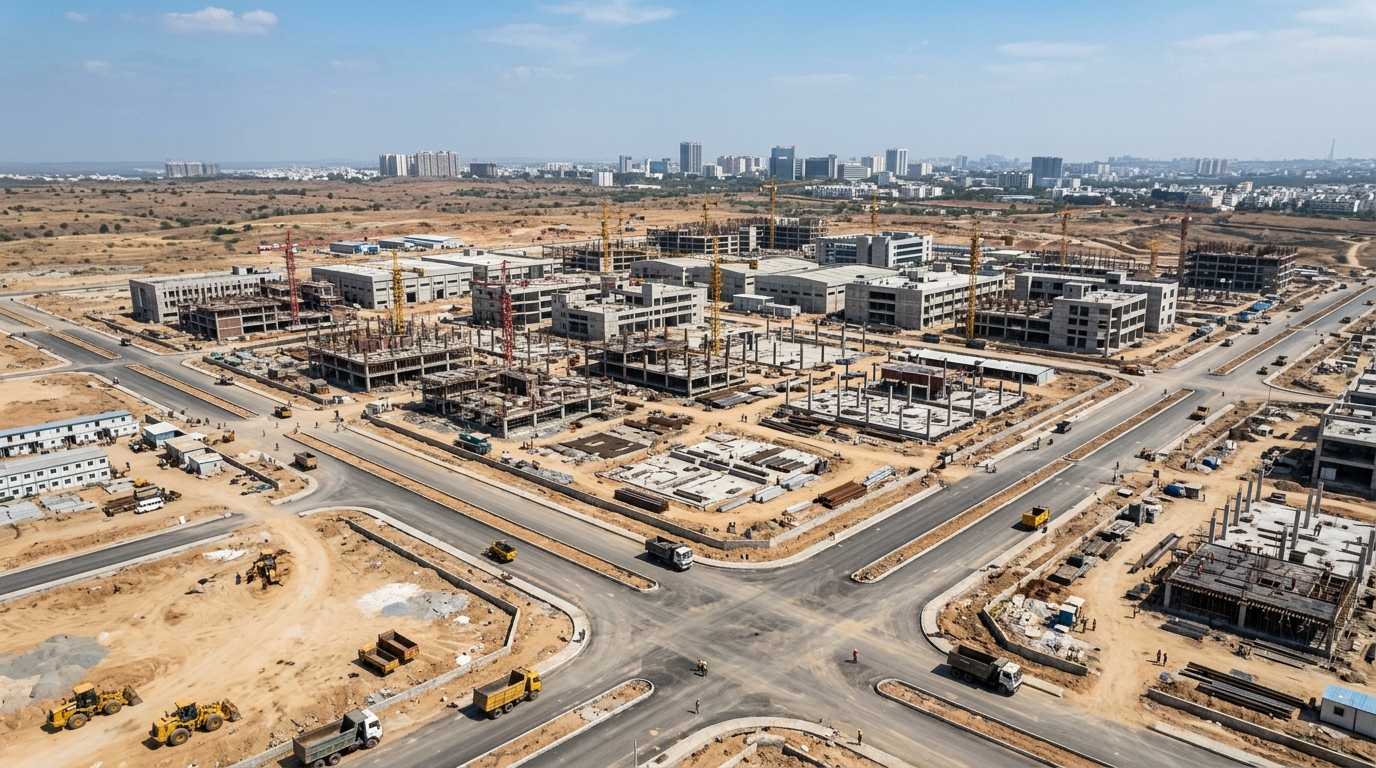
The Telangana government's issuance of operational guidelines for its industrial land conversion policy is a pivotal development for the Hyderabad real estate landscape. This move aims to simplify and expedite the process of converting land for industrial use, thereby directly addressing potential supply-side bottlenecks. By creating a more predictable and efficient regulatory environment, the policy is expected to stimulate the development of new industrial parks and facilities. This, in turn, will likely lead to an increase in the supply of industrial-grade land and built-up spaces, catering to the growing demand from manufacturing, logistics, and IT-enabled services sectors.
From a demand perspective, the policy is a strong positive signal. Hyderabad has consistently attracted significant investment due to its robust economic growth and skilled workforce. The streamlined land conversion process will make it easier for businesses to establish or expand their operations, potentially increasing demand for industrial land and warehousing. This increased demand, coupled with a more accessible supply, could lead to a more balanced market, potentially stabilizing or moderating rapid price appreciation in certain segments while creating opportunities for sustained growth in others. The policy's clarity is crucial for both domestic and international investors looking to allocate capital.
Institutional Investor Perspective and Capital Flows
Institutional investors, characterized by their long-term outlook and need for clear regulatory pathways, stand to benefit significantly from these operational guidelines. The predictability offered by the policy reduces execution risk, a key consideration for large-scale investments. We anticipate increased interest from global and domestic institutional players in Hyderabad's industrial and logistics real estate. This could manifest as direct acquisitions of land parcels for development, joint ventures with local developers, or investments in Grade A industrial parks. The policy's clarity will likely facilitate the flow of Foreign Direct Investment (FDI) into the sector, seeking stable, income-generating assets.
The influx of institutional capital is expected to drive higher standards in terms of infrastructure, sustainability, and tenant amenities within new industrial developments. This will further enhance Hyderabad's attractiveness as an investment destination. Funds focused on industrial and logistics real estate, infrastructure funds, and sovereign wealth funds are likely to be key players in this evolving market, seeking to capitalize on the projected growth in manufacturing and e-commerce-driven demand.
Micro-Market Relevance: Gachibowli, Kokapet, and Financial District
While the policy is broad, its impact will be felt most acutely in and around Hyderabad's established and emerging economic corridors. Areas like Gachibowli, the Financial District, and adjacent rapidly developing zones such as Kokapet, which have already witnessed significant absorption of commercial and residential space, are prime candidates for industrial land conversion. As these areas continue to attract IT and ITES companies, there's a growing need for ancillary industrial facilities, warehousing, and R&D centers. The policy could facilitate the development of such integrated facilities, making these micro-markets even more attractive for a diverse range of businesses and, consequently, for investors seeking to diversify their portfolios within these high-growth regions.
The conversion of suitable parcels in these strategically located areas can lead to the creation of modern industrial clusters, complementing the existing commercial hubs. This could lead to an arbitrage opportunity for investors who can acquire land at pre-conversion rates or participate in the development of these new industrial zones, leveraging the proximity to talent pools and existing infrastructure. The policy's success will be a key determinant of how quickly these areas can diversify their real estate offerings beyond traditional commercial and residential development.
- Increased potential for mixed-use developments integrating industrial and commercial spaces in key growth corridors.
- Opportunity for investors to acquire land in prime locations before full market repricing occurs.
- Potential for enhanced infrastructure development in and around these micro-markets due to increased industrial activity.
Source: Hyderabad Mail