Weakening Rupee Reshapes NRI Property Investment: Opportunities Emerge in Select Indian Markets
Published: August 2026
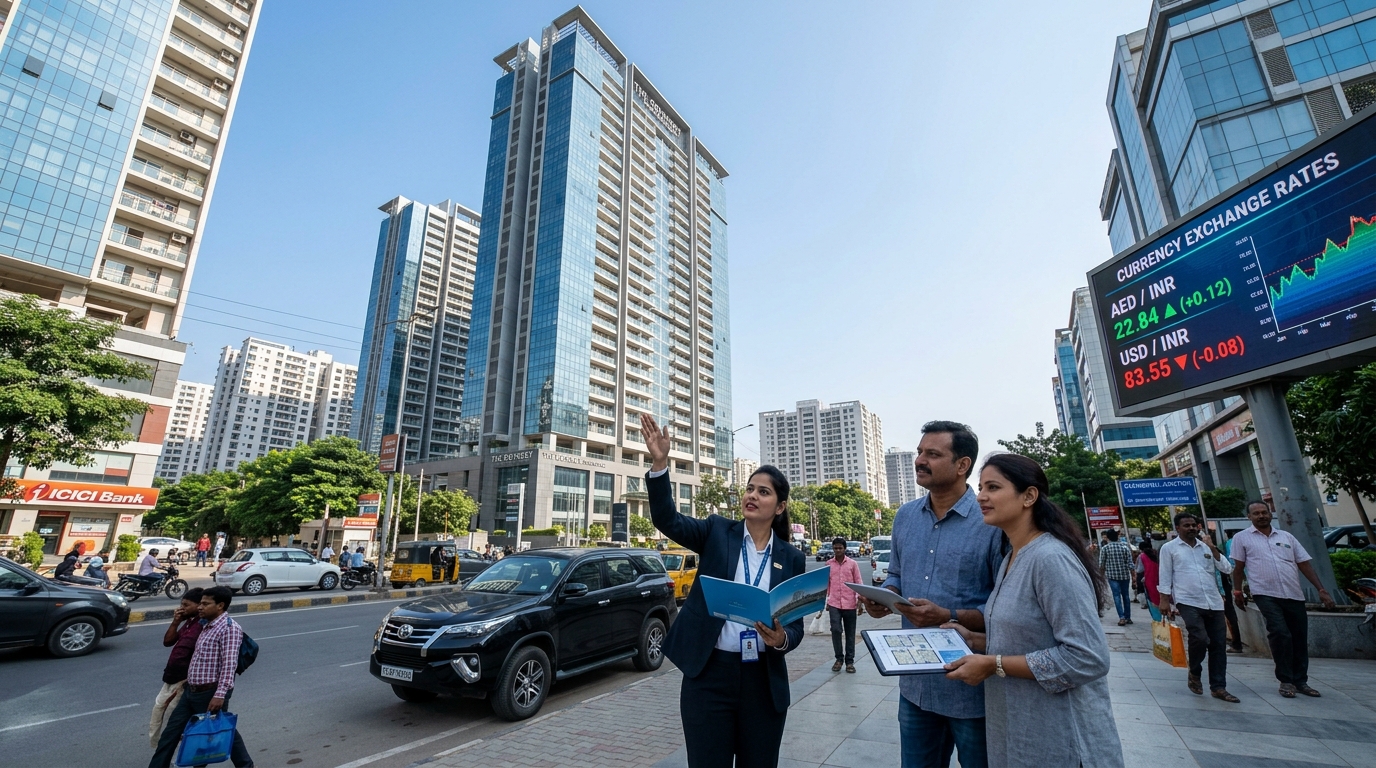
The Rupee's Double-Edged Sword for NRI Property Buyers
The recent weakening of the Indian rupee against major global currencies, including the UAE Dirham and the Saudi Riyal, is directly impacting the property budgets of Non-Resident Indians (NRIs) based in the Gulf. For those remitting funds to India for property purchases, the same amount of foreign currency now buys fewer rupees, effectively increasing the cost of acquisition in INR terms. This necessitates a recalibration of investment strategies and potentially alters the affordability calculus for many prospective buyers.
However, this currency dynamic also presents a unique arbitrage opportunity. For NRIs whose income is primarily in foreign currency, the rupee's depreciation can make Indian assets appear relatively more attractive in the long run, assuming currency stabilization or appreciation expectations. This could lead to increased demand from those seeking to lock in current rupee valuations before a potential reversal.
Emerging Hotspots: Hyderabad Leads the Charge
The news highlights Hyderabad as a key beneficiary of this evolving NRI investment landscape. Specific micro-markets within the city, such as Gachibowli, Kokapet, and the Financial District, are showing resilience and continued appeal to NRI investors. This sustained demand is driven by a confluence of factors including robust job creation in the IT and BFSI sectors, superior infrastructure development, and a growing ecosystem of premium residential and commercial projects. These areas are witnessing sustained absorption rates, indicating a healthy demand-supply balance.
From an institutional investor perspective, Hyderabad's continued prominence signifies a strategic focus on tier-1 cities with strong economic fundamentals and a high concentration of skilled professionals. The city's proactive government policies supporting infrastructure and ease of doing business further enhance its attractiveness. While individual NRI buyers might face budget constraints due to currency fluctuations, the underlying economic strength of these micro-markets is likely to attract larger capital flows, either through direct investment or by institutional funds that cater to NRI wealth management.
- Gachibowli: Thriving IT hub with consistent rental yields and capital appreciation potential.
- Kokapet: Emerging as a premium residential zone with a focus on luxury housing and green spaces.
- Financial District: A magnet for corporate offices, driving demand for both residential and commercial spaces.
Market Implications: Demand, Supply, and Pricing Dynamics
The depreciating rupee is likely to moderate the pace of demand from some NRI segments whose budgets are significantly impacted. However, for NRIs with more substantial foreign currency reserves or a long-term investment horizon, the current scenario might spur increased interest in locking in assets at perceived lower INR costs. This bifurcated demand could lead to a stabilization or moderate correction in pricing for certain property types, while premium segments in sought-after micro-markets are expected to maintain their upward trajectory.
Supply-side dynamics in these specific Hyderabad micro-markets are characterized by a focus on quality and amenities, aligning with the preferences of discerning NRI buyers. Developers are likely to emphasize projects that offer a blend of modern living, connectivity, and potential for capital appreciation, catering to the consistent demand. Institutional investors will be closely monitoring rental yields and occupancy rates in these office and residential corridors to gauge the health of the underlying economic activity, which is the primary driver of real estate performance.
Institutional Investor Outlook and Capital Flows
For institutional investors, the weakening rupee presents an opportunity to acquire Indian real estate assets at potentially more favorable valuations, especially when considering repatriation of future gains. The sustained economic growth and the robust performance of specific micro-markets like Hyderabad are key indicators that attract long-term capital. Funds are likely to continue flowing into income-generating commercial assets and well-located residential projects that offer both capital appreciation and rental stability.
The focus will remain on micro-markets with strong fundamentals, such as those in Hyderabad, which are supported by high job creation, infrastructure development, and a conducive business environment. While global economic headwinds and currency fluctuations are factors to consider, the underlying demand drivers for Indian real estate, particularly from the burgeoning IT and knowledge-based industries, remain robust and are expected to sustain investor interest and capital inflows.
Policy and Regulatory Environment
The Indian government's policies promoting foreign investment in real estate, including the Non-Resident Indian (NRI) Investment Scheme and the ease of repatriating funds, continue to provide a favorable framework. While no direct policy changes are mentioned in relation to the rupee's depreciation affecting NRI property purchases, the existing regulatory landscape supports NRI investment. Real estate investment trusts (REITs) and other financial instruments also offer avenues for NRIs to gain exposure to the Indian real estate market without direct property ownership, potentially mitigating some of the currency-related challenges.
The consistent focus on improving ease of doing business, infrastructure development, and the Goods and Services Tax (GST) structure are indirect policy influences that make India an attractive investment destination. These factors contribute to the overall stability and predictability of the real estate market, reassuring both individual and institutional investors.
Source: Gulf News