The Next Bengaluru? Hyderabad, Pune, and Other Emerging Indian Metros Poised for Real Estate Growth
Published: July 2026
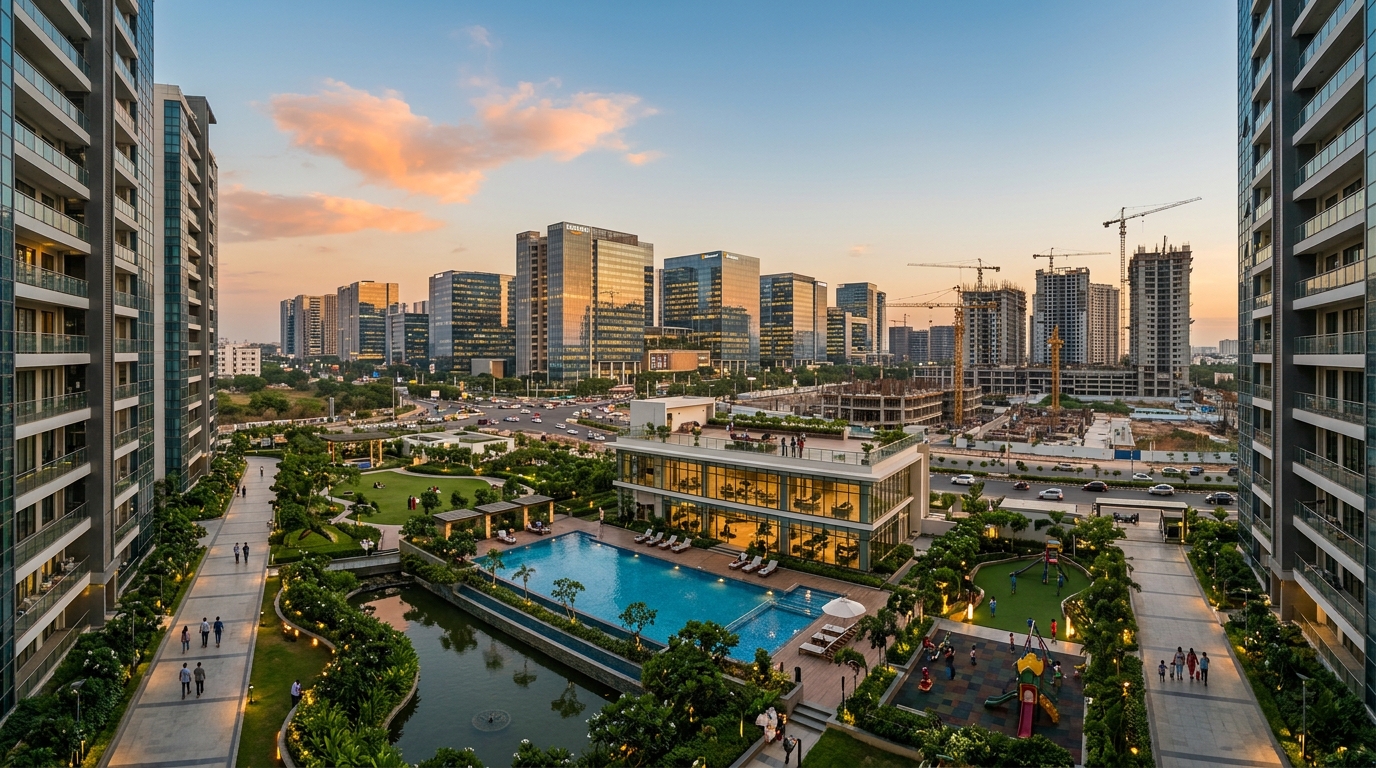
Identifying the New Real Estate Powerhouses
The Indian real estate landscape is constantly evolving, and the search for the 'next Bengaluru' is a recurring theme among investors and developers. Bengaluru's transformation from a nascent IT hub to a booming real estate market has been remarkable, driven by job creation, infrastructure development, and robust demand. ANAROCK's latest report identifies six cities that exhibit similar growth trajectories, signaling significant investment opportunities.
The cities identified are not random; they share key characteristics that have fueled Bengaluru's ascent. These include a burgeoning IT/ITeS sector, a skilled talent pool, improving infrastructure, and a growing aspirational middle class. The report's findings suggest a decentralization of growth, with emerging metros poised to absorb demand and offer competitive investment returns.
Hyderabad
Pune
Four other undisclosed cities (based on the source title, though the specific cities are not detailed in the provided snippet)
Potential for significant capital appreciation
Increased rental yields
Market Implications: Demand, Supply, and Pricing Dynamics
The emergence of these new growth corridors will inevitably lead to increased demand for both residential and commercial real estate. As IT companies and associated businesses expand their operations, they will drive demand for office spaces, leading to a ripple effect on residential property requirements. This surge in demand, if not matched by a commensurate increase in supply, will likely lead to upward pressure on both rental values and capital appreciation in these key micro-markets.
Developers will respond to this heightened demand by increasing supply, particularly in strategically located areas. We can anticipate a surge in new project launches, especially in segments catering to the mid-to-premium residential market and Grade A commercial office spaces. However, the pace of supply augmentation will be crucial in determining the sustainability of price growth. Over-supply in specific micro-markets could lead to price stagnation or correction, while controlled development aligned with demand will foster healthy appreciation.
Increased demand for residential and commercial properties
Potential for accelerated rental yield growth in prime office and residential areas
Rise in new project launches and a subsequent increase in housing inventory
Focus on integrated townships and mixed-use developments to cater to evolving urban needs
The Institutional Investor Perspective: Capital Flows and Strategic Allocation
For institutional investors, this list represents a recalibration of their India real estate strategy. The focus will likely shift from solely established markets to these emerging hubs, seeking higher alpha returns. We anticipate significant capital inflows from private equity funds, Real Estate Investment Trusts (REITs), and sovereign wealth funds looking to diversify their portfolios and tap into high-growth pockets.
The strategic allocation will be towards acquiring land parcels in well-connected peripheral areas of these cities, investing in Grade A commercial office buildings, and potentially partnering with developers on large-scale residential projects. The presence of a strong local government focus on infrastructure and ease of doing business will be a key determinant for institutional investor confidence. These investors will meticulously analyze the long-term sustainability of job growth and the availability of quality infrastructure before committing capital.
Increased interest from global and domestic institutional investors
Focus on Grade A commercial assets and strategically located land banks
Potential for joint ventures and acquisitions to gain market entry
Emphasis on ESG (Environmental, Social, and Governance) factors in investment decisions
Micro-Market Dynamics: A Closer Look at Hyderabad
Hyderabad, specifically its prominent IT corridors like Gachibowli, the Financial District, and Kokapet, has already demonstrated remarkable growth. These areas have become magnets for IT/ITeS companies due to established infrastructure, a skilled workforce, and supportive government policies.
The continued expansion of these micro-markets is expected to drive demand for premium residential offerings and high-quality commercial spaces. Kokapet, in particular, has seen significant development in recent years, attracting major IT players and developers. The availability of large land parcels in these zones offers further scope for large-scale, integrated developments, making them prime targets for institutional investment. The pricing in these areas is expected to see sustained growth, driven by the consistent influx of talent and corporate investment.
Gachibowli: Established IT hub with robust commercial and residential infrastructure.
Financial District: Growing hub attracting corporate offices and high-net-worth individuals.
Kokapet: Emerging prime location with large land parcels ideal for integrated development.
Continued demand for premium residential and Grade A office spaces.
Policy and Regulatory Environment: A Crucial Enabler
The success of these emerging real estate markets will be significantly influenced by proactive government policies and a conducive regulatory environment. Governments in these identified cities will need to focus on continuous infrastructure development, including roads, public transport, and utility services, to support the influx of businesses and residents. Streamlining approval processes and offering incentives for IT/ITeS sector growth will be critical.
Initiatives like the establishment of special economic zones (SEZs), plug-and-play office spaces, and investment in skill development programs will further enhance these cities' attractiveness. A stable and transparent regulatory framework is paramount for attracting and retaining institutional investor confidence, ensuring long-term capital commitment and sustainable real estate growth.
Focus on infrastructure development (transport, utilities, connectivity)
Streamlining of development approvals and ease of doing business
Incentives for IT/ITeS sector expansion
Supportive land use policies and urban planning
Source: livemint.com