Telangana Real Estate Faces September Slump: What Investors Need to Know
Published: October 2026
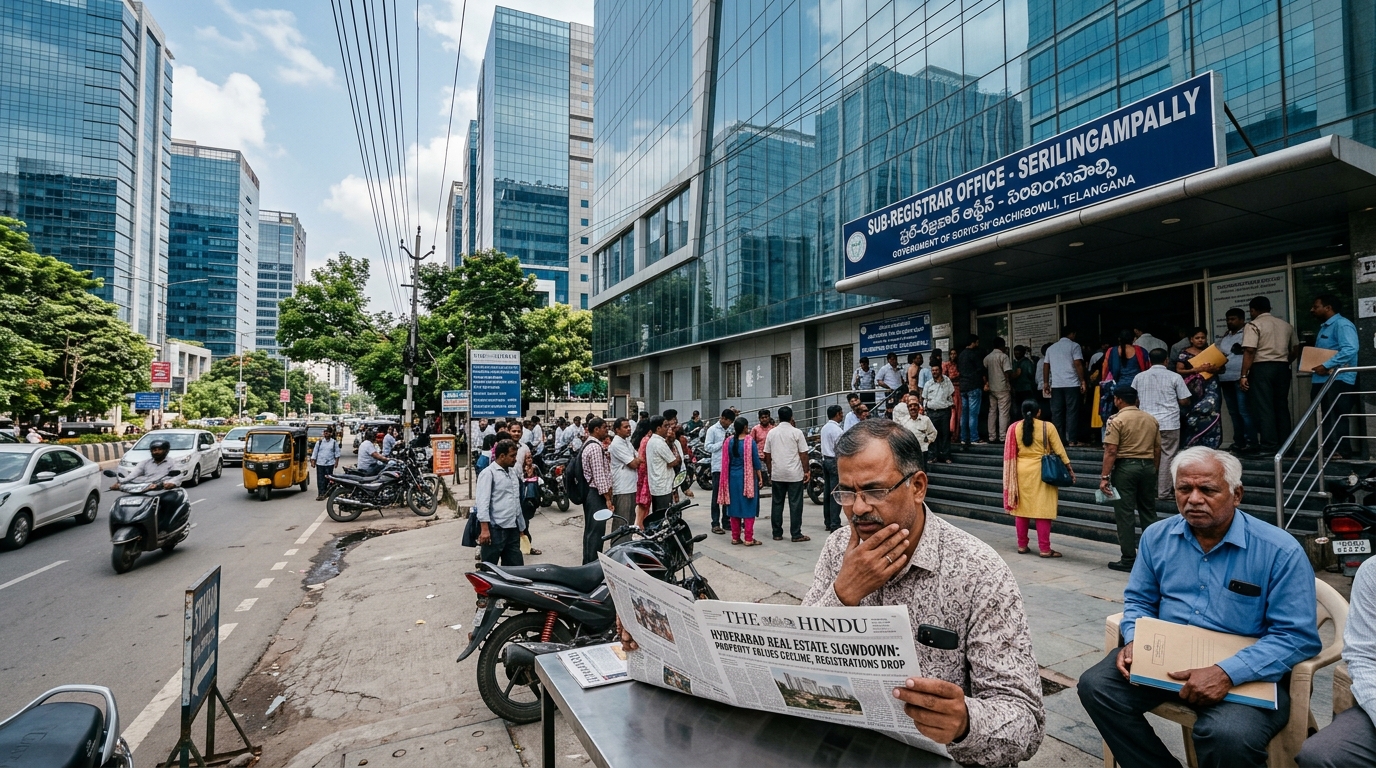
Market Dynamics Under Pressure: Demand, Supply, and Pricing
September witnessed a notable 15% decrease in home registrations across Telangana, a stark indicator of cooling market sentiment. This decline is directly linked to a softening of property values, suggesting that the sustained price appreciation seen in previous periods may be facing headwinds. The reduced registration numbers imply a contraction in demand, potentially driven by a combination of economic factors and an adjustment of buyer expectations regarding property valuations. While the news doesn't explicitly detail supply figures, a dip in registrations often precedes a slowdown in new project launches as developers react to subdued buyer interest and pricing pressures.
The implication of falling property values is significant for both buyers and sellers. For buyers, it presents a potential opportunity to enter the market at more attractive price points, especially in areas that may have experienced rapid price escalation. However, the cautious approach indicated by the registration dip suggests that buyers are exercising greater discretion, possibly awaiting further price corrections or more stable market signals. For sellers and developers, this trend necessitates a recalibration of pricing strategies and marketing efforts to align with current market realities and re-stimulate demand.
Reduced buyer confidence due to softening property values.
Potential for a more balanced buyer-seller negotiation landscape.
Need for developers to reassess pricing and inventory management strategies.
Institutional Investor Perspective: Navigating the Downturn
For institutional investors, the September registration data in Telangana serves as a crucial signal. A 15% fall in transactions, coupled with declining property values, suggests a period of market correction rather than a fundamental collapse. This might present a contrarian opportunity for well-capitalized institutional players. Focus areas for these investors would be on acquiring distressed assets at attractive yields, identifying micro-markets with resilient underlying demand drivers, and potentially initiating pre-leasing strategies for commercial spaces anticipating future recovery.
The direction of capital flow is likely to become more discerning. Investors will be prioritizing markets with strong economic fundamentals, robust employment growth (particularly in sectors like IT and BFSI), and established infrastructure. While specific micro-markets like Hyderabad's Financial District, Gachibowli, and Kokapet are known for their resilience, the overall market slowdown might lead to increased selectivity even within these prime locations. A thorough due diligence process, focusing on rental yields, vacancy rates, and future development pipeline, will be paramount in navigating this period.
Opportunity for distressed asset acquisition at favourable valuations.
Increased scrutiny on micro-market fundamentals and long-term growth potential.
Focus on yield-driven investments and strategic pre-leasing for commercial assets.
Policy and Regulatory Environment: A Waiting Game?
The news does not directly mention any specific policy or regulatory changes impacting the Telangana real estate market in September. However, sustained dips in property registrations and values often prompt authorities to review existing policies or consider new interventions. Potential areas for policy focus could include measures to stimulate demand, such as stamp duty concessions or incentives for first-time homebuyers, or adjustments to regulatory frameworks to support developer liquidity. Alternatively, if the slowdown is perceived as a natural market correction, policymakers might adopt a wait-and-see approach, allowing market forces to rebalance.
From a regulatory standpoint, transparency in property transactions and efficient approval processes remain critical for fostering investor confidence. Any policy adjustments would need to be carefully calibrated to avoid artificial inflation of prices and ensure sustainable market growth. The long-term impact of any governmental response will be closely watched by all stakeholders in the Telangana real estate ecosystem.
Potential for demand-stimulative policy measures.
Importance of maintaining regulatory transparency and efficiency.
Policymakers' role in ensuring sustainable market correction and growth.
Micro-Market Focus: Hyderabad and its Tech Corridors
While the 15% decline is a statewide figure, it's crucial to analyze its impact on key micro-markets within Telangana, particularly Hyderabad. Areas like the Financial District, Gachibowli, and Kokapet, known for their concentration of IT and business parks, have historically exhibited strong demand driven by a robust job market and aspirational homeownership. The current slowdown, however, suggests that even these resilient markets are not immune to broader economic influences and changing buyer sentiment.
The dip in registrations in these prime locations could indicate a temporary pause in buying activity as potential buyers assess the market or await further price adjustments. For institutional investors with a long-term view, these micro-markets still hold significant promise due to their established ecosystems and continued absorption capacity. However, the current trend warrants a more granular analysis of rental yields, vacancy rates, and the pipeline of commercial and residential projects within each specific area to identify pockets of opportunity amidst the broader market correction.
Resilient micro-markets like Financial District, Gachibowli, and Kokapet may see temporary buying pauses.
Continued importance of job growth and economic activity in these corridors.
Need for granular analysis of micro-market specific dynamics, including rental yields and vacancy.
Source: The New Indian Express