Smartworks' Mega Hyderabad Lease: A Green Signal for Office Space Developers
Published: June 2026
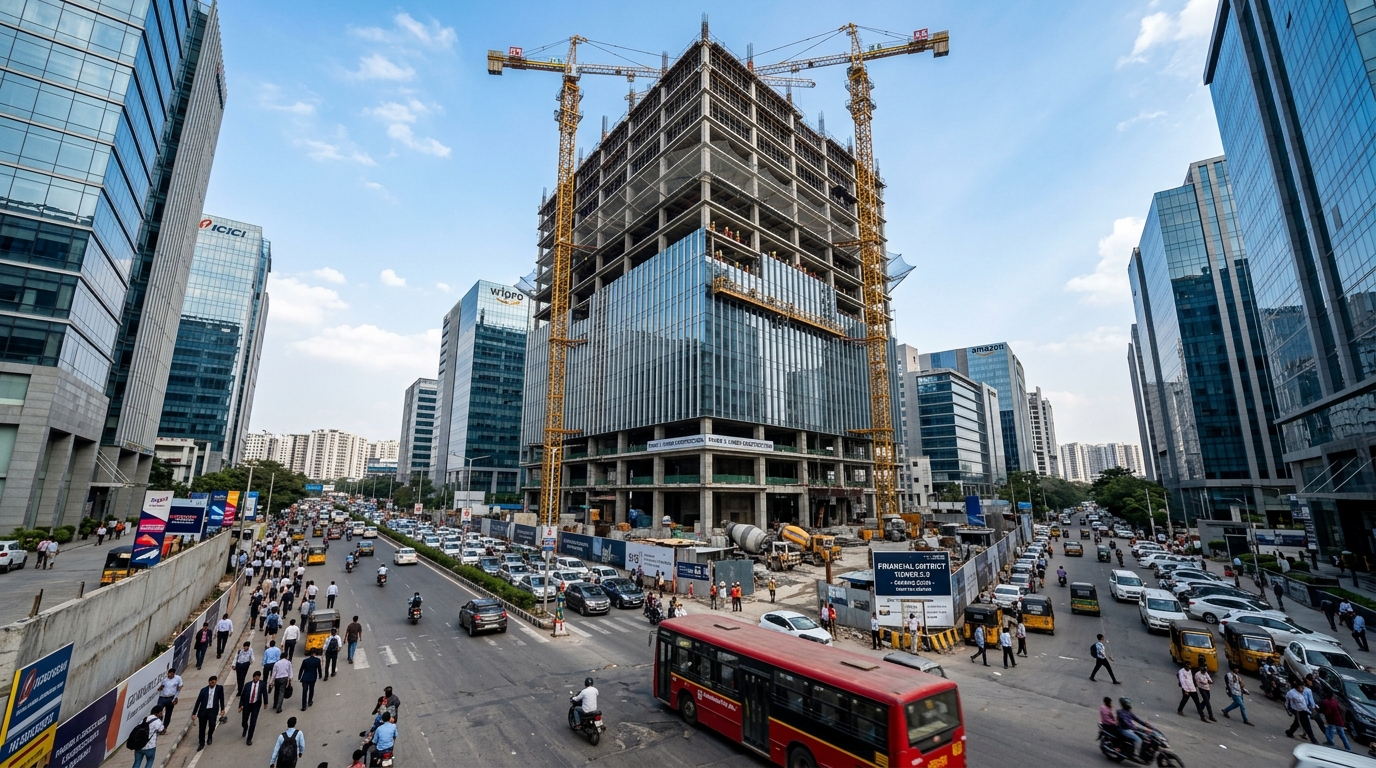
Decoding the Smartworks Deal: Opportunities for Builders and Landowners
The sheer scale of Smartworks' renewed lease underscores a robust and persistent demand for Grade A and flexible office spaces in Hyderabad. For builders, this signals a continued appetite for quality construction, focusing on amenities, sustainability, and employee well-being. Landowners in strategic Hyderabad locations, particularly those with proximity to established IT corridors or upcoming business hubs, can anticipate increased interest and potentially higher land values. The ₹121 crore rental figure suggests a premium is being placed on well-managed, modern office environments, rewarding developers who invest in delivering superior product.
This lease renewal is more than just a transaction; it's a validation of Hyderabad's growth trajectory as a key business destination. It reinforces the need for developers to not only build but also to curate spaces that cater to the evolving needs of co-working operators and their end-users. Developers should consider partnerships with established co-working providers or design flexible layouts that can be easily adapted to different tenant requirements, thereby maximizing rental yields and occupancy rates.
- Focus on delivering Grade A office spaces with a strong emphasis on amenities and sustainability.
- Explore flexible floor plate designs to accommodate co-working operators and diverse tenant needs.
- Landowners should leverage this demand by positioning their plots in prime commercial micro-markets.
- Consider offering integrated facilities management services to enhance property value and tenant satisfaction.
Construction Trends, Approvals, and the Supply Pipeline
The Smartworks renewal highlights the importance of a robust supply pipeline that matches demand. Developers need to stay abreast of construction trends, particularly those favoring sustainability (LEED certification, energy efficiency) and smart building technologies. The approval process in Hyderabad, while generally streamlined for large commercial projects, remains a critical factor. Projects with clear titles, compliant zoning, and efficient approval management will have a competitive edge. Builders should proactively engage with local authorities to understand and navigate the regulatory landscape, minimizing potential delays.
Given the current demand, it's crucial for developers to accurately assess the existing and planned supply in key Hyderabad micro-markets. A potential supply-demand mismatch could emerge if new projects don't align with the evolving needs of occupiers. This deal suggests that demand for quality office space isn't saturating, but developers must ensure their offerings are differentiated and meet the high standards set by existing, successful projects. Pre-leasing strategies and understanding the tenant pipeline are vital to de-risk new developments.
- Prioritize sustainable construction practices and incorporate smart building technologies.
- Proactively manage the approval process for commercial projects to ensure timely delivery.
- Conduct thorough market analysis to avoid oversupply and identify niche opportunities.
- Engage in pre-leasing discussions with potential tenants and co-working operators to secure commitments.
Location Spotlight: Hyderabad's Commercial Epicenter
While the specific location of Smartworks' renewed lease isn't detailed in the news, Hyderabad's established IT hubs like Gachibowli and the Financial District, along with emerging zones such as Kokapet, are prime beneficiaries of such positive sentiment. These areas are characterized by a high concentration of IT and IT-enabled services (ITeS) companies, a robust talent pool, and well-developed social infrastructure. Developers with land parcels or existing assets in these micro-markets are well-positioned to capitalize on this ongoing demand.
The consistent growth in these corridors suggests a sustained demand for flexible and serviced office spaces. Developers should assess the absorption rates and vacancy levels in these specific areas. A well-executed project in Gachibowli, the Financial District, or Kokapet, offering modern amenities and excellent connectivity, is likely to attract significant interest from co-working operators like Smartworks, driving healthy rental returns and capital appreciation.
- Focus on developing in or near established IT corridors like Gachibowli and the Financial District.
- Evaluate opportunities in emerging commercial hubs like Kokapet, considering their future growth potential.
- Ensure projects offer superior connectivity, amenities, and access to talent pools.
- Understand the specific needs of IT and ITeS companies when designing office spaces.
Navigating Risks and Execution Challenges
Despite the positive news, developers must be cognizant of potential risks. Economic downturns, shifts in remote work policies, and evolving tenant preferences can impact long-term demand. Execution challenges include rising construction costs, labor availability, and navigating complex regulatory environments. For large-scale commercial projects, securing financing and managing project timelines are critical. Furthermore, maintaining and managing these spaces post-construction to meet the high standards of operators like Smartworks is an ongoing commitment.
The ₹121 crore lease represents a significant commitment, implying a degree of stability in the market. However, developers should conduct thorough due diligence on potential tenants, including their financial stability and track record. Diversifying tenant profiles within a single project can also mitigate risks. Continuous market monitoring and adapting development strategies to align with future trends, such as the increasing demand for ESG-compliant buildings, will be crucial for long-term success in Hyderabad's competitive commercial real estate landscape.
- Conduct comprehensive risk assessments, including economic and policy-related factors.
- Develop robust strategies for cost management and labor sourcing in construction.
- Ensure strong financial backing and efficient project management to meet deadlines.
- Prioritize tenant relationship management and adaptive space management post-construction.
- Stay updated on ESG (Environmental, Social, and Governance) compliance and integrate it into development plans.
Source: Hindustan Times