Navigating the Rupee's Descent: Hyderabad's Real Estate Landscape Amidst Currency Volatility
Published: April 2026
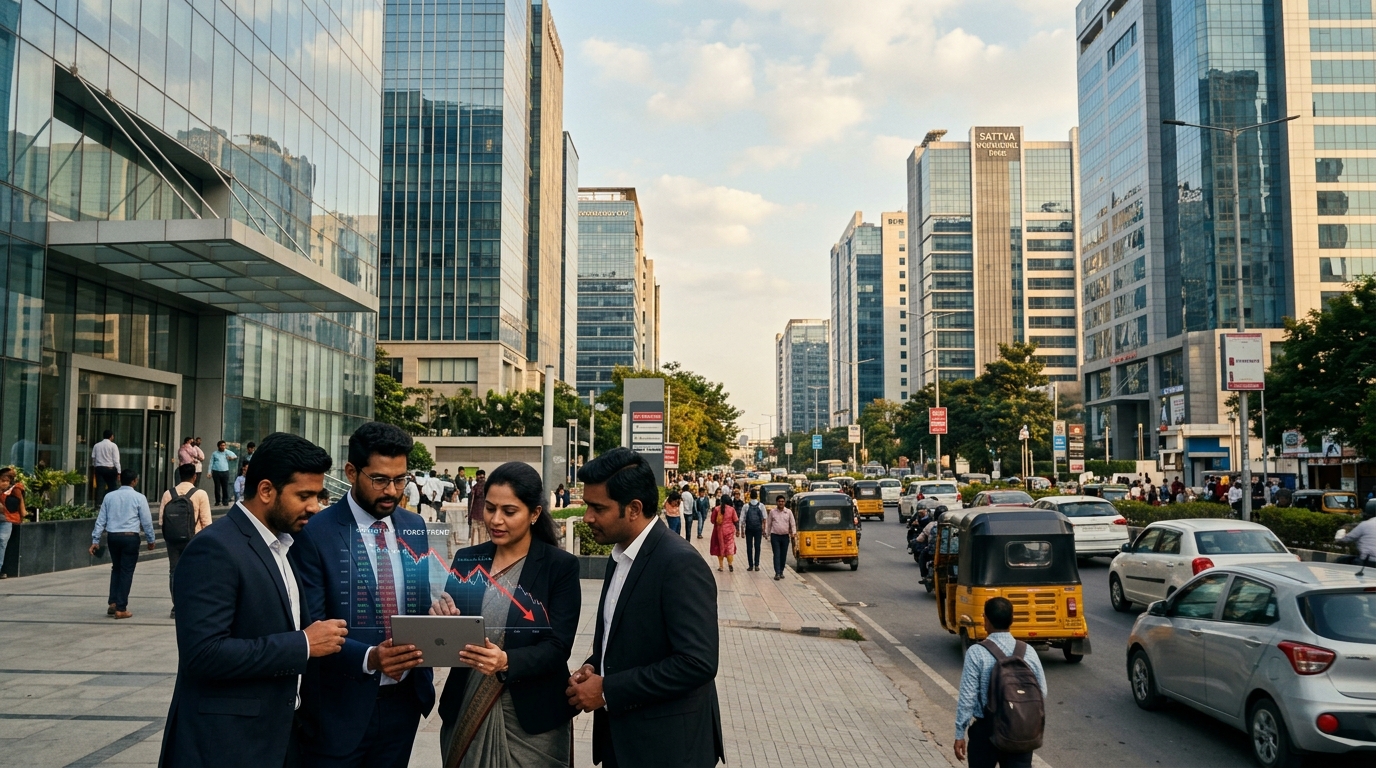
Market Implications: Demand, Supply, and Pricing Adjustments
The falling Rupee directly influences the cost of imported construction materials and equipment, potentially leading to an increase in development costs for real estate projects in Hyderabad. This upward pressure on input prices could translate into higher property prices, especially for new launches and premium developments. Conversely, for foreign buyers, a weaker Rupee makes Indian real estate more attractive, potentially boosting demand from this segment. However, the sustainability of this demand is contingent on broader economic stability and the perceived long-term appreciation of Indian assets. The existing supply pipeline in Hyderabad, particularly in areas like Gachibowli and Kokapet which have seen significant commercial and residential development, might experience a temporary slowdown in absorption if domestic demand falters due to inflationary pressures linked to the currency.
Data from recent quarters indicates robust pre-sales and ongoing construction in Hyderabad's prime corridors. A significant currency depreciation could create a bifurcated market: developers may delay new project launches to reassess costs and pricing, while existing inventory, especially if priced in USD or with a significant import component, might see price adjustments. The pace of absorption in established residential and commercial hubs like the Financial District will be a key indicator of market resilience. Furthermore, the rental yields for commercial properties could be impacted if multinational corporations, a significant tenant base in Hyderabad, begin to see their operational costs increase due to a weaker Rupee.
- Increased development costs due to higher import prices for construction materials.
- Potentially higher property prices for new developments.
- Enhanced attractiveness of Indian real estate for foreign investors.
- Risk of domestic demand slowdown due to inflationary pressures.
- Bifurcated market with potential price adjustments for existing inventory.
Institutional Investor Perspective and Capital Flows
Institutional investors, particularly foreign ones, often view currency fluctuations as a critical factor in their investment decisions. A depreciating Rupee can signal a 'buy' opportunity for those looking to acquire Indian assets at a lower cost in their home currency, potentially leading to an inflow of foreign direct investment (FDI) into the real estate sector. However, this also comes with increased currency risk, which institutions meticulously factor into their risk-reward analysis. They will be closely monitoring macroeconomic indicators, interest rate policies, and the overall stability of the Indian economy to gauge the long-term viability of such investments. Domestic institutional investors, on the other hand, might adopt a more cautious stance, assessing the impact of inflation and potential interest rate hikes on their existing portfolios and future investment strategies.
Capital allocation towards Hyderabad's real estate, especially in its tech and financial hubs, has been strong due to its sustained growth trajectory. The current currency scenario might lead to a more selective approach from institutional players, focusing on prime assets with strong fundamentals and pre-leased commercial spaces that offer predictable revenue streams. The direction of capital will likely lean towards projects that have a significant export component or are less reliant on imported materials. Discussions around hedging strategies will also become more prominent in investor dialogues to mitigate currency-related risks.
- Increased attractiveness for foreign direct investment (FDI) in real estate.
- Heightened currency risk assessment by institutional investors.
- Selective approach towards prime assets and pre-leased commercial spaces.
- Increased focus on hedging strategies to mitigate currency risks.
- Cautious stance from domestic institutional investors monitoring inflation and interest rates.
Policy and Regulatory Environment
While the current news doesn't explicitly mention policy changes directly tied to the Rupee's fall impacting real estate, indirect policy responses are likely. The Reserve Bank of India (RBI) might implement measures to stabilize the Rupee, which could include interest rate adjustments. Any increase in interest rates would directly impact the cost of borrowing for developers and home buyers, potentially dampening demand. Conversely, policies aimed at attracting foreign capital could be further strengthened. Developers and investors will be keenly watching for any regulatory pronouncements or incentives designed to counterbalance the economic headwinds created by currency depreciation. The government's stance on foreign investment in real estate and any potential policy shifts to encourage inflows will be crucial.
The Real Estate Investment Trust (REIT) sector, which has seen growing traction, might also be influenced. A weaker Rupee could make Indian REITs more appealing to international investors seeking diversified real estate exposure. However, the underlying asset performance and rental income stability will remain paramount. Any regulatory changes that enhance transparency and ease of investment will be particularly beneficial in attracting and retaining institutional capital during periods of currency volatility.
- Potential RBI measures like interest rate hikes to stabilize the Rupee.
- Impact of interest rate changes on borrowing costs for developers and buyers.
- Possible strengthening of policies to attract foreign capital.
- Enhanced appeal of Indian REITs for international investors.
- Importance of regulatory transparency and ease of investment.
Micro-Market Focus: Hyderabad's Growth Corridors
Hyderabad's key micro-markets, particularly the IT and financial hubs like Gachibowli, Kokapet, and the Financial District, are likely to be at the forefront of these market dynamics. These areas have been magnets for both domestic and international investment due to a thriving commercial ecosystem and robust residential demand. The influx of multinational corporations in these zones has traditionally supported high rental values and capital appreciation.
For these micro-markets, the Rupee's fall could create a double-edged sword. On one hand, the cost of setting up new offices for foreign companies might become more expensive in Rupee terms, potentially slowing down new leasing activities. On the other hand, existing foreign tenants might find their operational costs slightly more manageable if a portion of their revenue is in foreign currency. Developers focusing on premium residential projects in these sought-after locations will need to carefully calibrate their pricing strategies to remain competitive. The demand for luxury and mid-segment housing in areas like Kokapet, which has seen significant high-end development, will be a key barometer of consumer confidence and purchasing power amidst economic fluctuations. Investors will be closely observing rental growth and vacancy rates in these prime commercial and residential pockets to gauge the immediate impact.
- Gachibowli, Kokapet, and Financial District are key areas to monitor.
- Potential slowdown in new office leasing by foreign companies due to increased Rupee costs.
- Mixed impact on existing foreign tenants with revenue in foreign currency.
- Need for developers to recalibrate pricing strategies for premium residential projects.
- Rental growth and vacancy rates in these prime areas will be critical indicators.
Source: Great Andhra