Navigating the Hyderabad Real Estate Slowdown: Insights for Savvy Investors
Published: April 2026
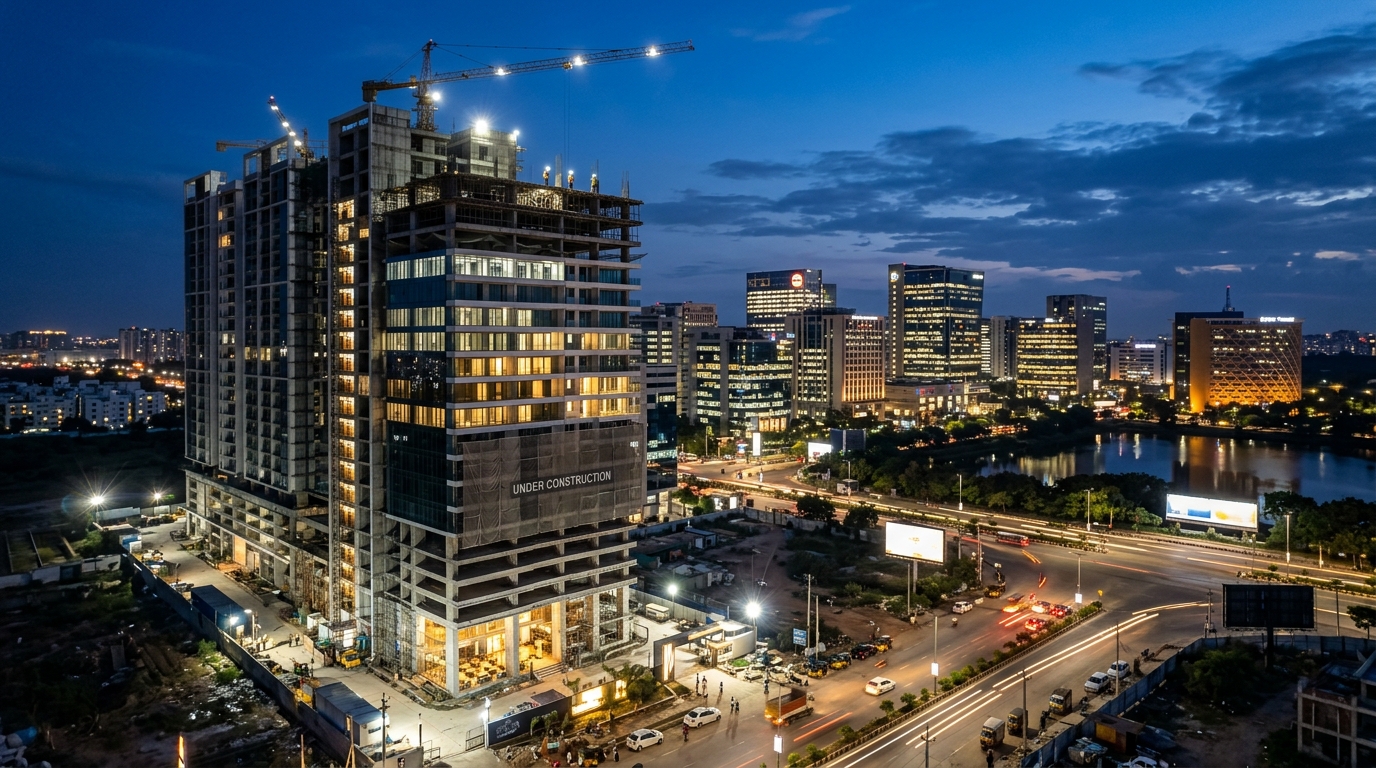
Understanding the Current Market Dynamics
Hyderabad's once-booming real estate market is exhibiting signs of a slowdown, a shift that warrants careful examination by investors. While the article doesn't provide specific percentage figures for the slowdown, it points to a cooling off period after a sustained period of robust activity. This deceleration is likely attributable to a combination of factors, including potential saturation in certain segments, evolving buyer sentiments, and perhaps a more cautious economic outlook. The implication for demand is a more discerning buyer pool, with price sensitivity potentially increasing. Supply, on the other hand, might see a recalibration as developers assess the revised demand landscape. Pricing, which has seen significant appreciation, could experience a stabilization or even a marginal correction in specific micro-markets.
The article highlights that this slowdown is not necessarily a crisis but a natural market adjustment. After periods of rapid growth, a phase of consolidation is common. For investors, this translates to a market where opportunities still exist, but a more strategic and patient approach is required. Overly aggressive pricing might become unsustainable, and developers might need to offer more attractive payment schemes or incentives to move inventory. The long-term fundamentals of Hyderabad, such as its IT and life sciences sectors, remain strong, suggesting that this slowdown is likely a temporary recalibration rather than a fundamental decline.
- Buyer sentiment shifting towards increased price sensitivity.
- Potential recalibration of new supply pipelines by developers.
- Price stabilization or marginal correction in specific segments.
Institutional Investor Perspective: Navigating the Shift
For institutional investors, the current phase in Hyderabad's real estate market presents both challenges and opportunities. While aggressive returns from rapid appreciation might be temporarily subdued, the slowdown can lead to more attractive entry points. Institutions often look beyond short-term fluctuations and focus on long-term value creation. The underlying economic drivers of Hyderabad, such as its status as a major IT and business hub, continue to attract talent and businesses, underpinning future demand for residential and commercial spaces. Institutional investors will likely focus on quality assets in established or rapidly developing micro-markets that exhibit resilience and continued growth potential.
Capital allocation strategies for institutional investors will need to be nuanced. This might involve a shift towards Grade A commercial properties in prime business districts, or well-located residential projects catering to the influx of professionals. Furthermore, a slowdown can sometimes lead to consolidation within the developer community, creating opportunities for well-capitalized institutional players to acquire distressed assets or partner with stronger entities. The emphasis will be on due diligence, risk assessment, and identifying assets with strong rental yields and long-term appreciation potential, rather than relying solely on rapid capital value growth.
- Focus on long-term value creation and identifying attractive entry points.
- Prioritization of Grade A commercial and well-located residential assets.
- Opportunities for consolidation and strategic acquisitions.
Micro-Market Spotlight: Gachibowli, Kokapet, and the Financial District
The slowdown in Hyderabad's real estate market is likely to have varied impacts across its key micro-markets. Areas like Gachibowli, Kokapet, and the Financial District, which have been prime beneficiaries of the IT boom, might experience a moderation in demand and price growth. However, these are also the areas with the strongest underlying fundamentals, driven by continuous job creation and corporate presence. While the pace of new launches might slow, demand for quality residential and commercial spaces in these established hubs is expected to remain relatively robust due to their inherent advantages.
Developers and investors in these micro-markets will need to differentiate their offerings. The focus might shift from rapid expansion to enhancing amenities, sustainability, and overall living/working experience. For Gachibowli, which is a mature IT corridor, and the burgeoning Kokapet and Financial District, a slight cooling can lead to a more balanced market where end-users and long-term investors can find better value. The continued influx of IT companies and the development of associated infrastructure in these zones suggest that their long-term appeal remains intact, even amidst a broader market slowdown.
- Moderation in demand and price growth in IT-centric micro-markets.
- Continued demand for quality spaces in Gachibowli, Kokapet, and Financial District.
- Emphasis on differentiation through enhanced amenities and sustainability.
Policy and Regulatory Environment
While the provided news snippet does not explicitly detail specific policy or regulatory changes contributing to the slowdown, it's crucial to acknowledge their potential influence. Government initiatives aimed at boosting infrastructure, promoting ease of doing business, and creating employment are fundamental to real estate market health. Any shifts in these policies, or their implementation, can have a direct impact on investor confidence and buyer affordability. For instance, changes in property registration norms, stamp duty, or incentives for developers could either stimulate or dampen market activity. Furthermore, the overall economic policy environment, including interest rate trends and inflation control measures, indirectly shapes the real estate landscape.
Investors should remain aware of any forthcoming policy announcements or regulatory shifts from the Telangana government that could affect the real estate sector. While the article focuses on market dynamics, the stability and predictability of the regulatory framework are paramount for sustained investor interest. A proactive approach to understanding and adapting to these potential influences will be key to navigating Hyderabad's evolving real estate market successfully.
- Importance of government infrastructure and business-friendly policies.
- Potential impact of property registration and tax regulations.
- Need for investor awareness of evolving policy landscape.
Source: Telangana Today