Navigating Political Rhetoric: Real Estate Opportunities Amidst State Government Accusations
Published: September 2026
Implications for Builders and Landowners
Political discourse around government involvement in real estate, even accusatory, often points to areas of intense development and potential policy shifts. For builders, this means scrutinizing government land allocation strategies, infrastructure development plans, and any proposed regulatory changes that could favor or hinder specific projects. Landowners should be aware that increased government activity, real or perceived, can influence land values and development potential, making it a prime time to explore partnerships or strategic sales.
The accusation itself suggests a focus on land and development. This could translate into accelerated approvals for certain types of projects or increased scrutiny on others. Builders should proactively engage with local authorities to understand the prevailing sentiment and align their project pipelines accordingly. A proactive approach to understanding the 'why' behind these accusations can reveal underlying policy drivers that create opportunities.
- Monitor government land policies and urban planning initiatives.
- Assess land values in areas experiencing significant government focus.
- Engage with local authorities to understand approval dynamics.
Construction Trends, Approvals, and Supply Pipeline
When governments are perceived to be heavily involved in real estate, it can signal a push for rapid urban development. This might manifest as streamlined approvals for projects aligned with state development goals, potentially leading to a faster construction cycle. For developers, this presents an opportunity to tap into a potentially accelerated project pipeline. However, it also demands a keen eye on the types of construction being prioritized. Is it affordable housing, commercial hubs, or infrastructure-linked residential developments? Understanding this will dictate where to focus supply.
The supply pipeline is critical. If the government is actively shaping the real estate landscape, there's a risk of a potential supply-demand mismatch. Either the government's actions could artificially inflate supply in certain areas, or a lack of clarity in its strategy could lead to a scarcity of approved projects. Developers must conduct robust market research to identify genuine demand pockets and ensure their projects are positioned to meet them, rather than being caught in a speculative surge or a bureaucratic bottleneck.
- Analyze government-driven infrastructure projects for downstream development opportunities.
- Investigate potential bottlenecks or accelerations in the project approval process.
- Conduct granular demand analysis to avoid oversupply in government-favored zones.
Location-Specific Opportunities: Hyderabad, Gachibowli, Kokapet, Financial District
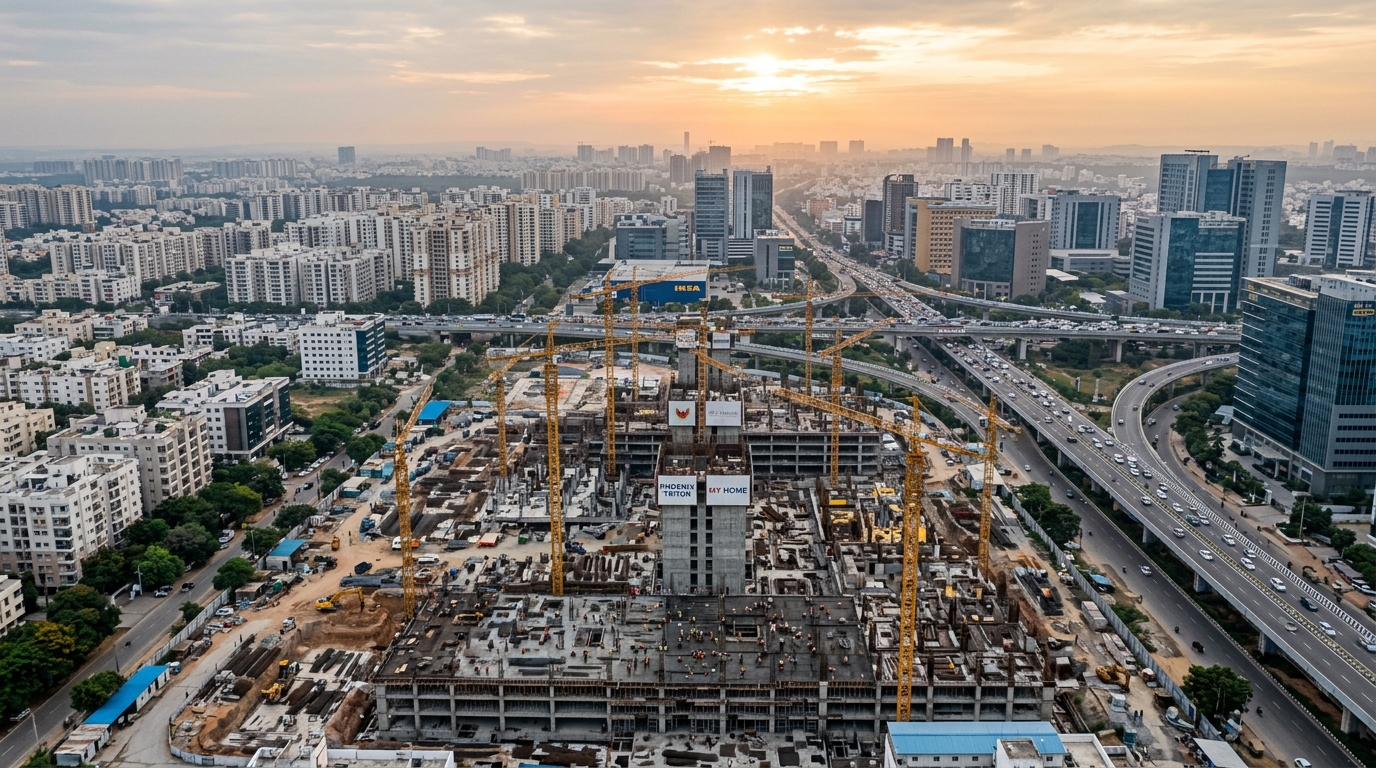
The news mentioning a state government's alleged involvement in real estate activities in Telangana, particularly in and around Hyderabad, Gachibowli, Kokapet, and the Financial District, highlights these as prime zones of interest. These areas are already established hubs for IT, finance, and commercial activities, attracting a consistent influx of professionals and businesses. Any government focus here is likely to amplify existing growth trends.
Developers with projects in or eyeing these specific locations should anticipate increased competition but also heightened demand. The proximity to key economic drivers means that well-conceived residential, commercial, and mixed-use developments will likely find a ready market. However, landowners in these premium locales should be prepared for potential acquisition offers or joint venture proposals that reflect the enhanced development potential driven by state-level interest. This is a crucial time for due diligence and strategic planning in these high-stakes areas.
- Focus on premium residential and commercial developments in Gachibowli and Financial District.
- Explore mixed-use projects in Kokapet to cater to evolving urban lifestyles.
- Assess land acquisition potential in buffer zones around these core development areas.
Risks and Execution Challenges
Political rhetoric, however strong, doesn't always translate directly into operational efficiency for the real estate sector. Developers must be wary of potential policy U-turns or changes in government priorities, which can create uncertainty and disrupt long-term project planning. The 'real estate agency' accusation might imply a level of direct government intervention that could lead to market distortions or unfair competition, posing a risk to private developers.
Execution challenges will stem from navigating these political undercurrents. Obtaining clear and consistent approvals, securing financing for projects influenced by speculative government activity, and managing construction timelines amidst potential policy shifts require astute strategic planning and risk management. Building strong relationships with all stakeholders, including government bodies, local communities, and suppliers, will be paramount to successful execution in this dynamic environment.
- Develop contingency plans for potential policy shifts.
- Conduct thorough due diligence on any government-linked land or project opportunities.
- Prioritize transparency and ethical practices to build trust and mitigate reputational risks.
Source: The Times of India