Navigating Hyderabad's High-Inventory, High-Price Paradox: Opportunities and Challenges for Developers
Published: April 2026
Understanding the Developer's Dilemma: High Inventory, High Prices
Hyderabad's real estate market is currently exhibiting a peculiar paradox: an abundance of unsold inventory coexisting with stubbornly high property prices. For developers and landowners, this situation demands a nuanced strategic approach. High prices, while seemingly positive for profit margins, are often propped up by limited new launches in premium segments and sustained demand from end-users and investors seeking value appreciation in prime micro-markets. The high inventory suggests a potential slowdown in absorption or a mismatch between what's being built and what the market truly desires at current price points. This necessitates a careful evaluation of project viability, target audience, and pricing strategies to avoid getting caught in the unsold stock cycle.
Landowners looking to monetize their assets need to be realistic about current market conditions. While land values might have appreciated significantly, a prolonged period of high inventory can impact the speed of land sales and the premiums developers are willing to pay. Strategic partnerships with developers who have a proven track record of navigating market complexities, or opting for joint development agreements that share risk, could be more advantageous than outright sales at inflated expectations.
Analyze absorption rates for different unit types and price brackets.
Re-evaluate target customer profiles and their affordability at current price levels.
Explore phased development strategies to manage inventory risk.
For landowners, consider flexible deal structures with developers.
Construction Trends, Approvals, and the Supply Pipeline
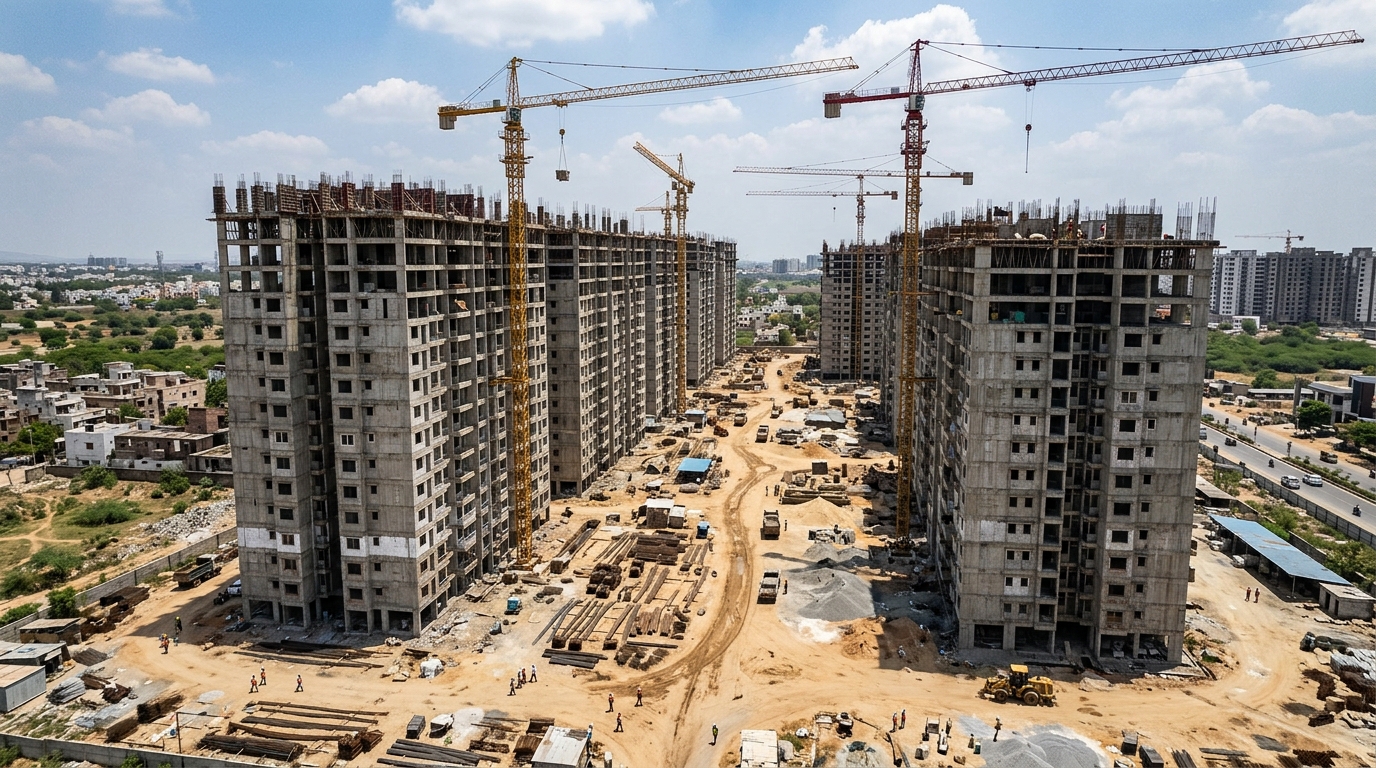
The current market sentiment might lead to a cautious approach in launching new projects, impacting the future supply pipeline. Developers who have secured approvals and are in the construction phase for projects targeting the mid-to-premium segment are likely facing increased carrying costs due to slower sales velocity. This could also lead to a tightening of the supply pipeline for new launches in the short to medium term, potentially creating opportunities for developers who can bring relevant inventory to market swiftly.
The approval process, always a critical factor, becomes even more impactful in a high-inventory environment. Delays in obtaining necessary clearances can exacerbate holding costs and reduce the competitiveness of new projects. Streamlining internal processes and anticipating regulatory requirements are paramount. Developers should focus on projects that offer unique selling propositions or cater to unmet niche demands to differentiate themselves. The supply pipeline needs to be managed with an eye on market absorption, not just historical growth trends.
Prioritize efficient project management to reduce construction timelines.
Develop strong relationships with regulatory bodies to expedite approvals.
Focus on sustainable construction practices to enhance project appeal and reduce long-term costs.
Invest in market research to identify demand gaps rather than simply replicating existing inventory.
Location Spotlight: Gachibowli, Kokapet, and the Financial District
Areas like Gachibowli, Kokapet, and the Financial District in Hyderabad remain robust due to the sustained influx of IT professionals and the presence of major corporations. These micro-markets continue to exhibit strong rental yields and capital appreciation potential, attracting developers. However, even here, high inventory needs to be addressed. Developers launching in these prime locales must offer projects that align with the aspirations of the target demographic, typically young professionals and families seeking modern amenities, connectivity, and a quality lifestyle. The 'paradox' might be more pronounced in peripheral areas, while these established hubs might absorb inventory faster if the product is right.
The opportunity lies in developing projects that offer a compelling value proposition within these sought-after locations. This could include integrated developments, smart homes, or niche offerings like co-living spaces catering to the specific needs of the workforce. Understanding the exact demand drivers and saturation points within each of these sub-markets is crucial for successful project conceptualization and execution.
Conduct granular demand analysis within Gachibowli, Kokapet, and the Financial District.
Focus on premium amenities and lifestyle offerings that appeal to the IT demographic.
Explore partnerships with corporations for bulk housing solutions.
Consider mixed-use developments to enhance project appeal and walkability.
Navigating the Risks and Execution Challenges
The primary risks for developers in this market include slower sales velocity, leading to extended project lifecycles and increased debt servicing costs. There's also the risk of price corrections if inventory levels continue to outpace demand, impacting profitability. Furthermore, maintaining construction quality and timely delivery becomes even more critical to build buyer confidence in a market where potential buyers might be more discerning.
Execution challenges will revolve around managing cash flows effectively, controlling costs amidst fluctuating material prices, and ensuring efficient sales and marketing strategies. Building a strong brand reputation for quality and reliability will be key to overcoming buyer hesitancy. Developers must be agile, adapting their strategies based on real-time market feedback and economic indicators. A robust risk management framework is essential for navigating this complex yet opportunity-rich Hyderabad real estate landscape.
Develop robust financial modeling with contingency plans for slower sales.
Implement strict cost control measures throughout the project lifecycle.
Invest in experienced sales and marketing teams capable of nuanced communication.
Emphasize transparent communication with stakeholders regarding project progress and market conditions.
Source: AP7AM