Hyderabad's Thirsty Property Market: When Water Scarcity Becomes a Buyer's Red Flag
Published: November 2026
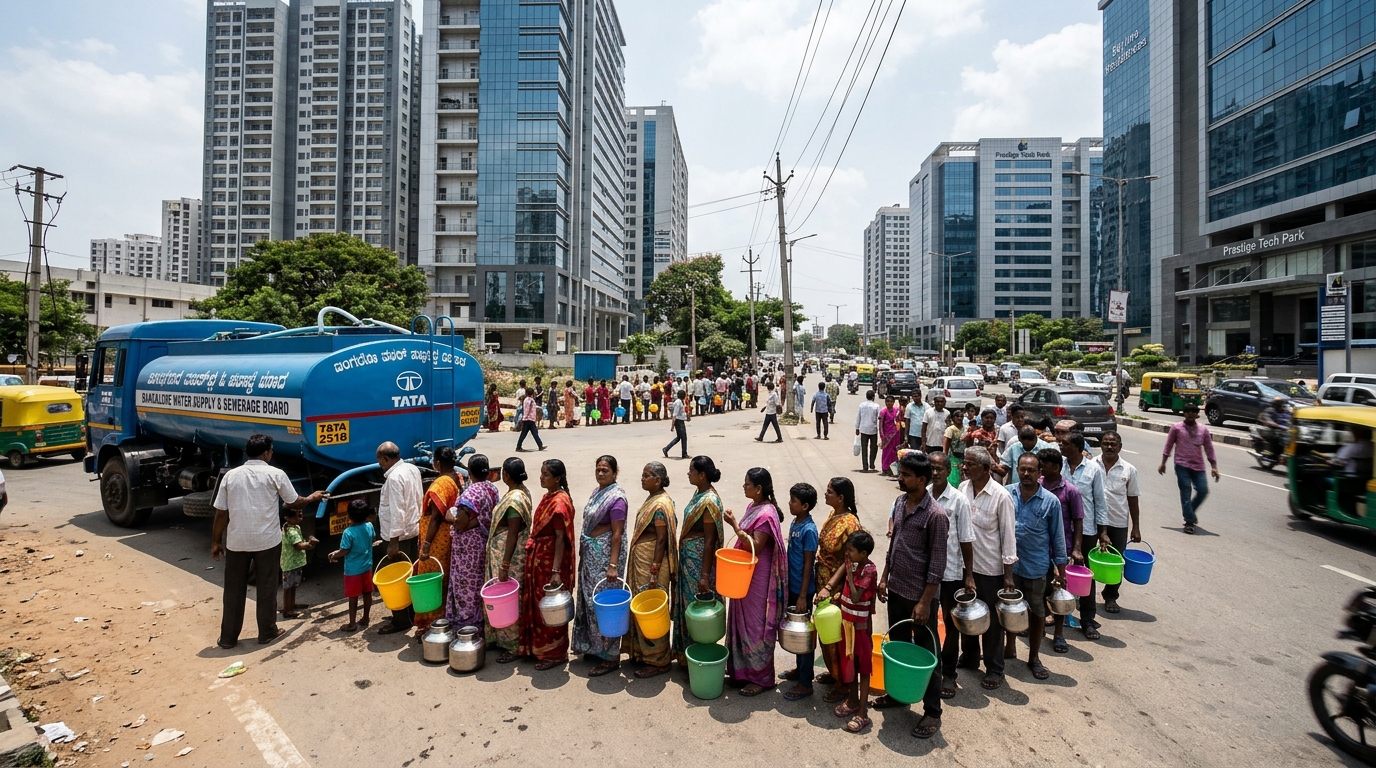
The Unseen Price of Progress: From Trickles to Torrents of Tankers
Imagine the scene: the year is 2026, and October in Hyderabad isn't just about pleasant weather and festive cheer. For thousands of residents, it's also about anxiously waiting for a water tanker, a daily reality that has escalated at an alarming rate. The Hindu's report of water tanker bookings skyrocketing from 87,000 in October 2025 to a staggering 2.2 lakh in October 2026 is more than just a statistic; it's a siren call from the ground, whispering about the immense strain on our urban infrastructure amidst rapid growth.
This isn't about isolated incidents of dry taps. This is a systemic issue reflecting a critical imbalance. As Hyderabad continues its meteoric rise as a business and IT hub, attracting talent and investment at an unprecedented pace, the fundamental resource of water seems to be lagging behind. The surge in tanker bookings signifies that the existing water supply mechanisms are either insufficient to meet the demand or are facing logistical challenges in distribution, leaving many households and potentially even commercial establishments scrambling for this basic necessity.
Ground-Level Ripples: Impact on the Real Estate Ecosystem
For the average homebuyer in Hyderabad, this is a sobering reality check. The allure of modern apartments and sprawling villas in burgeoning areas like Gachibowli, Kokapet, and the Financial District might be significantly dimmed by the prospect of water shortages. Beyond the initial purchase price and amenities, the fundamental question of reliable water supply now looms large, potentially impacting property valuations and desirability.
Investors, ever keen on future returns, will be scrutinizing this trend closely. A city struggling with water security might become a less attractive proposition for long-term capital appreciation. Developers, the architects of Hyderabad's skyline, face a dual challenge. Firstly, ensuring their projects have robust and sustainable water management solutions, and secondly, addressing the growing concern among potential buyers. The cost of water infrastructure, water harvesting, and efficient distribution will likely become a significant factor in project planning and execution. This could lead to increased development costs and, consequently, higher property prices, further straining affordability.
- Buyers: Increased concern over essential resource availability, potential impact on property desirability and long-term value.
- Investors: Re-evaluation of risk factors, potential shift in investment focus away from water-stressed regions.
- Developers: Increased project costs due to water management infrastructure, need for innovative and sustainable solutions, potential price adjustments.
The Horizon Ahead: Challenges and Emerging Hotspots
The current situation is a wake-up call for Hyderabad. While the city's economic engine is running at full throttle, its foundational resources need equal attention. The Telangana government and the Hyderabad Metropolitan Water Supply and Sewerage Board (HMWSSB) will need to accelerate their efforts in augmenting water sources, improving infrastructure, and implementing efficient water management policies. The long-term solution lies not in more tankers, but in sustainable water conservation and supply augmentation projects.
As for emerging hotspots, areas that already boast robust water infrastructure or those where developers are proactively integrating advanced water management systems might gain an edge. While Gachibowli, Kokapet, and the Financial District continue to be prime locations due to their economic significance, their future growth will be inextricably linked to their ability to address water challenges. Perhaps the next 'hotspot' will be defined not just by its connectivity and amenities, but by its guaranteed access to this most precious resource.
Source: The Hindu