Hyderabad's Real Estate Cooling: Unsold Inventory Signals a Shifting Market Landscape
Published: June 2026
Market Dynamics: Demand-Supply Imbalance Emerging?
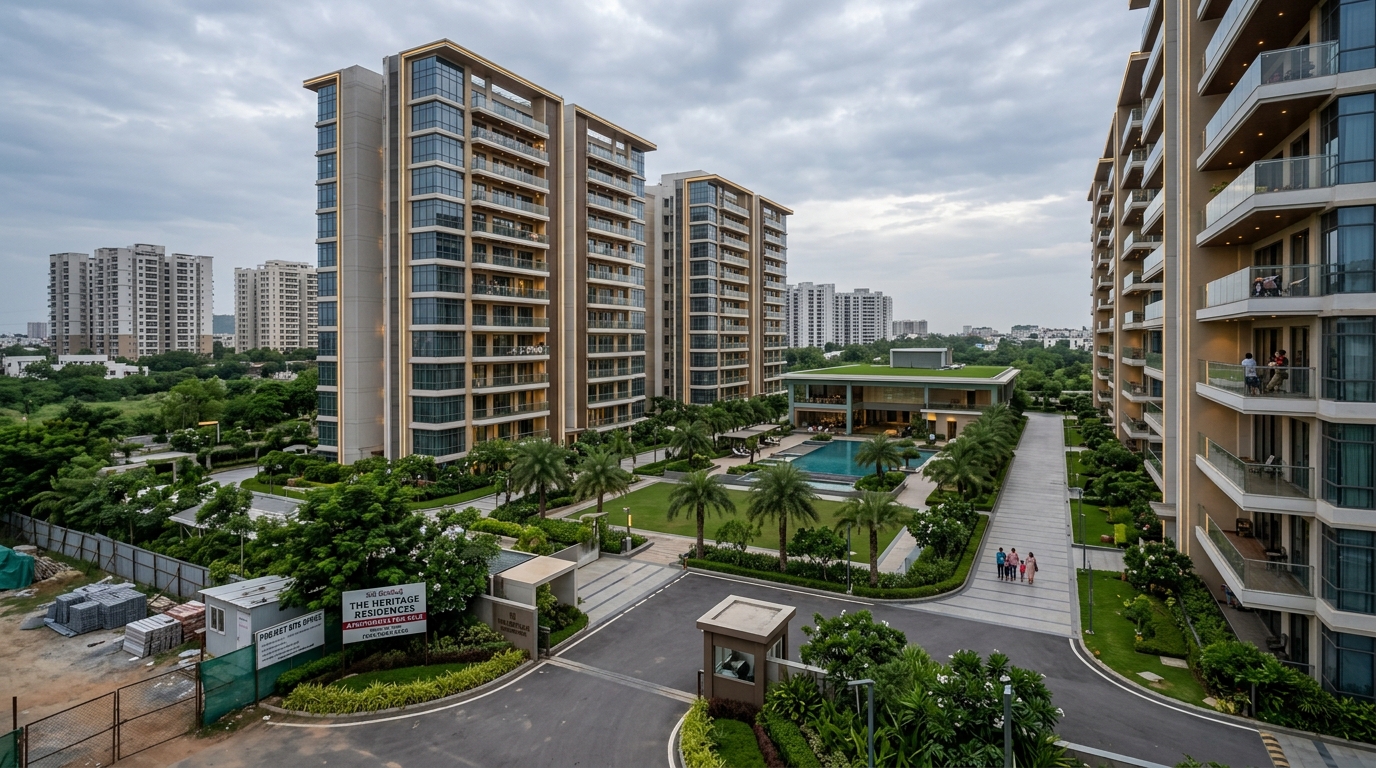
The Hyderabad real estate market, often characterized by robust demand, is showing signs of a slowdown as indicated by a rise in unsold housing inventory. While specific figures are not detailed in the provided news, the implication is a widening gap between supply and absorption rates. This suggests that the pace of new project launches may have outstripped current buyer demand, potentially leading to increased competition among developers to clear existing stock.
This shift can translate into a more balanced negotiation environment for buyers, with potential for price stabilization or even marginal corrections in certain micro-markets. For developers, it necessitates a strategic recalibration of sales and marketing efforts, focusing on project differentiation and targeted promotions to attract genuine buyers.
- Potential for increased buyer negotiation power.
- Developers may need to adjust pricing strategies to move inventory.
- Focus on project USP and targeted marketing crucial for sales.
Institutional Investor Outlook: Navigating the Inventory Surge
For institutional investors, this evolving market scenario presents both challenges and opportunities. A rising unsold inventory typically signals a mature market where speculative buying might be diminishing, leading to a greater focus on end-user demand. Investors may look for opportunities to acquire distressed assets or invest in projects with strong fundamental demand drivers.
The current trend could lead to a more discerning approach from institutional capital. While overall investment sentiment might see a temporary pause in high-growth areas, there will likely be a renewed emphasis on thorough due diligence, project viability, and experienced developer track records. Capital flow might re-route towards projects with a clear path to absorption and strong rental yield potential, particularly in established and well-connected micro-markets.
- Increased focus on end-user driven demand.
- Opportunity for distressed asset acquisition or opportunistic investments.
- Emphasis on developer credibility and project fundamentals for institutional capital.
- Potential shift towards rental yield focused investments.
Micro-Market Relevance: Beyond the City Limits
While the news doesn't pinpoint specific micro-markets within Hyderabad experiencing this slowdown, it's crucial to consider areas with significant recent development and supply infusion. If areas like Gachibowli, Kokapet, and the Financial District have seen a high volume of new launches in recent times, they might be more susceptible to an increase in unsold inventory. These premium residential hubs are often driven by the IT and financial services sector, and any slowdown in their growth or absorption capacity would directly impact inventory levels.
Conversely, established residential pockets with sustained end-user demand might be more resilient. Investors and developers should analyze the absorption rates and inventory overhang at a hyper-local level to make informed decisions. Understanding the demand drivers of each micro-market, such as job creation, infrastructure development, and social amenities, will be paramount.
- Potential impact on high-development zones like Gachibowli, Kokapet, and Financial District.
- Importance of hyper-local inventory and absorption rate analysis.
- Demand drivers such as IT job growth and infrastructure are key.
Policy and Regulatory Landscape: A Stabilizing Influence?
The current news does not explicitly mention any policy or regulatory changes impacting Hyderabad's real estate market. However, policymakers often respond to market shifts. If the trend of rising unsold inventory continues, it could prompt discussions around incentivizing demand, streamlining regulatory approvals for developers with viable projects, or potentially revising taxation policies.
Regulatory bodies might also increase scrutiny on new project launches to ensure a more sustainable pace of development aligned with absorption capacity. For investors, a stable and predictable policy environment is crucial. Any interventions aimed at market stabilization, such as those promoting affordable housing or facilitating faster project clearances, could positively influence investor sentiment.
- Potential for policy interventions to stabilize the market.
- Increased regulatory scrutiny on new project launches.
- Investor confidence relies on a stable and predictable policy environment.
Source: Hyderabad Mail