Hyderabad's Real Estate Boom: Q1 2026 Sales Surge Signals Opportunity for Developers
Published: April 2026
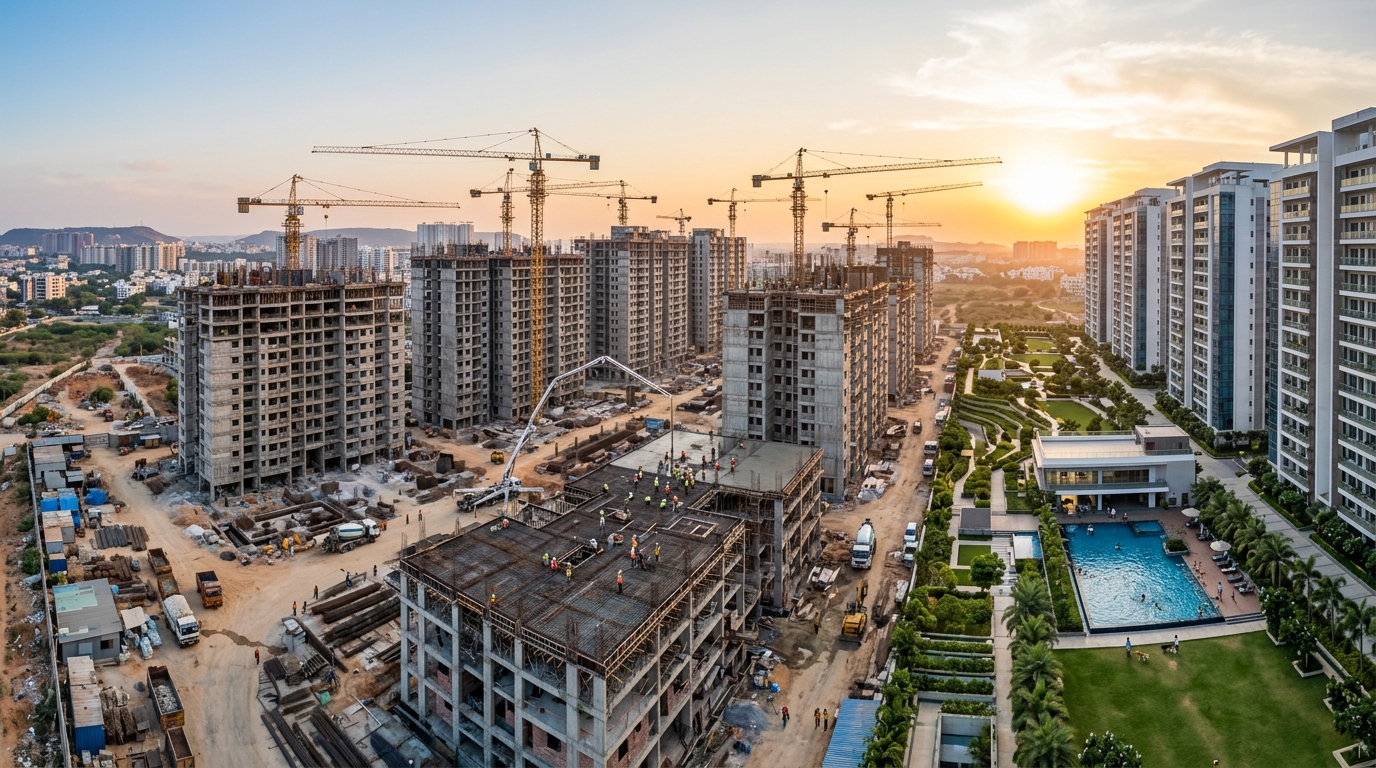
Decoding the Surge: Implications for Builders and Landowners
The impressive 9,541 home sales in Hyderabad during Q1 2026, coupled with a 9% price increase to ₹8,211 per sq ft, are definitive indicators of a thriving market. For builders, this signifies robust demand, creating a favorable environment for launching new projects and accelerating existing ones. The increased per-square-foot pricing translates directly to higher revenue potential and improved profit margins, provided cost-effective construction and timely delivery are maintained. Landowners stand to benefit significantly from increased land values, making this an opportune moment for strategic land monetization through joint ventures or outright sales to developers who are actively seeking inventory to meet escalating demand.
This sustained growth suggests a healthy supply-demand dynamic, where buyer confidence is high. Developers who can accurately forecast future demand and cater to specific buyer preferences will be best positioned to secure market share. Understanding the buyer profile, whether it's end-users seeking homes or investors looking for capital appreciation, will be crucial for product conceptualization and marketing strategies.
Accelerate project launches to capture current demand.
Explore land acquisition or joint venture opportunities with landowners.
Focus on value engineering to maintain profitability amidst rising input costs.
Refine marketing strategies to target specific buyer segments.
Construction Trends, Approvals, and the Supply Pipeline
The current market momentum necessitates a keen eye on construction timelines and the approval process. Developers must ensure their supply pipelines are robust and can respond efficiently to market needs. This means proactively engaging with regulatory bodies to streamline approvals for new projects, as delays can lead to missed market opportunities. Trends in construction materials and technologies that enhance speed and reduce costs will be critical. Consider pre-fabricated components and advanced building techniques that can shorten project completion times, thereby enabling faster revenue realization and reducing exposure to market fluctuations.
The current sales figures suggest that the existing supply pipeline may not be sufficient to meet projected future demand, especially in strategically important micro-markets. Developers should anticipate this potential supply-demand mismatch and plan accordingly. Investing in pre-construction planning and securing necessary resources, labor, materials, and capital, will be paramount to maintaining a competitive edge and fulfilling buyer commitments.
Expedite the building plan approval process through proactive engagement.
Invest in construction technologies that improve efficiency and reduce build times.
Secure long-term contracts for key construction materials to mitigate price volatility.
Diversify construction methodologies to cater to varied project requirements.
Micro-Market Opportunities: Gachibowli, Kokapet, and the Financial District
While the overall Hyderabad market is strong, micro-markets like Gachibowli, Kokapet, and the Financial District are likely to be prime beneficiaries of this growth. These areas, known for their IT hubs, commercial establishments, and burgeoning infrastructure, attract a premium demographic of homebuyers. The demand here is driven by a combination of end-users seeking proximity to workplaces and investors capitalizing on rental yields and appreciation potential. Developers with a focus on premium and mid-luxury segments would find these locations highly rewarding.
Consider the specific amenities and lifestyle offerings that appeal to the professional workforce in these areas. High-quality construction, modern amenities, and sustainable building practices will be key differentiators. The increasing price per square foot in these prime locations indicates an appetite for well-conceived residential offerings that blend convenience with aspirational living. Developers should conduct granular market research within these micro-markets to identify specific unmet needs and tailor their product accordingly.
Focus on high-quality residential offerings in Gachibowli, Kokapet, and Financial District.
Develop projects that cater to the lifestyle and convenience needs of IT professionals.
Leverage the strong rental yield potential in these employment hubs.
Explore mixed-use development opportunities to enhance project viability.
Navigating Risks and Execution Challenges
Despite the positive market sentiment, developers must remain vigilant about potential risks. Fluctuations in construction material costs, labor availability, and evolving regulatory landscapes are inherent challenges. Executing projects within budget and on schedule is critical to realizing profitability. A well-defined risk management strategy, including contingency planning for unforeseen cost escalations or delays, is essential.
Furthermore, market saturation in specific micro-segments is a possibility if multiple developers converge on similar product offerings. Differentiation through design, amenities, and unique selling propositions will be crucial. The execution challenge also extends to maintaining a high standard of quality throughout the construction process, which directly impacts customer satisfaction and brand reputation. Strong project management, transparent communication with stakeholders, and a commitment to ethical business practices will be the bedrock of sustained success in this dynamic market.
Implement robust cost control measures and explore hedging strategies for material prices.
Develop strong relationships with reliable labor contractors.
Maintain flexibility in project planning to adapt to regulatory changes.
Focus on building a strong brand reputation through quality and timely delivery.
Source: MSN