Hyderabad's Public Assets Under the Lens: HMDA Land Mortgage Implications for Real Estate Investors
Published: October 2026
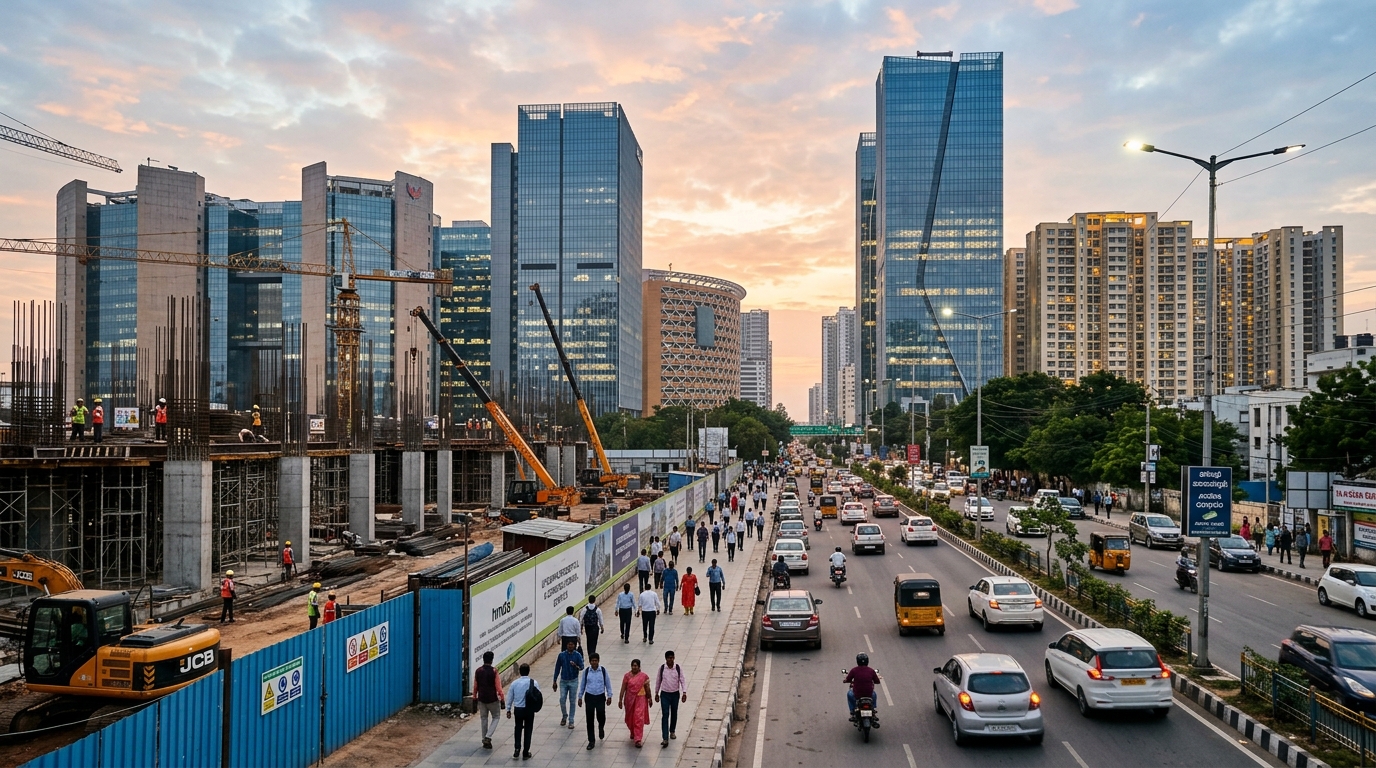
Understanding the HMDA Land Mortgage and its Market Ramifications
The news highlights that the Hyderabad Metropolitan Development Authority (HMDA) has mortgaged public land assets. While the exact beneficiaries and terms of these mortgages are not detailed, such actions typically serve to unlock capital for development or infrastructure projects. From a real estate investment perspective, this directly impacts the available land supply. If these mortgaged lands are intended for future development, it could increase the supply pipeline. Conversely, if the mortgages are a precursor to selling these assets to developers, it might represent a controlled release of land into the market, potentially preventing speculative land hoarding and ensuring more predictable development cycles.
This policy shift can influence demand-supply equilibrium. For areas where land is scarce and demand is high, a controlled release through such mechanisms could lead to more stable, albeit potentially higher, pricing. Developers may face increased competition for these HMDA-released plots, driving up acquisition costs, which would likely be passed on to end-users. This could indirectly support price appreciation in existing residential and commercial projects in adjacent areas due to a more managed land pipeline.
- Potential increase in future land supply.
- Impact on land acquisition costs for developers.
- Stabilization of pricing in high-demand zones.
- Indirect support for existing property values.
Institutional Investor Perspective: Stability and Long-Term Value
Institutional investors, often characterized by their long-term investment horizons and preference for stability, would view this HMDA action as a positive development for market predictability. A regulated approach to land release, as suggested by the mortgage of public assets, can mitigate the risks associated with volatile land prices and opaque land acquisition processes. This controlled environment is conducive to the deployment of significant capital into large-scale residential, commercial, and mixed-use developments, which are typically favored by institutional players.
The focus on public assets by HMDA suggests a strategic approach to urban planning and development. Institutional investors are likely to analyze the specific micro-markets where these assets are located. Areas undergoing significant infrastructure upgrades or those identified for future growth, such as the established hubs of Gachibowli, the emerging residential zones of Kokapet, and the business-centric Financial District, would be prime targets. These locations offer the potential for sustained rental yields and capital appreciation, making them attractive for institutional portfolios seeking robust returns.
- Enhanced market predictability and reduced risk.
- Conducive environment for large-scale developments.
- Targeting of prime micro-markets with growth potential.
- Focus on long-term rental yields and capital appreciation.
Policy and Regulatory Impact: Setting the Stage for Controlled Growth
The act of mortgaging public land by a development authority like HMDA can be interpreted as a strategic policy tool to manage urban expansion and resource allocation. This move indicates a proactive stance by the government to leverage its land bank for planned development rather than leaving it to market forces alone, which can sometimes lead to unbridled speculation. This regulatory approach signals a commitment to structured urban growth.
For investors, this implies a more transparent and potentially less fragmented land acquisition landscape in the future. It could also mean that regulatory approvals for projects utilizing these lands might be streamlined, as the underlying land tenure and development intent are being addressed at a higher level. Such policies can attract Foreign Direct Investment (FDI) into Hyderabad's real estate sector, as it signals a stable and well-managed investment environment.
- Strategic land management for urban planning.
- Mitigation of land speculation.
- Potential for streamlined regulatory approvals.
- Attraction of Foreign Direct Investment (FDI).
Micro-Market Relevance: Gachibowli, Kokapet, and the Financial District
Hyderabad's prominent growth corridors, including Gachibowli, Kokapet, and the Financial District, are likely to be at the forefront of any development spurred by the HMDA's land mortgage actions. These areas are already characterized by robust commercial activity, a thriving IT sector, and increasing residential demand. The availability of HMDA-controlled land in these vicinities could accelerate the pace of development, leading to new commercial spaces, premium residential complexes, and enhanced social infrastructure.
Investors should closely monitor which specific parcels of land are being mortgaged and for what purpose. If these are in prime locations within these micro-markets, it could lead to intensified competition among developers, potentially pushing up land prices in the short to medium term. However, the long-term effect could be a more balanced supply, preventing price bubbles and ensuring sustainable growth, which is ideal for institutional capital seeking predictable returns over a decade or more.
- Accelerated development in prime growth corridors.
- Intensified competition and potential short-term price hikes.
- Balanced supply and prevention of price bubbles.
- Focus on sustainable growth for long-term investments.
Source: Urban Acres