Hyderabad's Luxury Boom: A Goldmine for Developers - Navigating the High-Growth Landscape
Published: October 2026
The Unfolding Opportunity: What This Means for Builders and Landowners
The 'Hyderabad's Ascent as a Premier Luxury and Wealth Hub' narrative is not just a headline; it's a direct signal to the real estate sector. An increasing concentration of high-net-worth individuals (HNIs) and a thriving IT and business ecosystem are fueling a significant demand for premium residential and commercial spaces. For builders, this translates to an elevated demand for luxury apartments, villas, and branded residences that offer exclusivity, superior amenities, and prime locations. Landowners in strategic areas can capitalize on this trend by partnering with developers experienced in the luxury segment, securing premium land values and potential joint venture opportunities.
The rise of Hyderabad as a wealth hub indicates a sustained upward trajectory in disposable incomes and investment appetite for tangible assets like real estate. Developers who can accurately forecast and cater to the evolving preferences of these affluent buyers, demanding not just space but experiences, security, and sophisticated lifestyles, will be best positioned for success. Early movers who can secure prime land parcels and initiate projects aligned with luxury aspirations stand to gain significant market share and premium pricing power.
Identify demand for ultra-luxury, branded residences, and serviced apartments.
Explore joint ventures with landowners in prime luxury corridors.
Focus on creating unique lifestyle amenities and services that appeal to HNIs.
Develop strong relationships with wealth management firms and corporate relocation services.
Construction Trends, Approvals, and the Supply Pipeline
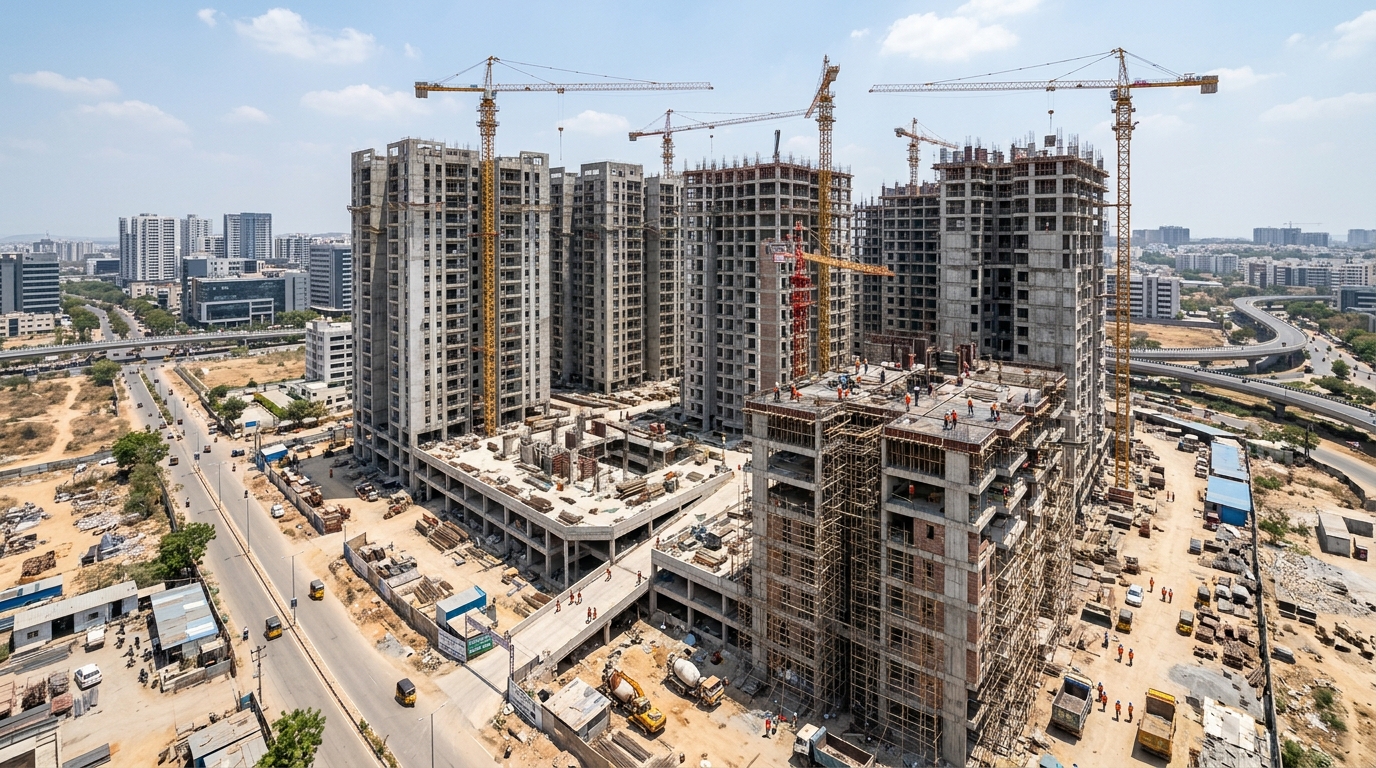
The current construction trends in Hyderabad, particularly in the luxury segment, are leaning towards larger-format residences, integrated developments with retail and entertainment, and a strong emphasis on green building practices and smart home technology. Developers must align their project blueprints with these emerging preferences. The approval process, while a constant factor, is becoming more streamlined for projects that adhere to urban planning regulations and contribute to the city's aesthetic and infrastructural growth. However, the 'supply pipeline' needs careful management to avoid oversupply in specific micro-markets while addressing the clear demand for high-end properties.
A key consideration for developers is the 'supply pipeline'. While demand is robust, the pace of approvals and the readiness of the construction sector to deliver complex, high-specification projects will dictate the market's equilibrium. Developers should proactively engage with regulatory bodies and ensure their projects are not just compliant but also contribute positively to the urban fabric. Investing in skilled labor and advanced construction technologies will be crucial to maintain quality and adhere to timelines, thereby building trust and reputation in the luxury segment.
Prioritize sustainable and smart home technologies in new developments.
Explore pre-fabrication and modular construction for efficiency in luxury projects.
Maintain a lean but responsive supply chain for premium materials.
Engage early with urban planning and approval authorities to anticipate timelines.
Location-Specific Opportunities: Gachibowli, Kokapet, and the Financial District Advantage
The news specifically points to Hyderabad's ascent, and within the city, certain micro-markets are poised for exponential growth in the luxury real estate sector. Gachibowli, Kokapet, and the Financial District are emerging as epicenters of this wealth creation, driven by a high concentration of IT giants, MNCs, and a burgeoning startup ecosystem. These areas are attracting top-tier talent and, consequently, a significant demographic of HNIs seeking premium housing solutions close to their workplaces. Developers should focus on identifying opportunities in these specific zones, offering integrated townships, high-rise luxury apartments, and premium commercial spaces that cater to the lifestyle and professional needs of the inhabitants.
The development of world-class infrastructure, connectivity, and the presence of a young, aspirational workforce in these regions make them prime targets for luxury real estate. Kokapet, in particular, is emerging as a hub for ultra-luxury projects, offering expansive land parcels that can accommodate large-scale, amenity-rich developments. The Financial District, with its established corporate presence, also presents opportunities for premium residential offerings catering to senior management and expatriates. A nuanced understanding of the specific demand drivers and buyer profiles within each of these micro-markets is crucial for targeted development strategies.
Target Gachibowli for integrated lifestyle townships with co-working spaces.
Focus on ultra-luxury villas and penthouses in Kokapet's expansive plots.
Develop premium residential towers with concierge services near the Financial District.
Analyze the influx of expatriates and their housing preferences in these hubs.
Navigating Risks and Execution Challenges
While the opportunities are immense, developers must be cognizant of the inherent risks and execution challenges associated with the luxury real estate market. The demand for premium housing is aspirational and can be sensitive to economic downturns. Maintaining impeccable quality and adhering to stringent timelines are non-negotiable in this segment; any lapse can severely damage brand reputation. Furthermore, securing prime land parcels in these sought-after locations can be highly competitive and expensive, requiring robust financial planning and negotiation skills.
Execution challenges also extend to managing the expectations of affluent buyers, who often demand highly customized living spaces and world-class amenities. The supply chain for premium construction materials and specialized labor can also be a bottleneck. Developers need to implement rigorous project management practices, conduct thorough market research to avoid oversupply in niche segments, and build contingency plans to mitigate potential delays or cost overruns. Sustainable business practices and a strong ethical framework are paramount to building long-term credibility in this discerning market.
Conduct thorough feasibility studies to assess market saturation and pricing viability.
Implement stringent quality control measures at every stage of construction.
Develop a robust financial model with contingency for unforeseen costs.
Foster strong relationships with suppliers of high-end construction materials and skilled artisans.
Source: Telugu Times