Hyderabad's Land Value Surge: A New Era for Real Estate Investment in Gachibowli and Financial District?
Published: June 2026
Market Dynamics: Demand, Supply, and Pricing Pressures
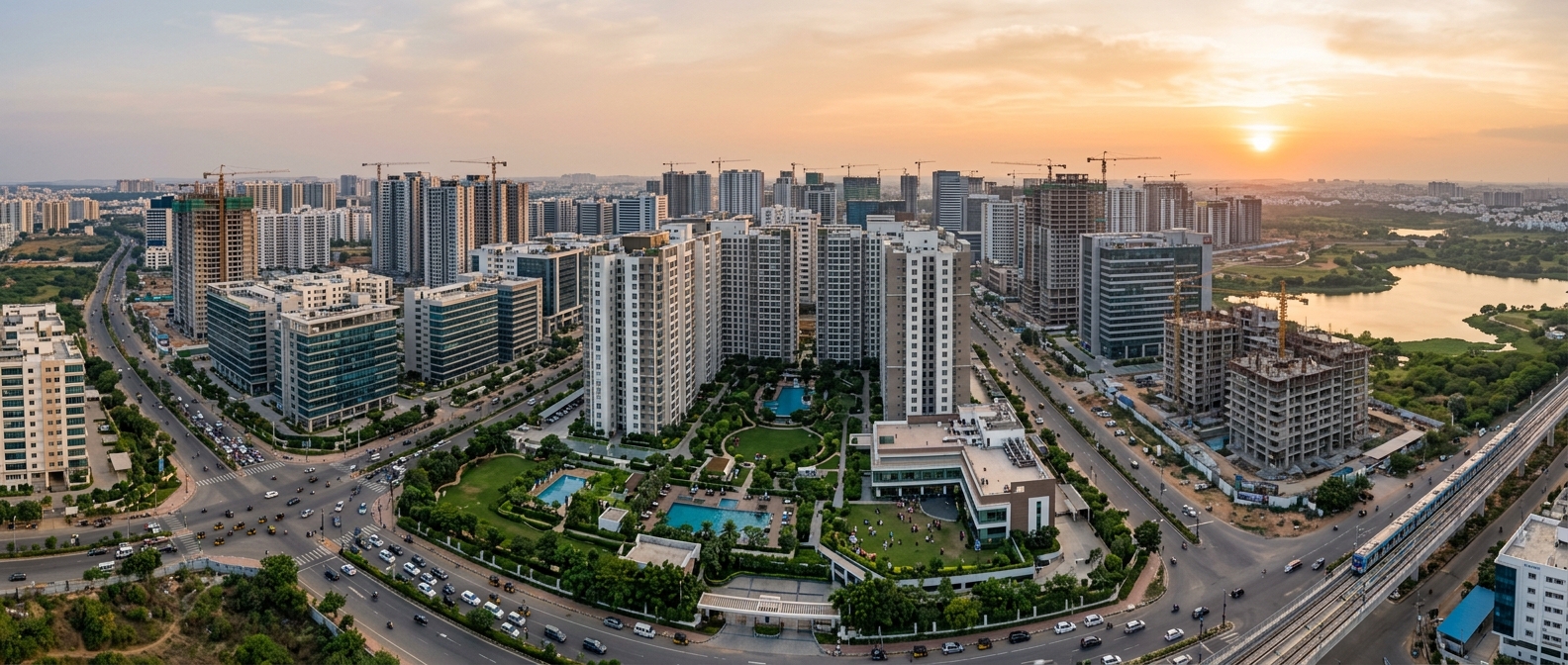
The recent revision of land values in Hyderabad has acted as a catalyst, directly translating into a pronounced increase in property prices across the city. This upward price momentum is most acutely felt in areas experiencing robust economic activity and high employment generation, such as the IT and financial hubs of Gachibowli and the Financial District. The revision, likely reflecting increased development potential and market demand, tightens the supply-demand equation. As land becomes more expensive, developers face higher input costs, inevitably passing these onto end-buyers and renters.
This scenario is creating a dual effect: while existing property owners stand to benefit from increased asset values, prospective buyers may face affordability challenges. The surge in prices is expected to fuel demand for higher-value properties and could also encourage a faster pace of construction to meet anticipated demand, although the immediate impact is a price escalation. The long-term sustainability of these price increases will depend on continued economic growth and job creation in these micro-markets.
- Increased property prices across Hyderabad.
- Concentrated price hikes in IT and financial hubs (Gachibowli, Financial District).
- Tightened supply-demand balance due to higher land acquisition costs.
- Potential affordability concerns for new buyers.
- Stimulation of demand for premium properties.
Institutional Investor Perspective: Capital Flows and Risk Assessment
For institutional investors, Hyderabad's revised land values present a nuanced opportunity. The immediate price surge indicates strong underlying market fundamentals and investor confidence, making the city an attractive destination for capital deployment. However, the higher entry cost due to land value increases necessitates a more rigorous risk assessment. Investors will be closely scrutinizing rental yields, absorption rates, and the long-term growth trajectory of these micro-markets to ensure profitable returns.
The premium associated with prime locations like Gachibowli and the Financial District is likely to attract institutional capital seeking growth assets. This could lead to increased activity in commercial real estate development (office spaces, retail) and potentially influence the residential segment with a focus on higher-end offerings. Fund managers are likely to re-evaluate their portfolio allocations, potentially increasing exposure to Hyderabad's prime corridors, provided the projected rental and capital appreciation justify the elevated valuations.
- Increased investor confidence in Hyderabad's real estate market.
- Higher entry costs for institutional investors.
- Focus on rental yields, absorption rates, and risk-return profiles.
- Attraction of capital to prime IT and financial hubs.
- Potential for increased investment in commercial and premium residential segments.
Policy and Regulatory Impact: Navigating the New Valuation Landscape
The land value revision itself is a policy-driven event, directly impacting registration charges, property taxes, and development charges. For developers, this means a higher cost of doing business, which is likely to be factored into project pricing. Regulatory bodies might also observe increased revenue from stamp duty and registration fees. This move could be aimed at formalizing land values, aligning them with market realities, and potentially curbing speculative under-valuation.
From a regulatory standpoint, such revisions can also signal government intent to promote planned development and infrastructure upgrades in identified growth zones. Investors will be watching for any subsequent policy announcements related to urban infrastructure development, zoning regulations, or incentives that could further bolster the real estate market in these high-potential areas. The clarity provided by updated land valuations can also streamline acquisition processes for large-scale developments.
- Increased costs for developers (registration, development charges).
- Higher government revenue from stamp duty and registration.
- Potential for curbing speculative under-valuation.
- Signal of planned development and infrastructure investment.
- Streamlined land acquisition processes for institutional players.
Micro-Market Spotlight: Gachibowli, Financial District, and Kokapet
The news specifically highlights the impact of land value revisions in areas synonymous with Hyderabad's growth story: Gachibowli and the Financial District. These are established IT and business hubs with a consistent demand for commercial and residential spaces, driven by multinational corporations and a growing skilled workforce. The revision reinforces their premium status and likely intensifies competition for land parcels.
Kokapet, often considered an extension or a neighboring growth corridor with significant development potential, would also likely experience spillover effects. The increased land values in core areas could push demand and development towards emerging pockets like Kokapet, making it an attractive alternative for both developers and investors looking for slightly less saturated but still high-growth environments. The synergy between these micro-markets will be crucial in shaping Hyderabad's overall real estate trajectory.
- Gachibowli and Financial District: Established demand drivers.
- Reinforced premium status and increased competition for land.
- Potential spillover demand into emerging growth corridors like Kokapet.
- Synergistic development across these micro-markets.
- Focus on high-value commercial and residential offerings.
Source: Deccan Chronicle