Hyderabad's Indiramma Towers: A Game Changer for Affordable Housing and Investor Opportunities
Published: September 2026
Market Implications: Demand, Supply, and Pricing Dynamics
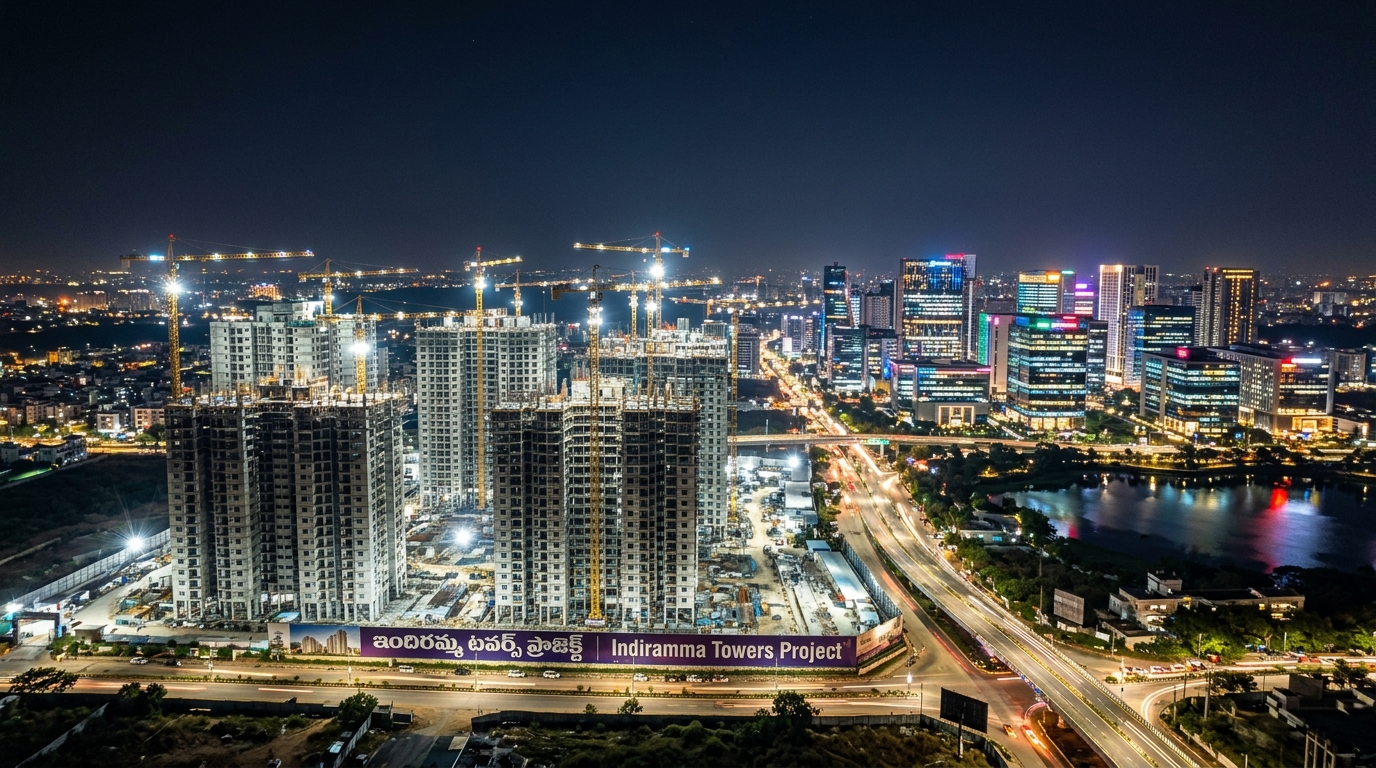
The planned development of 1 lakh LIG homes under the Indiramma Towers project directly addresses a substantial unmet demand in Hyderabad's housing market. This segment, often underserved by private developers focused on mid-to-high income segments, represents a large, latent buyer base. The government's proactive intervention aims to bridge this gap, potentially unlocking significant purchasing power through subsidies and targeted financing. This influx of supply, though focused on a specific income bracket, can indirectly influence pricing across other segments by easing pressure on overall housing availability.
While the primary beneficiaries are LIG households, the sheer scale of the project might lead to increased construction activity and demand for raw materials, potentially impacting input costs for the broader real estate sector. Furthermore, the success of such a large-scale affordable housing initiative could set a precedent for future developments, influencing the strategic planning of developers and impacting land utilization patterns across the city.
Institutional Investor Perspective: New Avenues and Risk Appetites
From an institutional investor's standpoint, the Indiramma Towers project presents a nuanced opportunity. While direct investment into LIG housing may not align with traditional yield expectations of some global funds focused on premium commercial or luxury residential assets, it opens doors for impact investing and specific funds targeting socio-economic development. The government's role as the primary driver suggests a reduced development risk for partners, particularly in land acquisition and initial approvals. Investors with an ESG (Environmental, Social, Governance) focus may find this project appealing, especially if it's structured with robust governance and sustainable construction practices.
The ripple effect of this project could be significant. An expanding LIG population requires enhanced urban infrastructure, public transport, utilities, and social amenities. This, in turn, could stimulate demand for commercial and retail spaces in and around these new developments, presenting indirect investment opportunities. Furthermore, the success of such public-private partnerships (PPPs) could encourage more large-scale affordable housing initiatives, creating a more stable and predictable market for various real estate asset classes in the long run.
Potential for impact investment and ESG-focused capital flows.
Indirect opportunities in supporting infrastructure and ancillary commercial/retail developments.
Catalyst for future large-scale affordable housing PPPs, enhancing market predictability.
Policy and Regulatory Impact: Shaping the Future of Urban Development
The Indiramma Towers project is a clear manifestation of the government's commitment to inclusive urban development and its policy emphasis on affordable housing. Such initiatives often involve significant policy interventions, including land allocation, expedited approvals, and potential subsidies or tax incentives for developers and buyers. This project could lead to the refinement of existing affordable housing policies or the introduction of new regulatory frameworks to facilitate similar large-scale developments.
The success or challenges encountered during the implementation of this project will likely inform future policy decisions concerning urban planning, zoning regulations, and the balance between market-driven development and government-led social housing initiatives. It also underscores the increasing role of government in shaping the supply side of the real estate market, particularly for essential housing needs.
Micro-Market Relevance: Beyond the Immediate Development Zone
While the specific micro-markets for the Indiramma Towers are not detailed in the news, the project's scale suggests it will necessitate new urban expansion zones. These will likely be on the periphery of existing developed areas. However, the impact will be felt across Hyderabad. The increased population density from 1 lakh homes will strain existing infrastructure and necessitate upgrades in transportation, utilities, and social services. This could indirectly boost the attractiveness of established micro-markets like Gachibowli, Kokapet, and the Financial District if improved connectivity and amenities are a consequence of this urban expansion.
Conversely, an influx of affordable housing could alleviate pressure on rentals in more established residential areas, potentially stabilizing rental yields for investors in those regions. The strategic location of these new developments will be crucial in determining their long-term success and their impact on surrounding property values and rental markets. Proximity to employment hubs, transportation networks, and essential services will be key determinants of the project's overall contribution to the city's livability and economic vibrancy.
Potential for strain on existing infrastructure in well-developed areas.
Indirect benefits to established micro-markets through improved connectivity and amenity demand.
Alleviation of rental pressure in existing residential zones.
Critical importance of strategic location for long-term success and value appreciation.
Source: Realty Today