Hyderabad's Housing Affordability Crisis: A Wake-Up Call for Investors and Policymakers
Published: May 2026
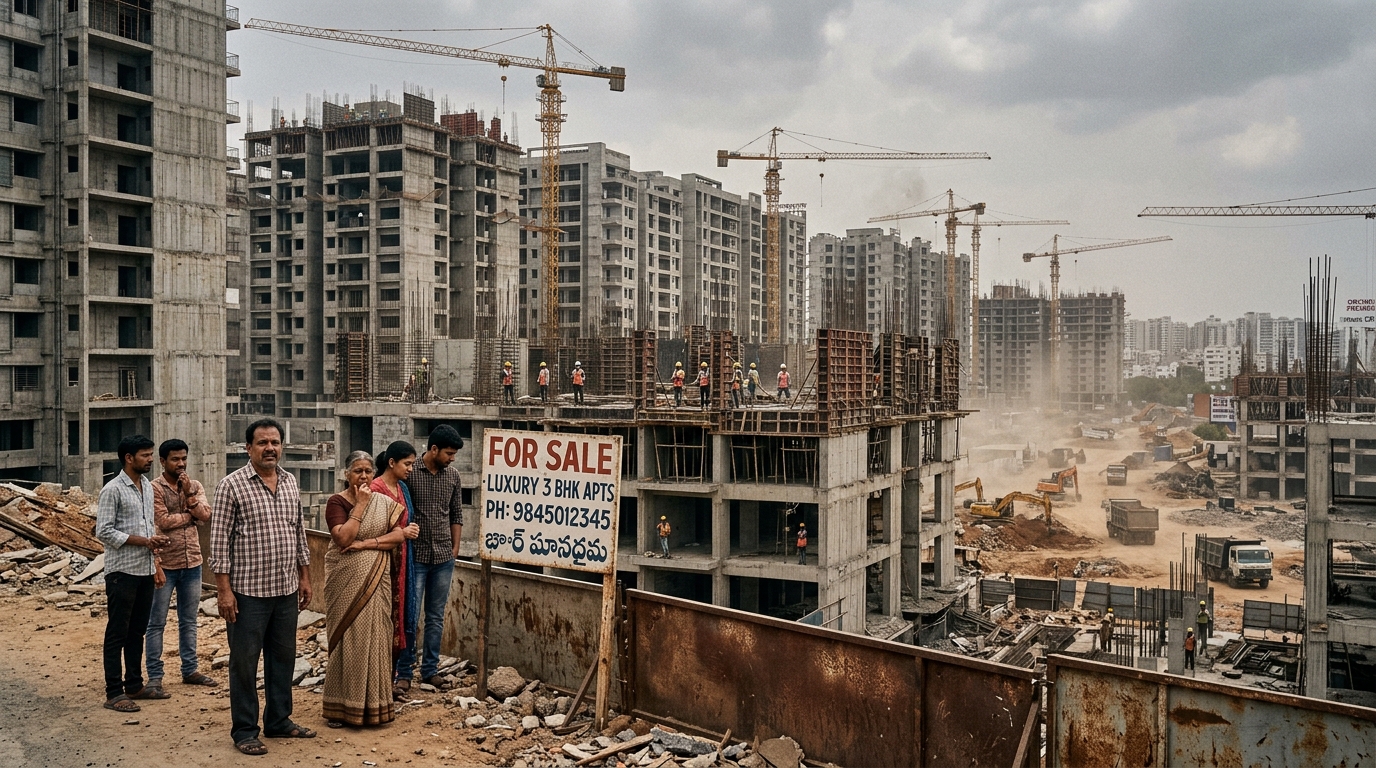
The Widening Affordability Chasm in Hyderabad's Real Estate
The dream of homeownership in Hyderabad, once within reach for many, is rapidly becoming a distant aspiration, according to a recent report from The Hans India. This growing unaffordability is primarily driven by a significant disconnect between rising property prices and stagnant income growth, pushing the middle-income segment to the sidelines. The report suggests that the average home price in key city areas has outpaced salary increments, creating a substantial barrier for potential buyers.
This trend has direct implications for market dynamics. While demand from the ultra-luxury segment may remain robust, the broader middle-class demand, which forms the backbone of sustained market growth, is likely to be suppressed. This could lead to an oversupply in certain segments if developers continue to focus on premium projects, while also potentially creating opportunities for alternative housing solutions or sub-markets catering to more budget-conscious buyers.
Rising property prices outpacing income growth.
Suppressed demand from the middle-income segment.
Potential for market segmentation and new niche opportunities.
Institutional Investor Perspective: Navigating the Affordability Challenge
For institutional investors, the current scenario in Hyderabad presents a complex picture. While the city's economic growth and IT sector expansion continue to attract capital, the affordability issue requires a nuanced approach. Investors need to assess whether the current pricing reflects sustainable demand or is driven by speculative forces. The report's findings suggest a potential shift in investment focus away from mass-market residential projects towards sectors with more predictable returns, such as Grade A commercial office spaces or well-curated rental housing solutions.
However, this affordability challenge also presents opportunities. Institutional investors could explore opportunities in build-to-rent models, affordable housing projects (potentially through Public-Private Partnerships), or investing in areas where infrastructure development is set to drive future value appreciation without the current premium. The long-term growth trajectory of Hyderabad, driven by its economic fundamentals, still makes it an attractive market, but the strategy needs to be adapted to the evolving affordability landscape.
Re-evaluation of investment strategies towards income-generating assets.
Exploring build-to-rent and affordable housing segments.
Focus on long-term value appreciation in developing micro-markets.
Due diligence on pricing sustainability.
Micro-Market Spotlight: Hyderabad's Hotspots Under Pressure
Areas like Gachibowli, Kokapet, and the Financial District, long considered prime residential hubs due to their proximity to employment centers and premium amenities, are likely feeling the brunt of this affordability squeeze. While these micro-markets continue to attract high-net-worth individuals and expatriates, the entry-level and mid-segment housing options within these areas are becoming increasingly scarce and expensive. This could lead to a spillover effect, pushing demand to secondary or tertiary locations within a drivable distance.
Developers and investors focusing on these specific micro-markets need to critically analyze their product mix. A continued focus solely on ultra-luxury may lead to saturation, while a failure to address the demand for more accessible housing could result in missed opportunities. The policy implications for these high-growth corridors are also significant, potentially requiring incentives for developers to incorporate a more diverse range of housing typologies.
Gachibowli, Kokapet, Financial District facing affordability pressures.
Potential for demand shift to peripheral areas.
Need for diversified product offerings in prime micro-markets.
Implications for local infrastructure and planning.
Policy and Regulatory Considerations
The affordability crisis in Hyderabad's real estate market necessitates a proactive policy response. Government intervention could focus on measures to increase housing supply, particularly in the affordable and mid-income segments. This might include streamlining the approval process for such projects, offering incentives like reduced stamp duty or tax breaks for developers building affordable housing, and potentially implementing land pooling or development schemes in designated areas.
Furthermore, policies aimed at controlling speculative investments and ensuring transparency in pricing mechanisms could also play a role. The Telangana government's RERA (Real Estate Regulatory Authority) framework provides a foundation, but its enforcement and potential enhancements to address affordability are crucial. Ultimately, a balanced approach that encourages both investment and ensures housing accessibility for the broader population will be key to sustainable growth in Hyderabad's real estate sector.
Incentives for affordable housing development.
Streamlining regulatory approvals.
Measures to curb speculative real estate investment.
Strengthening RERA enforcement and scope.
Exploring land development policies.
Source: The Hans India