Hyderabad's GCC Surge: A Gold Rush for Developers and Landowners in Telangana's New Urban Epicenter
Published: October 2026
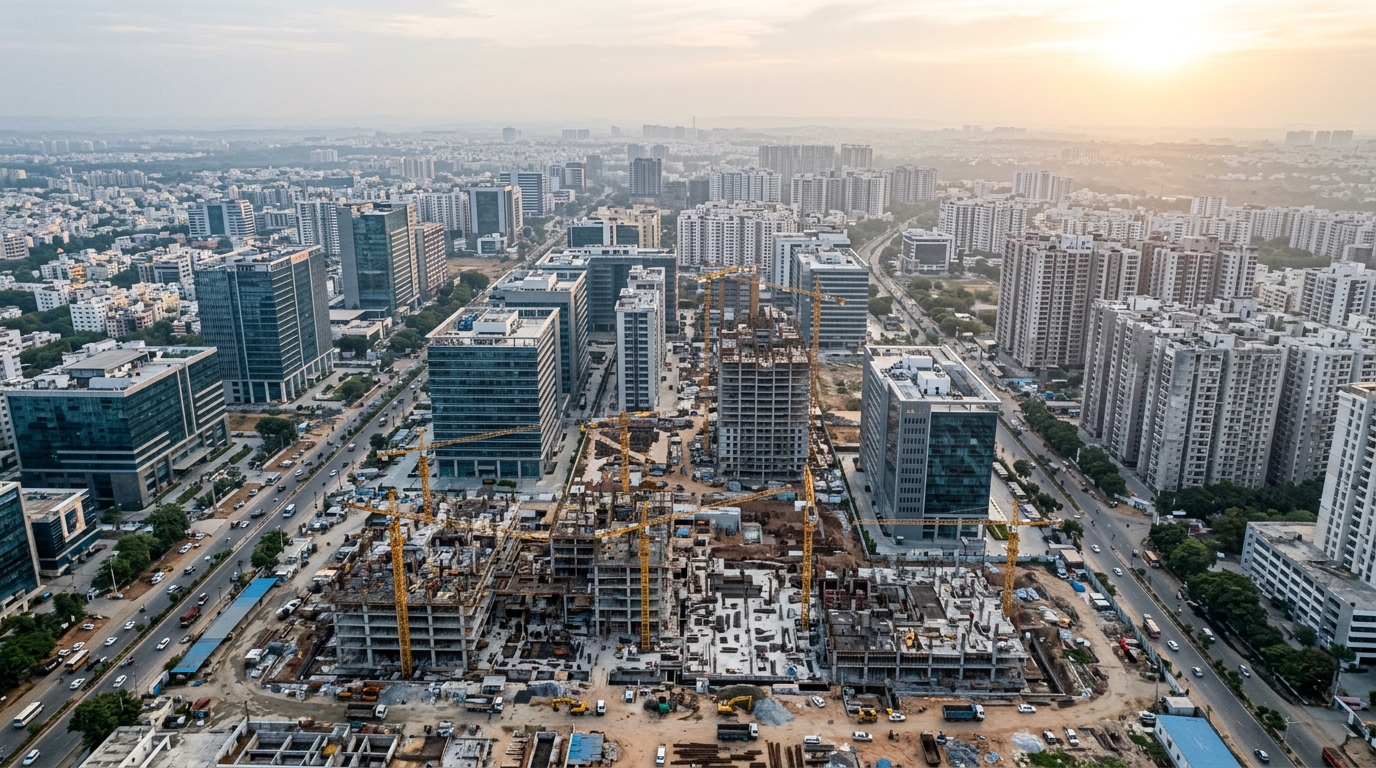
The GCC Effect: Unlocking Developer and Landowner Potential
The relentless influx of multinational corporations establishing GCCs in Hyderabad is creating a voracious demand for commercial, residential, and ancillary spaces. For developers, this translates to a red-hot market for office spaces, particularly Grade A developments that can cater to the stringent requirements of these global giants. Beyond commercial, the ripple effect on residential demand is immense. Employees of these GCCs, often highly paid professionals, are seeking quality housing solutions, driving demand for premium apartments, villas, and even plotted developments. Landowners in strategic corridors are in an enviable position, with the potential to command significantly higher valuations for their parcels, whether for direct development or sale to eager developers.
The key takeaway for builders is the need to diversify their portfolio. While office space development remains crucial, understanding and tapping into the residential and hospitality sectors that directly serve the GCC workforce is paramount. For landowners, proactive engagement with developers, understanding market dynamics, and securing favorable terms will be critical to capitalizing on this growth spurt.
- Identify specific GCC expansion plans to pre-empt demand hotspots.
- Explore joint development agreements with landowners to de-risk land acquisition.
- Consider integrated township development to capture both residential and commercial opportunities.
Construction Trends, Approvals, and the Supply Pipeline
The pace of GCC establishment is outpacing traditional construction timelines. This necessitates a more agile and efficient construction approach. Developers must leverage pre-fabricated construction techniques, advanced project management tools, and a robust supply chain to meet accelerated deadlines. The Telangana government's proactive stance on facilitating business and infrastructure development is reflected in streamlined approval processes, though the sheer volume of projects can still lead to some bottlenecks.
The supply pipeline for office space needs continuous monitoring. While current absorption rates are high, understanding future demand projections and ensuring a consistent supply of quality commercial real estate will be vital to prevent future imbalances. For residential, the focus will be on speed-to-market and quality, ensuring that new projects can quickly cater to the immediate needs of the incoming talent pool.
- Invest in technologies that accelerate construction timelines (e.g., modular construction).
- Build strong relationships with government agencies to navigate approval processes efficiently.
- Maintain a diversified construction pipeline to cater to both immediate and future demand.
Location-Specific Opportunities: Gachibowli, Kokapet, and the Financial District Nexus
The established IT and financial hubs of Gachibowli and the Financial District are prime beneficiaries of this GCC boom. However, the spillover effect is creating significant new opportunities in emerging corridors like Kokapet, which is rapidly transforming into a prime destination for large-scale office developments and premium residential enclaves. Proximity to these core areas, coupled with developing infrastructure, makes these 'fringe' locations highly attractive for developers looking to secure land at potentially more accessible price points, while still benefiting from the overall growth trajectory.
The strategic advantage lies in understanding the connectivity and infrastructure upgrades planned for these areas. Proximity to talent pools and existing amenities will further enhance the appeal of these emerging micro-markets. Developers should prioritize projects that offer modern amenities and sustainable designs to attract discerning tenants and residents.
- Focus on developing mixed-use projects that combine commercial, residential, and retail in these high-growth zones.
- Monitor infrastructure development (e.g., new roads, metro lines) to identify future growth pockets.
- Consider phased development to manage risk and adapt to evolving market demands in these dynamic locations.
Navigating Risks and Execution Challenges
Despite the optimistic outlook, developers must remain cognizant of potential risks. The rapid pace of development can lead to increased construction costs due to material and labor shortages. Furthermore, the intense competition among developers could lead to aggressive pricing strategies, potentially impacting profit margins if not managed meticulously. Execution challenges also include ensuring timely delivery of projects that meet international standards, managing complex stakeholder relationships, and adapting to evolving regulatory landscapes.
A crucial aspect of risk mitigation will be robust financial planning and contingency management. Developers need to conduct thorough due diligence on land acquisition, secure strong pre-commitments for commercial spaces, and build strong relationships with reliable contractors and suppliers. Understanding the long-term sustainability of this GCC boom and diversifying investment strategies will be key to navigating potential market fluctuations.
- Conduct thorough market analysis to forecast demand and competitive landscape accurately.
- Implement stringent cost control measures and explore alternative sourcing for materials.
- Develop a strong crisis management plan to address unforeseen challenges effectively.
Source: Urban Acres