Hyderabad's Affordable Housing Dilemma: Navigating the 'Luxury' Threat for Developers
Published: May 2026
The Shifting Sands: Impact on Builders and Landowners
The Times of India's report raises a critical point for developers: the increasing dominance of luxury projects in prime Hyderabad locations could be inadvertently squeezing out much-needed affordable housing. This trend directly impacts builders who have historically focused on the affordable segment, forcing a re-evaluation of their business models and project pipelines. Landowners, particularly those with parcels in areas traditionally considered more accessible, might see a surge in interest from luxury developers, potentially driving up land values but also altering the socio-economic fabric of these neighborhoods.
For landowners, the key takeaway is understanding the evolving market demand. While luxury commands higher margins, the sheer volume of demand for affordable housing remains substantial. Strategic partnerships or phased development could be avenues to cater to both segments. Builders must consider if their current land bank and development expertise align with the prevailing market sentiment. A pivot towards mid-range housing, bridging the gap between affordable and luxury, could be a prudent strategy.
- Builders: Re-evaluate project portfolios and target demographics.
- Landowners: Assess long-term value vs. short-term premium offers.
- Consider phased development to capture different market segments.
Construction Trends, Approvals, and the Supply Pipeline
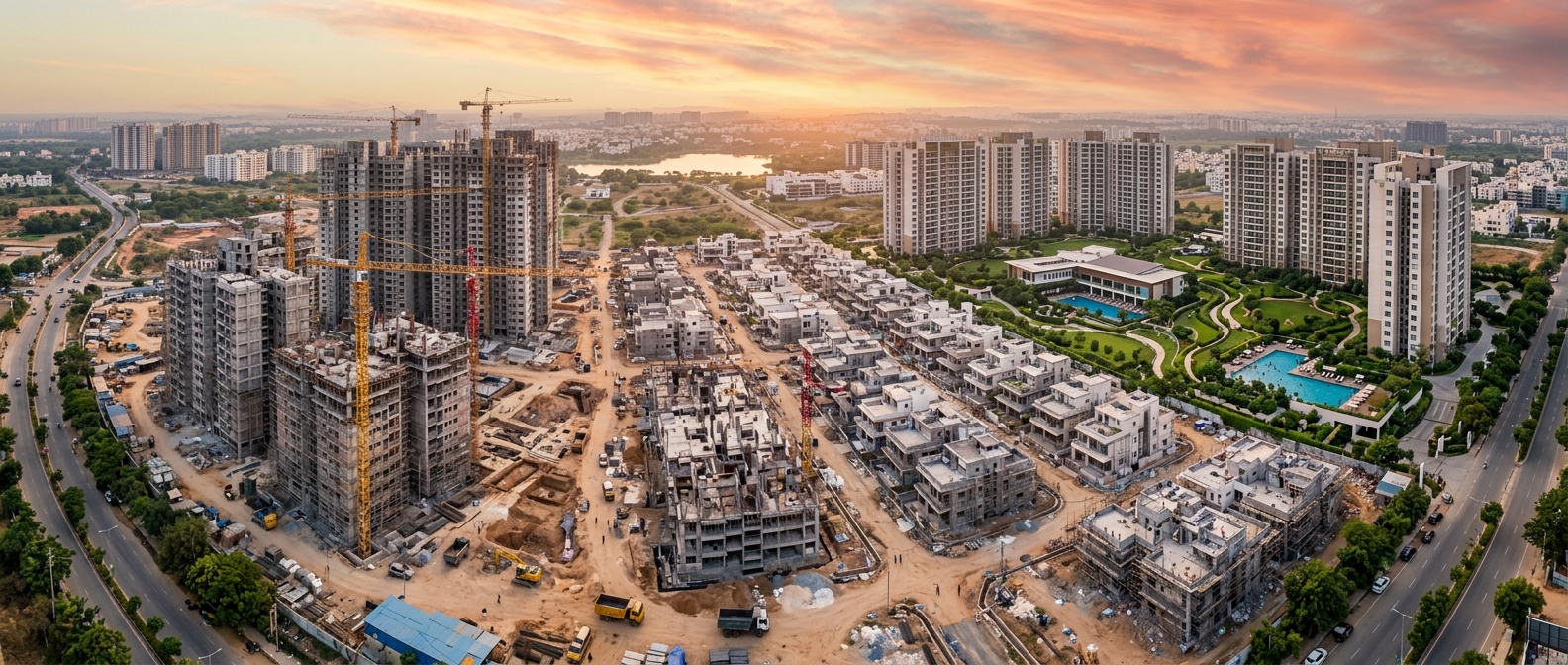
The perceived 'luxury threat' to affordable housing suggests a potential supply-demand mismatch if construction trends continue to favor high-end units. Developers focused on affordability need to ensure their projects receive timely approvals to maintain a competitive edge. The current construction landscape in Hyderabad, especially in growth corridors like Gachibowli, Kokapet, and the Financial District, is characterized by rapid development, but often geared towards premium segments due to perceived higher profitability.
The supply pipeline for affordable homes might be constricting. This could be exacerbated by rising construction costs, labor availability, and the increasing cost of land in desirable areas. Developers must be agile in sourcing materials and managing labor to keep their affordable housing projects viable. Furthermore, government initiatives and policy support for affordable housing become crucial in this scenario to encourage construction and maintain a balanced supply.
- Monitor approval timelines rigorously.
- Secure reliable supply chains for construction materials.
- Explore innovative construction techniques to reduce costs.
- Advocate for government incentives supporting affordable housing.
Location-Specific Opportunities and Challenges in Hyderabad
Hyderabad's real estate market, particularly the IT and financial hubs like Gachibowli, Kokapet, and the Financial District, is a prime example of this dynamic. These areas are experiencing significant population influx, creating a perpetual demand for housing across all income levels. The 'luxury threat' is most pronounced here, where developers are tempted by the high returns offered by premium apartments and villas.
However, this concentration of luxury development also creates a significant unmet demand for affordable and mid-range housing within commuting distance of these employment centers. Builders who can identify pockets of land or redevelop older structures in or near these prime areas could tap into a substantial market. The challenge lies in balancing the cost of land acquisition with the affordability targets of their projects. Moreover, ensuring adequate infrastructure and amenities to support a growing population in these rapidly developing zones is paramount for long-term project success.
- Identify fringe areas near IT/Financial hubs for affordable projects.
- Explore redevelopment opportunities.
- Focus on transit-oriented development to enhance accessibility.
- Ensure projects are integrated with essential city infrastructure.
Navigating Risks and Execution Challenges
The primary risk for developers in this scenario is misjudging market demand or over-investing in a segment that may not offer sustainable returns in the long run. The 'luxury threat' could lead to a saturation of high-end properties, while the affordable segment continues to be underserved, creating a potential for market imbalance.
Execution challenges include navigating the complex regulatory environment, especially for projects targeting lower-income groups which may have specific compliance requirements. Rising input costs, including labor and materials, can erode profit margins in the competitive affordable housing market. Furthermore, ensuring the quality and timely delivery of projects are critical for maintaining brand reputation and customer trust. Developers must maintain robust project management practices and contingency plans to mitigate these inherent risks.
- Conduct thorough market research to avoid segment saturation.
- Develop strong relationships with local authorities for smooth approvals.
- Implement stringent cost control measures.
- Prioritize quality construction and on-time delivery.
Source: The Times of India