Hyderabad's ₹650 Crore Land Dispute: A Wake-Up Call for Developers and Landowners
Published: June 2026
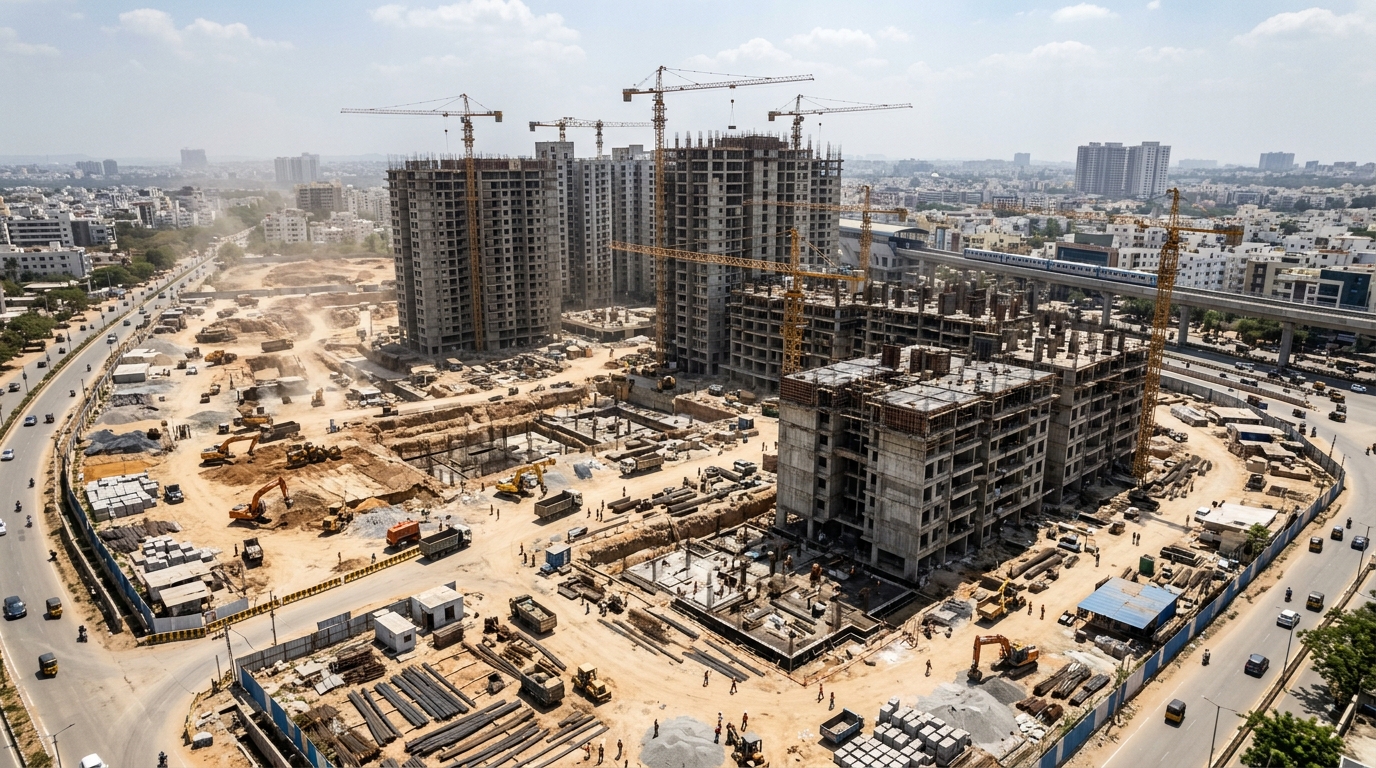
Impact on Builders and Landowners: Navigating the Shifting Sands of Land Acquisition
The ₹650 crore land dispute stemming from the Eidulakunta Lake diversion presents a complex scenario for both developers and existing landowners. For landowners in and around the affected areas, this conflict could lead to protracted legal battles, potential delays in development, and uncertainty regarding land titles and future usage. It underscores the importance of clear land documentation and adherence to environmental regulations. For builders, this situation translates into increased risk in land acquisition. Developers eyeing parcels near the lake or within its proposed diversion pathway must conduct exhaustive due diligence, scrutinizing the legality of land titles, environmental clearances, and the potential for community opposition. This dispute could also signal a broader trend where environmental concerns and community rights are gaining more prominence in development approvals, potentially slowing down projects that lack comprehensive stakeholder engagement.
The financial implications of such a dispute are substantial. Developers might face inflated land costs due to increased perceived risk, or worse, outright cancellation of projects if legal challenges prove insurmountable. This emphasizes the need for developers to build flexibility into their acquisition strategies and be prepared for longer gestation periods. Conversely, landowners who can navigate these complexities and secure clear titles might command premium prices as demand for compliant land increases.
- Landowners must ensure all land titles and documentation are legally sound and transparent.
- Developers should prioritize thorough legal and environmental due diligence before committing to land acquisition.
- Community engagement and early stakeholder consultations are crucial to mitigate future conflicts.
- Consider alternative land parcels that are less prone to environmental or legal disputes.
Construction Trends, Approvals, and the Supply Pipeline: A Looming Uncertainty
This land row directly impacts Hyderabad's construction trends and the supply pipeline, especially in areas proximal to the lake. Projects that were contingent on the lake's diversion or planned in its immediate vicinity might face significant delays or even abandonment. This could create a temporary disruption in the supply of new residential and commercial spaces, potentially exacerbating existing supply-demand mismatches if not managed proactively. The approval process for future projects in similar ecologically sensitive zones is also likely to become more rigorous. Authorities may impose stricter environmental impact assessments and demand more robust mitigation plans, leading to extended timelines for obtaining necessary sanctions. For builders, this means a more cautious approach to project planning and a greater emphasis on sustainable development practices that align with environmental regulations.
The current demand for housing and commercial spaces in Hyderabad, particularly in burgeoning corridors, remains robust. However, such land disputes can create pockets of uncertainty, potentially impacting investor confidence in specific micro-markets. Developers who can demonstrate a clear path through regulatory hurdles and environmental compliance will be better positioned to capitalize on the sustained demand. The longer-term implication is a potential shift in construction focus towards areas with clearer land titles and fewer environmental entanglements, or a greater investment in navigating the complex approval processes for projects in sensitive locations.
- Anticipate longer approval timelines for projects in environmentally sensitive zones.
- Factor in potential delays and increased costs associated with complex land acquisition and regulatory compliance.
- Explore construction in areas with established infrastructure and fewer environmental disputes.
- Focus on sustainable construction practices to streamline approvals and enhance market appeal.
Location-Specific Opportunity: Hyderabad, Gachibowli, Kokapet, and the Financial District Nexus
The Eidulakunta Lake diversion and the subsequent land dispute are particularly relevant to Hyderabad's rapidly developing western corridors, including Gachibowli, Kokapet, and the Financial District. These areas are prime targets for large-scale residential, commercial, and mixed-use developments. Any disruption or uncertainty surrounding land availability and legality in these growth engines can have ripple effects across the entire region. Developers who have been eyeing land parcels near the lake or in areas that might be indirectly impacted by water management changes must reassess their acquisition and development plans. While the dispute creates immediate challenges, it also presents an opportunity for those who can secure compliant land in adjacent, unaffected areas. The demand for premium residential and Grade-A commercial spaces in these premium micro-markets remains exceptionally high.
Smart developers will view this as a catalyst to identify and secure land in areas that are demonstrably free from such environmental and legal entanglements. The increased scrutiny on land acquisition in the vicinity of water bodies could push demand towards established townships and planned developments that have already navigated these approval pathways. The Financial District, Gachibowli, and Kokapet are still poised for significant growth, but the nature of land acquisition and project planning in these zones might evolve to incorporate a stronger emphasis on environmental stewardship and legal clarity, driven by precedents like this lake diversion dispute.
- Re-evaluate land acquisition strategies in Gachibowli, Kokapet, and the Financial District based on the dispute's implications.
- Prioritize acquiring land with clear titles and minimal environmental concerns in these high-demand zones.
- Explore opportunities in well-planned integrated townships that offer streamlined approvals.
- Leverage the demand for compliant, ready-to-develop parcels in these premium locations.
Risks and Execution Challenges: A Prudent Developer's Checklist
The Eidulakunta Lake diversion dispute brings to the forefront several critical risks and execution challenges for developers in Hyderabad. The primary risk is legal entanglement. Land acquired in the dispute zone could become subject to protracted litigation, leading to project stagnation and significant financial losses. Environmental clearances, which are increasingly stringent, pose another hurdle. Any perceived violation or lack of proper assessment can lead to project delays or outright rejection. Community opposition, often fueled by environmental concerns, can also derail projects, demanding a proactive and inclusive approach from developers.
Execution challenges include the potential for inflated acquisition costs due to perceived risk, the need for extensive legal and environmental consultancy, and the imperative to build strong relationships with local communities and authorities. Developers must also brace for potential changes in zoning regulations or development norms in response to such disputes. The supply chain might also be affected if material availability or labor access is disrupted in areas experiencing development freezes or delays. Ultimately, success in this environment hinges on meticulous planning, a deep understanding of the regulatory landscape, unwavering commitment to legal and environmental compliance, and a proactive approach to stakeholder management.
- Conduct thorough legal and environmental impact assessments for all land acquisitions.
- Develop robust community engagement plans to address concerns and foster local support.
- Secure all necessary environmental and development clearances well in advance.
- Build contingency plans for potential legal challenges and regulatory changes.
- Maintain transparent communication with all stakeholders throughout the project lifecycle.
Source: Hyderabad Mail