Hyderabad Real Estate Wake-Up Call: Developer Default and the TGRERA's Crucial Role
Published: May 2026
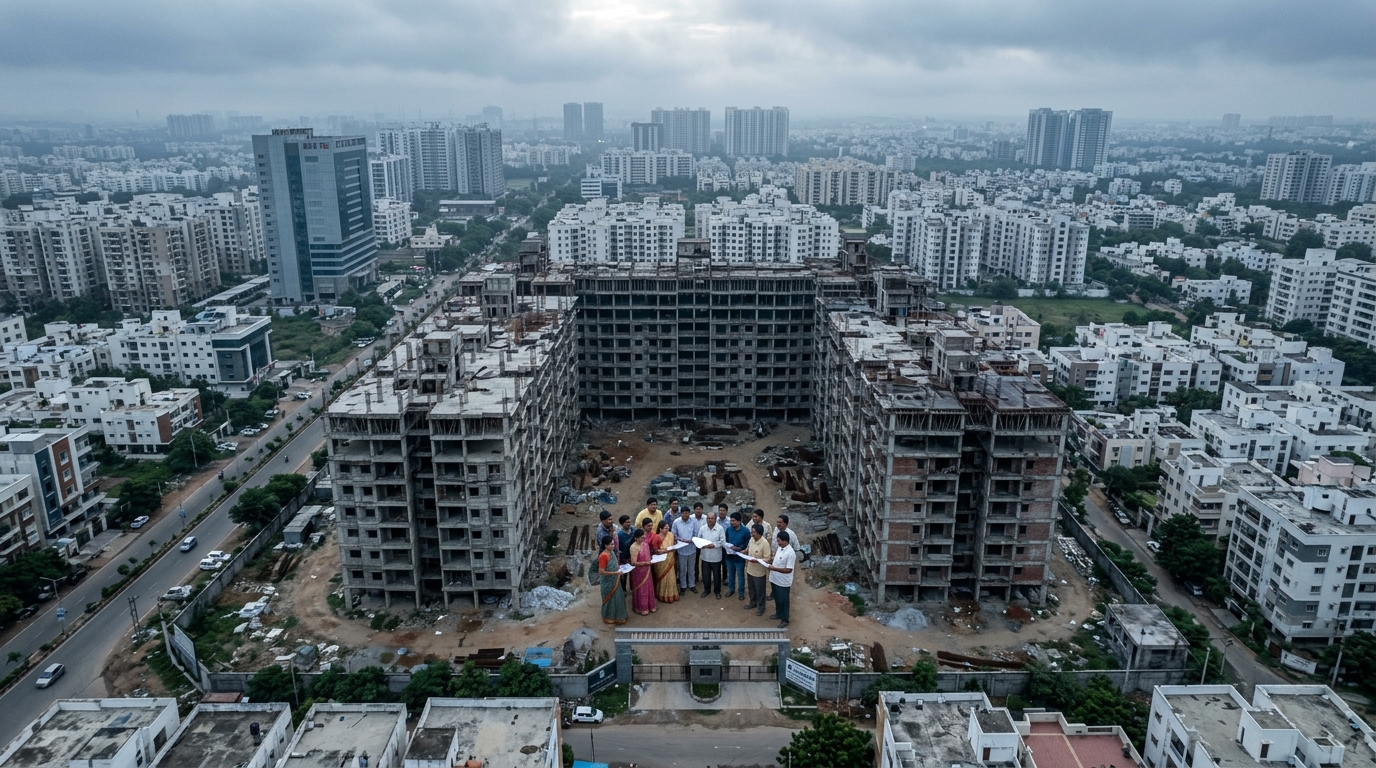
The Kompally Project Fiasco: A Cautionary Tale
The recent news of Bharathi Builders defaulting on its Kompally project, leaving buyers in the lurch, serves as a stark reminder of the inherent risks within the real estate sector, even in a booming market like Hyderabad. This incident, which has prompted the Telangana Real Estate Regulatory Authority (TGRERA) to order a refund for affected buyers, brings into sharp focus the need for due diligence and robust regulatory frameworks.
While specific details of the project's financial standing or the reasons for default are not elaborated, such situations typically arise from a confluence of factors including overleveraging, poor project execution, shifting market dynamics, or even fraudulent practices. For investors, especially those engaging with smaller or less established developers, this serves as a critical case study.
Market Implications: Demand, Supply, and Pricing Dynamics
Hyderabad's real estate market has been on a high growth trajectory, driven by strong demand from its burgeoning IT and technology sectors. Areas like Gachibowli, Kokapet, and the Financial District continue to witness robust absorption rates and steady price appreciation. However, isolated incidents of developer default, while concerning, are unlikely to derail the overall market sentiment in the short to medium term, provided regulatory bodies act swiftly and effectively.
The immediate impact of such fiascos can be a temporary dip in buyer confidence for projects by the specific developer. In the broader context, it could lead to a more discerning buyer base, placing a premium on transparency, project viability, and the track record of developers. This might indirectly benefit larger, reputable developers who have a history of timely project completion and adhere to stricter financial and operational standards. The long-term effect on pricing will likely be marginal unless such incidents become systemic, in which case a price correction due to reduced investor appetite could occur.
- Potential for increased demand for projects by established developers with strong financials and compliance records.
- Slight moderation in price expectations for projects from less-proven entities.
- Enhanced scrutiny from buyers regarding project timelines and financial disclosures.
Institutional Investor Perspective: Risk Mitigation and Due Diligence
For institutional investors, who often deploy significant capital into large-scale real estate developments or real estate investment trusts (REITs), such incidents serve as a crucial reminder to enhance their due diligence processes. While institutional investors typically engage with developers who have a proven track record and robust financial backing, this event emphasizes the importance of rigorous risk assessment, including detailed project feasibility studies, escrow account monitoring, and regulatory compliance checks.
The presence of a strong regulatory authority like TGRERA, and its decisive action in ordering refunds, is a positive signal for institutional capital. It demonstrates a commitment to protecting buyer interests and maintaining market integrity, which are paramount for attracting and retaining large-scale investments. This incident might lead institutional investors to favor projects that are already RERA-registered and where developers have a clear history of adhering to regulatory norms and timelines. The direction of capital flow, while still favoring Hyderabad's growth corridors, might become more selective, prioritizing projects with demonstrably lower execution risk.
- Reinforced emphasis on developer vetting and project feasibility assessments.
- Increased preference for projects with strong RERA compliance and transparent financial structures.
- Potential for greater allocation of capital towards larger, more established developers and REITs.
Policy and Regulatory Impact: TGRERA's Proactive Stance
The TGRERA's swift intervention in the Bharathi Builders case is a significant positive development. The order to refund buyers demonstrates the authority's commitment to its mandate of protecting consumer interests and ensuring fair practices within the real estate sector. This proactive stance is crucial for building and maintaining trust in the market.
Incidents like this can prompt regulators to further tighten oversight, potentially leading to stricter enforcement of rules, more frequent audits, and enhanced penalties for non-compliance. For developers, it underscores the imperative to operate with transparency and adhere strictly to project timelines and financial commitments. The TGRERA's actions are a strong indicator that Hyderabad's regulatory environment is maturing, which is a vital factor for sustainable real estate growth and investor confidence. This could lead to a more structured and less speculative market, benefiting all stakeholders in the long run.
- Increased enforcement of RERA regulations and potential for stricter compliance measures.
- Greater accountability for developers in project execution and financial management.
- Strengthened buyer confidence due to effective regulatory intervention.
Micro-Market Relevance: Hyderabad's Growth Corridors
While the specific Kompally project is located outside the prime growth corridors of Gachibowli, Kokapet, and the Financial District, the underlying issues have broader relevance. These prime micro-markets are characterized by high demand, driven by a robust employment ecosystem and considerable infrastructure development. The presence of a strong regulatory framework, as demonstrated by the TGRERA's action, is essential for sustaining the investor confidence required for continued growth in these areas.
For investors eyeing these premium micro-markets, the incident reiterates the need to look beyond the location and focus on the developer's reputation, financial health, and adherence to regulatory standards. The continued influx of talent and businesses into Hyderabad ensures sustained demand for residential and commercial spaces in Gachibowli, Kokapet, and the Financial District. However, any perception of systemic risk or weak regulatory enforcement could dampen the premium valuations these markets currently command. The TGRERA's decisive action helps to mitigate such systemic risks.
- Continued strong demand for residential and commercial properties in Gachibowli, Kokapet, and Financial District.
- Investor focus on developer credentials and regulatory compliance even in prime micro-markets.
- The importance of a robust regulatory environment for maintaining investor confidence in Hyderabad's growth corridors.
Source: NewsMeter