European Property Slump: A Cautionary Tale for Global Investors, and What it Means for India
Published: October 2026
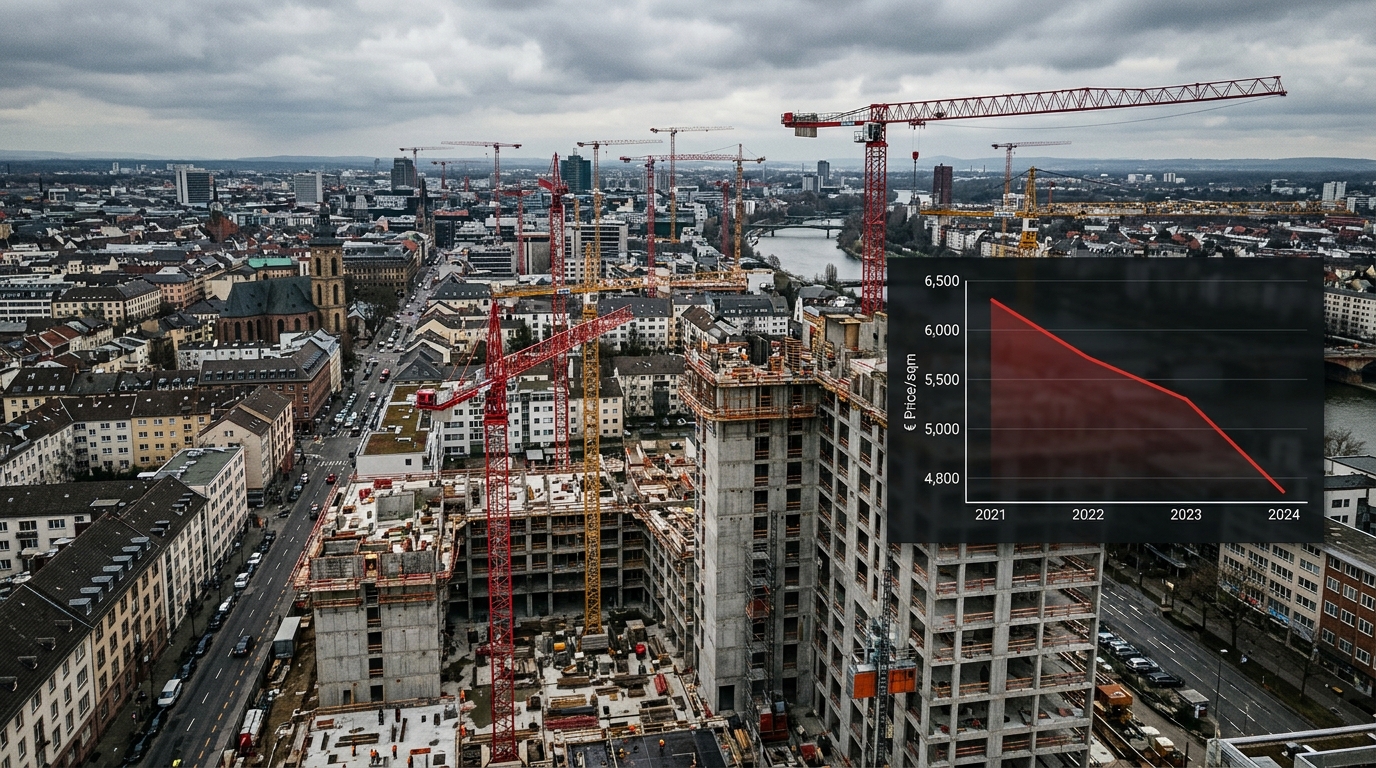
European Property Under Pressure: The Impact of Rising Interest Rates
The European real estate market is experiencing a significant downturn, characterized by declining property prices and a noticeable reduction in transaction volumes. This slump is directly attributable to the aggressive monetary policy tightening by central banks, which has driven up borrowing costs for both developers and buyers. Consequently, demand is waning as affordability diminishes, forcing sellers to recalibrate their price expectations. This creates a challenging environment for ongoing development projects and can lead to increased inventory overhang in certain segments.
The immediate market implications are a contraction in overall transaction activity. As financing becomes more expensive and harder to secure, speculative investment dries up, and even demand from owner-occupiers is tempered. This shift from a seller's market to a buyer's market, or even a distressed seller's market in some instances, signals a period of price correction and potentially a pause in capital deployment for many. The European experience underscores the sensitivity of real estate to interest rate cycles.
- Reduced demand due to affordability concerns.
- Increased supply of properties as some owners are forced to sell.
- Significant price corrections across various European markets.
- Slowdown in new project launches and development activity.
Institutional Investor Perspective: A Flight to Quality and Yield
For institutional investors, the European downturn presents a complex scenario. While some may see opportunities for distressed asset acquisition at attractive valuations, many are adopting a cautious stance. The increased cost of capital significantly impacts leveraged returns, leading to a re-evaluation of risk-adjusted returns. There's a palpable shift towards markets offering stability, strong underlying demand drivers, and favorable yield profiles. Institutional capital is likely to become more selective, prioritizing assets with robust leasing prospects and in resilient economic regions. This might translate to a redirection of capital towards emerging markets or sectors with perceived lower interest rate sensitivity.
The current climate prompts a 'flight to quality'. Investors will scrutinize lease structures, tenant creditworthiness, and the long-term economic fundamentals of any given market. In Europe, this means a focus on prime office spaces in major capitals with strong pre-leasing commitments or residential assets in high-demand, supply-constrained areas. However, the overarching trend is one of capital preservation and seeking uncorrelated returns, which might lead to reduced overall real estate allocation in the short to medium term for some larger funds.
- Increased focus on yield stability and capital preservation.
- Selective acquisition of distressed assets with potential for value-add.
- Re-evaluation of risk-adjusted returns in a higher interest rate environment.
- Potential redirection of capital towards more resilient or emerging markets.
Micro-Market Relevance: Lessons for Hyderabad's Growth Corridors
While the European market faces headwinds, the lessons learned are pertinent to rapidly developing Indian real estate corridors such as Hyderabad, particularly areas like Gachibowli, Kokapet, and the Financial District. These regions are characterized by strong IT/ITeS sector growth, a burgeoning population, and significant infrastructure development. The European experience highlights the importance of maintaining a balance between supply and demand, and the crucial role of affordability in sustained market growth.
For Hyderabad's prime micro-markets, the challenge lies in managing the pace of development to avoid a future overhang, especially if global economic slowdowns impact IT sector hiring or lead to increased office space vacancy. While current demand drivers remain robust, a sustained period of higher domestic interest rates, though perhaps not as extreme as in Europe, could still temper buyer sentiment and slow down speculative investments. Developers and investors in these Indian markets should focus on creating high-quality, sustainable assets with strong end-user appeal and consider the long-term implications of evolving work models on office space absorption. A cautious approach to leverage and a focus on pre-leasing for commercial projects will be prudent.
- Importance of balancing supply and demand to avoid future corrections.
- Sustained affordability as a key driver for long-term market health.
- Prudent leverage and a focus on pre-leasing for commercial projects.
- Impact of global economic slowdowns on local job markets and real estate demand.
Source: ET Realty