Central Asia Real Estate: A New Frontier for Hyderabad Developers?
Published: June 2026
Unlocking Central Asian Markets: What Builders and Landowners Should Consider
The diplomatic dialogue between Kazakhstan and the US regarding Central Asian real estate opportunities presents a significant, albeit nascent, prospect for Indian developers. While the immediate focus might not be on direct cross-border development, such high-level discussions often precede increased trade, investment, and the establishment of favorable business environments. For builders and landowners in India, this could translate into several indirect benefits. Firstly, it may stimulate interest in and capital flows towards emerging markets, potentially increasing demand for Indian expertise and construction services. Secondly, it could foster a more globally integrated real estate sector, encouraging Indian companies to explore international partnerships and diversification strategies. Landowners might see long-term appreciation of their assets as Indian developers, seeking broader horizons, begin to evaluate global investment landscapes.
The key takeaway here is to start understanding the geopolitical shifts and their potential economic ramifications. While direct entry into Central Asian markets requires substantial due diligence, the groundwork is being laid for increased international collaboration. This is an opportune moment to research market dynamics, regulatory frameworks, and potential local partners in regions like Kazakhstan and its neighbors.
Monitor geopolitical developments and their impact on global investment patterns.
Investigate the legal and regulatory landscapes of Central Asian countries for future reference.
Explore potential for joint ventures or knowledge-sharing with international firms involved in these regions.
Construction Trends, Approvals, and Supply Pipeline: A Global Perspective
Discussions at this level often touch upon infrastructure development and investment. If Central Asian nations are looking to boost their real estate sectors, this implies a potential need for construction materials, technology, and skilled labor. Indian construction firms, with their experience in rapid urbanization and diverse project typologies, could find themselves well-positioned to offer solutions. This could lead to an increased demand for specific construction materials, potentially impacting the domestic supply pipeline. Developers might see opportunities to export construction technology or offer project management services. Furthermore, enhanced international collaboration could streamline approval processes for foreign investors, mirroring trends seen in rapidly developing economies. This might also influence the types of construction projects prioritized, moving towards modern, sustainable, and smart city solutions.
For the Indian construction sector, this translates into a need to enhance our own innovation and sustainability practices. To be a competitive player on a global stage, we must ensure our supply chains are robust, our approval processes are efficient, and our construction methodologies are at par with international standards. This also presents an opportunity to re-evaluate our own domestic supply pipeline to identify potential bottlenecks or areas for growth that can cater to both local and international demand.
Assess current domestic supply chain capabilities for potential international demand.
Invest in R&D for sustainable and smart construction technologies.
Benchmark approval processes against international best practices.
Hyderabad's Emerging Hubs: A Localized Opportunity Amidst Global Shifts
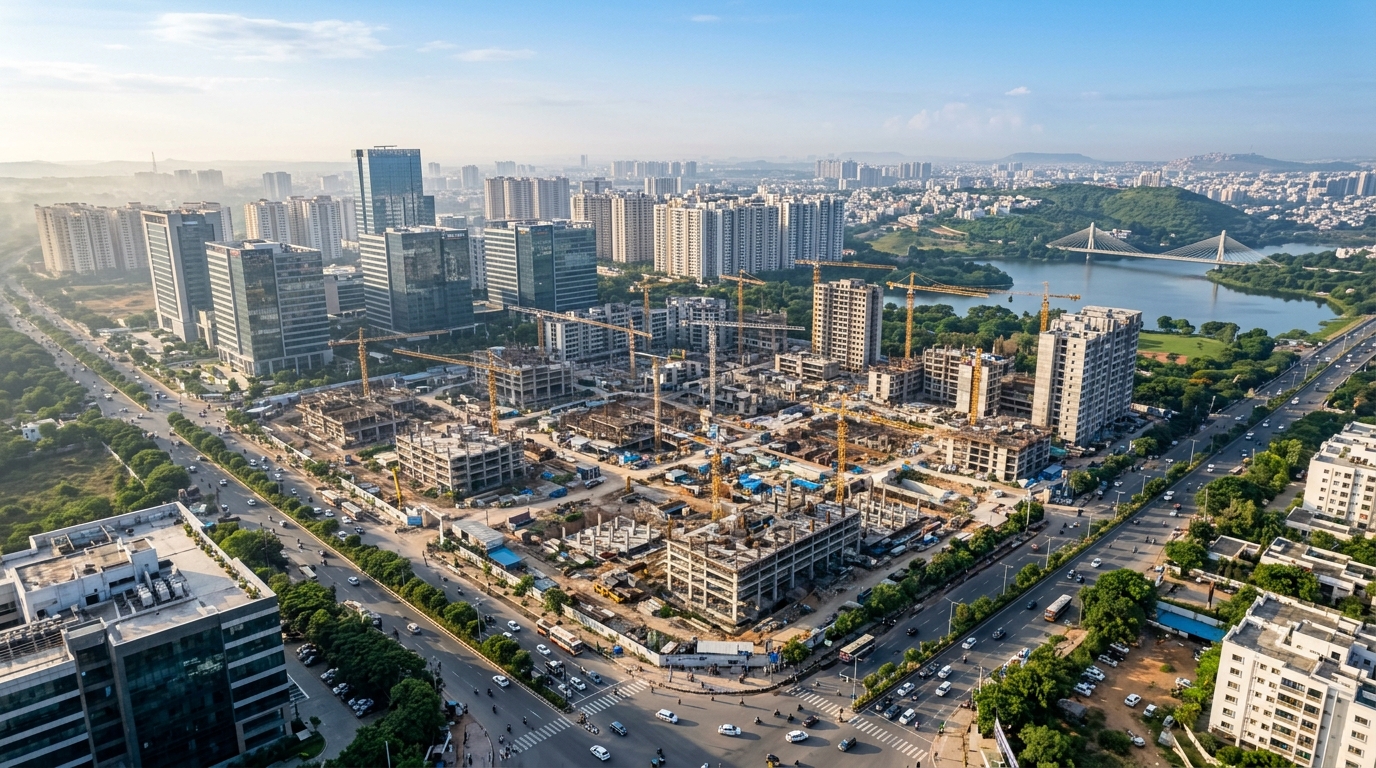
While the news focuses on Central Asia, the presence of a prominent Consul General and Ambassador suggests a broader agenda of economic partnership. For developers in Hyderabad, particularly those active in areas like Gachibowli, Kokapet, and the Financial District, this could signal a potential influx of foreign investment or increased interest in sophisticated real estate offerings. These prime locations are already experiencing a supply-demand mismatch for Grade A commercial and premium residential spaces. If Central Asian investment begins to diversify, some of this capital might be channeled into established, high-growth Indian markets. This could further intensify competition among developers for prime land parcels and accelerate the development of large-scale, integrated projects.
This global dialogue indirectly bolsters the attractiveness of Hyderabad as an investment destination. Developers in Gachibowli and Kokapet, who are already dealing with high land costs and a robust demand for quality commercial and residential spaces, might find themselves competing for international attention. The key for local players is to leverage this momentum by focusing on delivering projects that meet global standards of quality, sustainability, and smart infrastructure. The supply-demand gap in these areas is a testament to their inherent potential, and global interest can only amplify this.
Focus on delivering high-quality, sustainable, and smart projects in Hyderabad's growth corridors.
Strengthen investor relations to attract potential foreign capital.
Monitor land acquisition trends and potential for premium project launches.
Navigating Risks and Execution Challenges
Venturing into or even indirectly benefiting from new international markets comes with inherent risks. For Indian developers, these include understanding and navigating unfamiliar legal and regulatory frameworks, currency fluctuations, geopolitical instability in target regions, and the logistical challenges of managing projects remotely. Even if the primary impact is on domestic markets through increased capital inflow, the potential for a supply-demand mismatch to intensify in sought-after Hyderabad locations presents execution challenges. Developers must ensure their project pipelines are aligned with realistic demand forecasts to avoid oversupply in specific micro-markets. Furthermore, maintaining quality and adhering to timelines will be crucial when facing heightened competition.
The execution challenge lies in striking a balance between global aspirations and local realities. For Hyderabad, this means ensuring that the rapid pace of development doesn't compromise long-term urban planning or affordability. Developers need to conduct thorough feasibility studies, risk assessments, and engage with local stakeholders to ensure successful project execution, whether it's for domestic consumption or catering to international investor preferences.
Conduct comprehensive due diligence for any international market exploration.
Develop robust risk mitigation strategies for currency and geopolitical volatility.
Maintain realistic demand forecasts for domestic projects to avoid oversupply.
Prioritize strong local partnerships and stakeholder engagement.
Source: Telangana Today