AI's Blueprint for Hyderabad Real Estate: Unlocking Efficiency for Builders and Developers
Published: April 2026
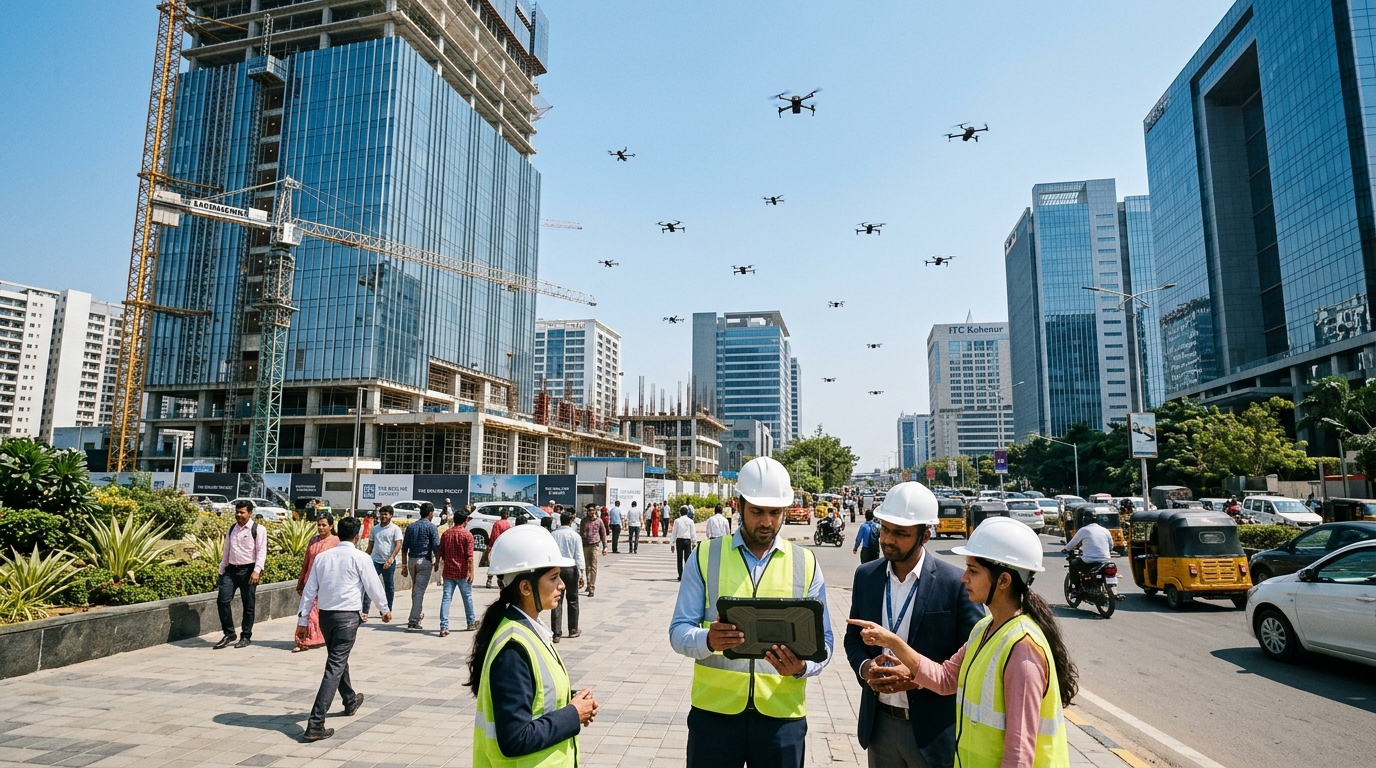
AI-Powered Construction: A Paradigm Shift for Builders and Landowners
The news of ASBL sponsoring the Python Conference 2026 in Hyderabad isn't just about technology; it's a clear indicator of the real estate industry's accelerating embrace of AI. For builders and developers, this translates to significant opportunities for optimizing every stage of the development lifecycle. From predictive analytics for market demand and site selection to AI-driven project management and automation in construction processes, the potential for enhanced efficiency and reduced costs is immense. Landowners stand to benefit from more accurate property valuations, faster due diligence, and improved negotiation strategies powered by data-driven insights.
AI can revolutionize construction by enabling sophisticated project scheduling, real-time monitoring of progress, and proactive identification of potential delays or cost overruns. Imagine AI systems analyzing satellite imagery for site analysis, optimizing material procurement based on real-time market prices, or even deploying robotic systems for repetitive construction tasks. This technological adoption is crucial for staying competitive in a market as dynamic as Hyderabad.
- AI for demand forecasting and market analysis.
- Automated project management and resource allocation.
- Predictive maintenance for completed projects.
- Enhanced due diligence and risk assessment for land acquisition.
Impact on Construction Trends, Approvals, and Supply Pipeline
The integration of AI will undoubtedly reshape construction trends. We can expect a move towards more data-informed design, where AI analyzes user behavior and environmental factors to create smarter, more sustainable buildings. The approval process, often a bottleneck, could see acceleration through AI-powered document analysis and compliance checks, reducing submission errors and speeding up review times. The supply pipeline will become more responsive, with AI optimizing inventory management and logistics, minimizing waste, and ensuring timely delivery of materials.
For Hyderabad, particularly in burgeoning corridors like Gachibowli, Kokapet, and the Financial District, this means a potential for faster project turnaround times and a more robust supply chain. Developers can leverage AI to predict demand for specific housing typologies or commercial spaces in these high-growth areas, ensuring their projects are aligned with market needs. This proactive approach can help mitigate the risks of a supply-demand mismatch, a common challenge in rapidly urbanizing regions.
- AI-driven design optimization for sustainable and smart buildings.
- Streamlined regulatory approvals through AI-powered compliance.
- Agile supply chain management for materials and logistics.
- Data-informed site selection and project phasing.
Hyderabad's Golden Triangle: Gachibowli, Kokapet, and the Financial District – Prime AI Opportunities
The concentration of IT hubs and a thriving economy in Hyderabad's Gachibowli, Kokapet, and Financial District presents a fertile ground for AI-driven real estate development. These areas are characterized by high demand for both residential and commercial spaces, coupled with a progressive outlook towards technology adoption. Builders can utilize AI to analyze foot traffic patterns, employee demographics, and business growth forecasts to identify optimal locations for commercial projects and residential enclaves that cater to specific professional segments.
Furthermore, AI can help developers understand the evolving needs of the workforce in these tech-centric zones, enabling the creation of mixed-use developments that offer integrated living, working, and recreational spaces. The ability to forecast rental yields and property appreciation with greater accuracy in these specific micro-markets will be a game-changer for investment decisions and project viability.
- Targeted residential development for IT professionals.
- AI-optimized commercial space leasing and management.
- Predicting infrastructure development needs based on economic indicators.
- Smart city integration leveraging AI for urban planning.
Navigating the AI Frontier: Risks and Execution Challenges
While the potential of AI in real estate is vast, developers must be mindful of the inherent risks and execution challenges. The initial investment in AI technologies, including software, hardware, and skilled personnel, can be substantial. Data privacy and security concerns are paramount; ensuring the ethical and secure handling of sensitive information is crucial. Moreover, the successful integration of AI requires a significant shift in organizational culture and workforce upskilling. Developers need to train their teams to effectively utilize AI tools and interpret AI-generated insights.
Another challenge lies in the accuracy and reliability of AI models. While AI can provide powerful predictions, human oversight and domain expertise remain indispensable. Developers must validate AI recommendations against their own market knowledge and experience. The pace of technological change also means that platforms and algorithms can become obsolete quickly, necessitating continuous adaptation and investment. For builders, ensuring that AI-driven construction processes are robust and scalable, while adhering to stringent safety and quality standards, will be a key execution hurdle.
- High initial investment costs for AI technology and talent.
- Data privacy, security, and ethical considerations.
- The need for workforce upskilling and cultural adaptation.
- Ensuring the accuracy and reliability of AI-driven predictions.
- Maintaining human oversight and domain expertise alongside AI.
Source: TheWire.in